
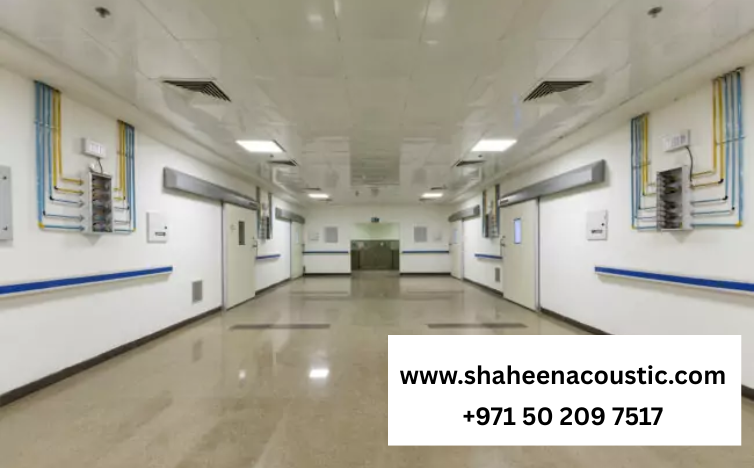
Noise control is a critical but often underestimated aspect of healthcare facility design. Hospitals and clinics operate around the clock, hosting sensitive medical procedures, patient recovery, consultations, and emergency services simultaneously. Without effective acoustic control, excessive noise can negatively impact patient healing, staff efficiency, and regulatory compliance. Implementing the right soundproofing solutions for hospitals and clinics is essential for creating a calm, safe, and professional healthcare environment.
This article explores the most effective hospital soundproofing methods, what works best in real-world healthcare settings, and how professional acoustic services can deliver long-term results.
Why Soundproofing Is Essential in Healthcare Facilities
Healthcare environments demand lower noise levels than most commercial buildings. Research shows that high noise levels can increase patient stress, delay recovery, disrupt sleep, and even contribute to medical errors. For medical staff, constant noise leads to fatigue, reduced concentration, and communication breakdowns.
Soundproofing in hospitals and clinics is not only about comfort; it is also about compliance. Many healthcare authorities and international standards specify acceptable noise levels for patient rooms, operating theaters, ICUs, and diagnostic areas. Proper acoustic treatment helps facilities meet these requirements while improving overall functionality.
Acoustic Challenges in Hospitals and Clinics
Hospitals face complex acoustic challenges due to multiple noise sources operating simultaneously. These include medical equipment, HVAC systems, staff movement, patient activity, alarms, and external traffic noise. Clinics, while smaller, still struggle with sound transfer between consultation rooms, waiting areas, and treatment spaces.
Another key issue is speech privacy. Confidential conversations between doctors and patients must remain private. Poor sound insulation can compromise patient trust and violate privacy regulations. Therefore, effective soundproofing solutions for hospitals and clinics must address both noise reduction and speech control.
Soundproof Partition Walls for Medical Spaces
One of the most effective soundproofing solutions in healthcare facilities is the use of high-performance partition walls. These walls are designed with multiple layers of gypsum boards, insulation materials, and acoustic membranes to block sound transmission between rooms.
In hospitals, soundproof partition walls are commonly used in patient rooms, consultation offices, laboratories, and administrative areas. Clinics benefit from these systems by preventing conversations and treatment sounds from leaking into adjacent spaces. When professionally installed, these partitions significantly improve acoustic privacy and comfort.
Acoustic Doors and Sealing Systems
Even the best soundproof walls can fail if doors are not acoustically treated. Acoustic doors are specifically engineered with solid cores, perimeter seals, and drop-down thresholds to minimize sound leakage.
Hospitals often require acoustic doors in operating theaters, ICUs, consultation rooms, and counseling areas. Proper door sealing systems eliminate gaps that allow sound to escape, ensuring the overall soundproofing system performs effectively. This solution is especially important in clinics where space is limited and doors are frequently used.
Soundproof Ceilings and Acoustic Panels
Ceilings play a major role in controlling airborne noise and reverberation. Soundproof ceiling systems use acoustic tiles, mineral fiber boards, or perforated gypsum panels combined with insulation above the ceiling void.
In healthcare environments, acoustic ceiling panels help absorb noise from equipment, footsteps, and conversations. They are particularly effective in corridors, waiting areas, nurses’ stations, and diagnostic rooms. Clinics benefit from acoustic ceilings by reducing echo and improving speech clarity during consultations.
Mass Loaded Vinyl for Healthcare Soundproofing
Mass Loaded Vinyl (MLV) is a high-density soundproofing material widely used in hospital sound insulation projects. Its flexibility allows it to be installed within walls, ceilings, and floors without taking up excessive space.
MLV is highly effective at blocking low-frequency noise generated by medical equipment and mechanical systems. It is often combined with drywall systems to enhance sound isolation in critical hospital areas. This makes it a preferred solution in modern healthcare soundproofing projects.
Vibration Isolation for Medical Equipment
Hospitals rely heavily on mechanical and diagnostic equipment that generates vibration and structure-borne noise. Without vibration isolation, these sounds can travel through floors and walls, disturbing nearby rooms.

Vibration isolation mounts, acoustic pads, and floating floor systems are used to minimize this issue. These solutions are essential in imaging rooms, laboratories, and plant rooms, ensuring sensitive medical areas remain quiet and stable.
Professional Healthcare Acoustic Services Matter
Effective soundproofing is not achieved through materials alone. Professional design, testing, and installation are crucial for long-term performance. Each hospital or clinic has unique acoustic requirements based on layout, usage, and regulatory standards.
Shaheen Acoustic specializes in delivering tailored soundproofing solutions for hospitals and clinics. Their healthcare acoustic services focus on patient comfort, staff efficiency, and compliance with international noise standards. From consultation to installation, professional acoustic services ensure measurable noise reduction and durable results.
Call us: Contact Shaheen Acoustic Soundproofing Expert in Dubai For Soundproofing: +971 50 209 7517
Choosing the Right Soundproofing Solution
The best soundproofing solutions for hospitals and clinics depend on several factors, including building structure, noise sources, functional requirements, and budget. A combination of soundproof walls, acoustic doors, ceiling treatments, and vibration control usually delivers the most effective outcome.