
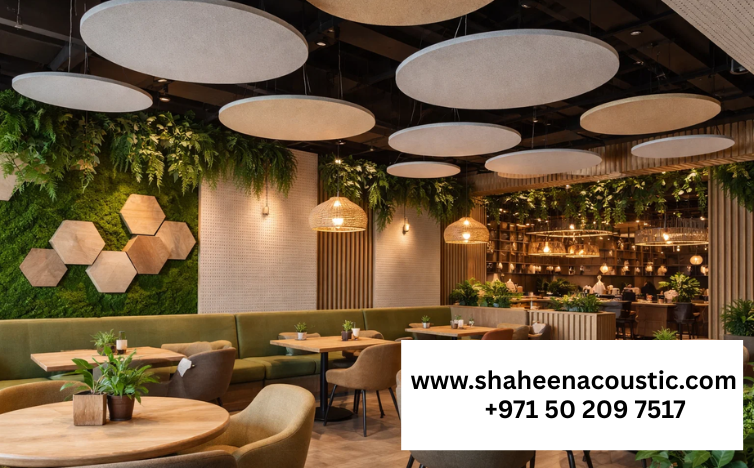
Walk into a busy restaurant during peak hours, and you’ll notice something quickly. People aren’t talking. They’re competing. Voices rise. Background noise builds. And within minutes, the entire space turns into what acoustic experts call the “café effect”—a chain reaction where everyone speaks louder just to be heard. That might feel like energy. But for customers, it often feels like discomfort.
And that discomfort costs businesses more than they realize.
Why Restaurant Noise Becomes a Real Problem
Most modern restaurants are designed to look good, not sound good.
Think about it:
- Concrete floors
- Glass walls
- Metal fixtures
- Open ceilings
All of these surfaces reflect sound instead of absorbing it. The result is excessive reverberation—sound bouncing endlessly around the room.
Studies show that restaurant noise levels often reach 70–80 dB or higher, making normal conversation difficult.
For context:
- Comfortable conversation: 55–65 dB
- Typical restaurants: 70–90 dB
That gap is exactly where the problem begins.
The Real Impact on Customers and Business
Noise doesn’t just affect ears—it affects experience.

When acoustics are poor:
- Customers struggle to hear each other
- Conversations become tiring
- Dining feels rushed instead of relaxed
Research in restaurant acoustics shows that speech intelligibility and reverberation directly influence customer satisfaction.
And here’s the part most businesses overlook:
Noise is one of the top reasons for negative reviews.
If customers can’t enjoy their time, they don’t come back. Simple as that.
What Actually Causes the Noise Problem
Restaurant noise is rarely caused by one thing. It’s a combination.
The biggest contributors include:
- Hard, reflective materials
- High ceilings with no treatment
- Open kitchen layouts
- Closely spaced seating
- Background music layered over crowd noise
One acoustic case study even found that typical restaurant interiors absorb only about 5% of sound, meaning 95% continues bouncing around the space.
That’s not a small issue. That’s the entire problem.
The Core Soundproofing Solutions That Actually Work
Fixing restaurant acoustics doesn’t mean making the space silent. It means controlling sound so it feels comfortable.
Acoustic Wall Panels: The First Fix
Wall panels are one of the most effective ways to reduce echo.
They absorb reflected sound waves and prevent them from bouncing across the room. This immediately improves clarity and reduces overall noise levels.
In restaurants with large wall surfaces, panels can make a noticeable difference within days of installation.
Ceiling Treatments: Where Most Noise Lives
Ceilings are often the biggest missed opportunity.
Sound travels upward, reflects, and comes back down—amplifying noise in the process.
Solutions like:
- Ceiling baffles
- Acoustic ceiling rafts
help absorb this reflected sound and reduce the overall “loudness” of the space.
This is especially important in restaurants with high or exposed ceilings.
Upholstered and Soft Finishes
Not everything has to be a technical installation.
Soft materials naturally absorb sound:
- Upholstered seating
- Curtains
- Carpets or rugs
These elements reduce harsh reflections and help balance the acoustic environment without affecting design.
Acoustic Partitions and Layout Control
Sometimes, the issue isn’t just noise—it’s how it travels.
Acoustic partitions help:
- Break up large open spaces
- Reduce sound spread between tables
- Create more private dining zones
This improves both comfort and perceived quality of the space.
Controlling the “Café Effect”
The café effect is one of the biggest challenges in hospitality acoustics.
As noise increases, people speak louder. That increases noise further. And the cycle continues.
Acoustic treatments break this cycle by reducing background noise, so people naturally speak at lower volumes.
The result? A calmer, more controlled environment—without losing energy.
Why One Solution Alone Isn’t Enough
Here’s where many restaurants make a mistake.
They install a few panels and expect full results.
But sound behaves in multiple ways:
- It reflects
- It spreads
- It amplifies
That’s why effective soundproofing requires a combination of solutions:
- Panels for walls
- Treatment for ceilings
- Soft materials for absorption
- Layout adjustments for control
Only then does the space actually improve.
Balancing Atmosphere and Comfort
Let’s be clear—restaurants shouldn’t be silent.
A completely quiet space feels unnatural.
The goal is balance:
- Enough sound for energy
- Not so much that it creates discomfort
Industry insights show that successful restaurants maintain a lively atmosphere without overwhelming conversation.
That balance is what keeps customers comfortable—and keeps them coming back.
Why Professional Acoustic Solutions Matter
Soundproofing a restaurant isn’t just about adding products. It’s about understanding how sound behaves in that specific space.
Every restaurant is different:
- Layout
- Materials
- Ceiling height
- Customer volume
That’s why professional acoustic solutions—like those offered through specialized providers—focus on complete system design rather than isolated fixes.
Because in hospitality, details matter.
And acoustics is one of the most overlooked details of all.
Call us: Contact Shaheen Acoustic Soundproofing Expert in Dubai For Soundproofing: +971 50 209 7517
Final Thought
A restaurant can have perfect food, perfect design, and perfect service. But if customers can’t hear each other, the experience breaks. Soundproofing isn’t just about reducing noise—it’s about creating an environment where people actually enjoy staying.