
Introduction
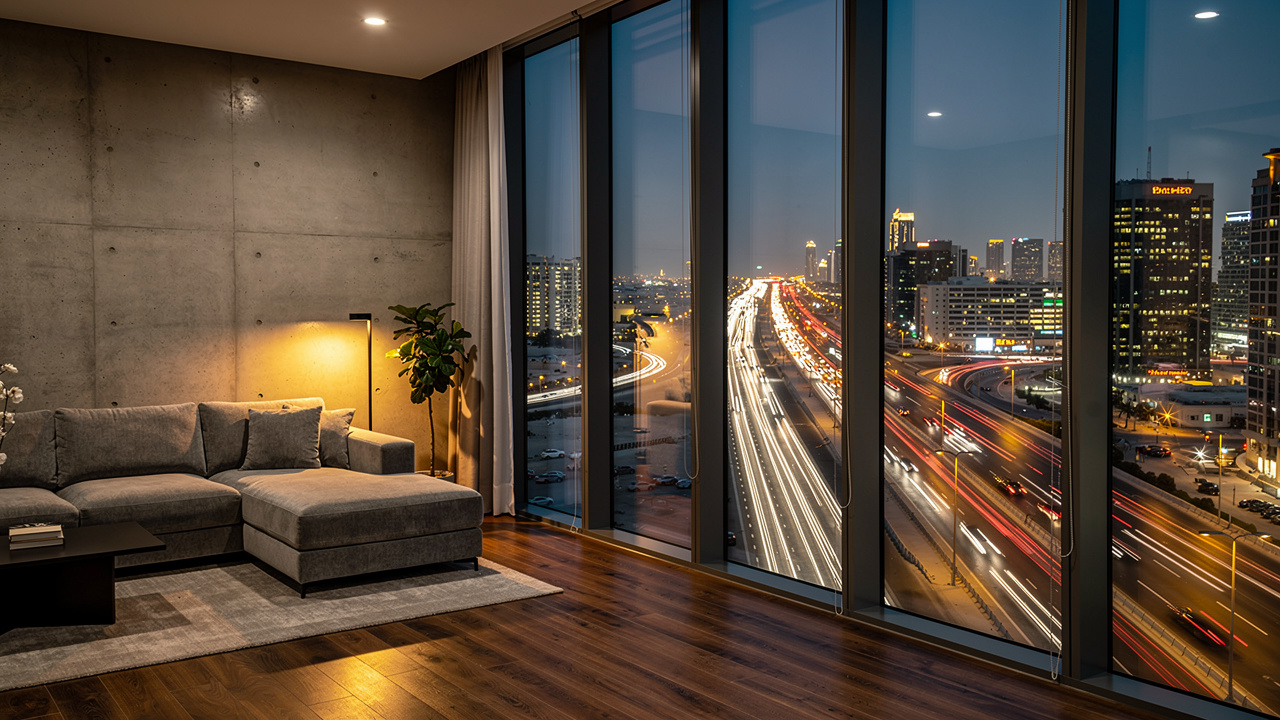
Traffic on Sheikh Zayed Road, late-night construction, and buzzing air conditioners can turn many Dubai apartments into noisy echo boxes. Standard windows rarely keep up, so the best soundproof windows for Dubai apartments in 2026 matter more than ever.
Constant noise wears down sleep, focus, and even long-term health. Thin single-pane glass lets street sounds rush straight into bedrooms and home offices.
In this guide, I walk through the best soundproof window options for Dubai apartments in 2026, from high-performance laminated acoustic glass to renter-friendly inserts and smart gap sealing. I also explain STC ratings in simple language, so you can compare window options with confidence and see where Shaheen Acoustic fits into the picture.
Now let us start with why Dubai apartments feel so loud in the first place.
Key Takeaways
STC ratings describe how well a window blocks airborne sound. Higher numbers mean better noise reduction and quieter rooms. For busy areas in Dubai, I usually aim for windows rated at least STC 35, and sometimes higher when traffic and construction sit right outside.
The best soundproof windows for Dubai apartments in 2026 fall into a few clear groups. Owners often choose laminated acoustic glass or upgraded double- and triple-pane glazing. Renters lean toward acoustic inserts and gap sealing, because these options avoid drilling and stay removable.
Sealing gaps around frames with acoustic sealant and quality weatherstripping is the base for every approach. Even the most advanced glass underperforms when air leaks remain. A careful hour with caulk and seals can sometimes cut a surprising amount of sharp traffic noise.
Shaheen Acoustic combines window sealing, acoustic glass, and supporting treatments into custom acoustic plans. With more than fifteen years in the UAE and over five thousand five hundred projects, the team knows how to match local noise problems to the right mix of materials and installation methods.
Why Noise Is Such A Problem In Dubai Apartments

Noise is a serious problem in Dubai apartments because dense development, busy roads, and constant building work surround many towers. For homes near Downtown Dubai, Dubai Marina, or Business Bay, quiet rooms often feel out of reach. The weakest point in most spaces is almost always the window.
According to the World Health Organization, long-term exposure to road traffic noise above about fifty-five decibels raises risks for heart disease and annoyance. In central districts near Sheikh Zayed Road and Al Khail Road, background noise often sits above that level for many hours each day. Thin glass does little to protect sleep or concentration in those conditions, and research on Photodegradation Mechanisms and Anti-Aging of window coatings shows how Dubai’s UV and heat environment accelerates the breakdown of seals and glazing materials.
Several overlapping noise sources make the problem worse:
Road traffic around Dubai, including areas such as Jumeirah and Business Bay, runs almost twenty-four hours. Trucks, buses, and sports cars create low-frequency rumble that standard glass handles very poorly. Even on higher floors, that deep hum vibrates windows and walls, slipping through simple frames with ease.
Construction activity stays intense around projects in Dubai Marina, Dubai Creek Harbour, and other growth zones. Pile driving, hammering, and saws create sharp mid and high-frequency sound. That kind of noise passes straight through single-pane windows, turning living rooms into unwanted listening booths.
Building services and neighbors add another layer. Lifts, chiller systems, and hallway conversations create a steady background. Noise from neighbors above and below travels through slabs and gaps around front doors, a challenge well documented in studies on Assessment of Air Permeability and watertightness in commercial windows and doors. When you put all these sources together, apartments can sit at indoor levels above fifty decibels, which the National Sleep Foundation notes is far from ideal for stable sleep.
“As a rule of thumb, if you have to raise your voice to talk to someone an arm’s length away, the noise level may be damaging to your hearing over time.”
— Centers for Disease Control and Prevention (CDC)
Standard single-pane windows in older Dubai towers often carry a Sound Transmission Class (STC) of only twenty-two to twenty-five. According to guidance shared by the Centers for Disease Control and Prevention, outdoor levels near seventy decibels are common along heavy traffic routes. That means indoor noise through weak windows can easily stay above fifty decibels, well above the thirty-five to forty decibel range many experts link with restful sleep.
What Are STC Ratings And Why Do They Matter?
STC ratings matter for soundproof windows because they give a simple way to compare how much noise different window systems block. A higher STC number means a window stops more airborne sound from entering your room.
STC, short for Sound Transmission Class, comes from standardized lab tests on building elements such as windows, walls, and doors. Engineers play sounds across many frequencies on one side of a sample, measure what comes through on the other side, and use a formula to convert that performance into a single number, a methodology explored in detail in research on Optimizing Sound Insulation Performance of triple glazing with varying glass and cavity configurations. This makes it easier to compare products from different manufacturers.
For windows in Dubai apartments, four STC bands show up most often:
STC 22–25 – Typical single-pane glass. Gives very little acoustic comfort near busy roads.
STC 28–34 – Standard double-pane insulated glass units (IGUs). Noticeably better than single-pane but traffic still intrudes.
STC 35–38 – Many triple-pane windows and some upgraded IGUs. Loud speech outdoors becomes a faint murmur.
STC 40–45 – Laminated acoustic glass systems with a special interlayer. These can cut perceived noise by more than half compared with single-pane glass.
According to the National Sleep Foundation, bedrooms feel most restful when background noise stays below about thirty-five decibels, so that higher STC band is very helpful near highways or metro lines.
“When you compare window options, always look at the STC rating of the whole unit, not just the glass thickness.”
— Shaheen Acoustic engineering team
For busy Dubai streets, I usually recommend aiming for at least STC 35. For apartments right beside Sheikh Zayed Road, the Dubai Metro, or active construction, STC 40 or higher often makes the difference between constant disturbance and real quiet.
Top Soundproof Window Choices For Dubai Apartments In 2026
The best soundproof windows for Dubai apartments in 2026 fall into a clear ladder of performance and budget. Owners can choose permanent upgrades such as laminated acoustic glass or new insulated glass units (IGUs). Renters and tenants in serviced apartments can use removable acoustic inserts combined with careful gap sealing.
When clients ask which options to consider first, I usually think in this order:
Laminated acoustic glass
Double-pane and triple-pane IGUs
Acoustic window inserts
Acoustic sealants and weatherstripping
Installation quality matters just as much as the glass. Even the highest rated window performs poorly when seals and frames leave small air paths. That is one big reason many residents in Dubai call Shaheen Acoustic to design and install a full acoustic system instead of buying glass alone.
Laminated Acoustic Glass As The Highest Performance Permanent Upgrade

Laminated acoustic glass is the top-tier choice for owners who need strong, long-lasting noise reduction. It uses two panes of glass bonded together with a clear plastic interlayer made from PVB, or polyvinyl butyral. That interlayer acts like a shock absorber for sound waves.
When traffic or construction noise hits the outer glass, the PVB layer flexes slightly and turns some of the vibration into heat. That lowers the energy that reaches the inner pane and the room. With the right thickness, laminated acoustic glass can reach STC ratings around 40–45, which cuts perceived noise more than half compared with single-pane windows.
This type of glass brings other benefits that matter in the Gulf climate:
It blocks around 90–95% of ultraviolet (UV) rays, so furniture and flooring fade more slowly under Dubai sun.
If anything strikes the window, the interlayer holds broken pieces together, which improves safety and security in high-rise buildings.
The extra mass helps reduce some low-frequency rumble from heavy traffic and chillers.
Laminated units are heavier than standard glass and need precise sealing to perform well. Because of that, I always recommend professional design and installation for Dubai projects. At Shaheen Acoustic, we usually pair laminated glass with upgraded seals and frame treatments so clients receive the full acoustic value they paid for.
Double Pane And Triple Pane IGU As The Best Step Up From Single Glazing
Double-pane and triple-pane insulated glass units (IGUs) give a strong step up from single-pane glass at a moderate price. A double-pane unit uses two glass sheets with an air or argon-filled gap between them. That gap disrupts sound waves and also improves thermal insulation.
Typical double-pane windows reach STC values between about twenty-eight and thirty-four. For many Dubai apartments that currently use single-pane glass, this upgrade alone makes street noise far more manageable. Triple-pane IGUs add a third sheet of glass and another gas-filled cavity, pushing typical STC values into the mid-thirties.
On top of quieter rooms, the extra layers reduce heat transfer, and experimental work on Sustainable Increase in Thermal resistance through air cavities created by window shutters confirms that even modest additional layers meaningfully improve insulation performance. The United States Department of Energy notes that high-performance double- and triple-pane windows can cut energy loss through glass by twenty-five to fifty percent compared with single-pane units. In a city where air conditioning runs much of the year, that extra insulation can mean noticeable savings on cooling bills.
For many owners, this option offers a good balance:
Better noise control than single-pane glass
Lower cooling costs
Less weight than thick laminated acoustic glass
When Shaheen Acoustic assesses a flat, we often include upgraded IGUs in mid-range proposals, especially where traffic noise is steady but not extreme.
Acoustic Window Inserts As The Best Option For Renters
Acoustic window inserts help renters and short-term residents enjoy quieter rooms without changing the building. These inserts are clear panels, usually made from thick acrylic or glass, that press snugly into the inside of the existing frame. A soft compression gasket around the edge forms an almost airtight seal.
Because you create a second pane with an air gap in between, the insert works like an extra insulated layer. On older single-pane windows, this often creates a dramatic drop in traffic noise and outdoor chatter. On newer double-pane windows, inserts still help, but the gain is smaller because the base glass already blocks more sound.
The main advantages for Dubai tenants are:
No drilling or screws – helpful when landlords restrict changes
Removable and reusable – you can take them when you move
Fast installation – many inserts press-fit in minutes once measured correctly
For expat families who change apartments every few years, that portability can be more attractive than paying for permanent replacement windows in a rented flat. Shaheen Acoustic often recommends inserts to clients who want better sleep now but expect to relocate within a short period.
Acoustic Sealants And Weatherstripping As The Essential First Step For Everyone

Acoustic sealants and weatherstripping form the foundation for every soundproof window plan. If air leaks around frames, sound will slip through those same gaps, no matter how good the glass is. In many Dubai towers, the original caulk and foam strips have dried out under heat and sun.
I like to treat gap sealing as a small project on its own:
Find the leaks. Move a hand slowly around the full frame on a breezy day. When your fingers feel a draft, or a small flame flickers near the frame, air and sound are squeezing through that joint. Marking these spots makes the sealing work much faster.
Remove failed sealant. Gently scrape away loose or cracked caulk from the inside edges of the frame. Then run a bead of acoustic sealant along the joints where the frame meets the wall. Unlike standard caulk, this material stays flexible over time, so it moves with the building during hot and cooler periods without cracking open again.
Upgrade weatherstripping. Replace worn foam strips around the moving sash with dense rubber compression seals. When the window locks, that tighter contact adds noticeable resistance to both drafts and high-frequency noise.
Close small gaps. Fill any tiny cracks at the sill and around trims. These may not look serious, but together they add up to a surprising total gap area.
For many clients, this simple care, which costs around twenty-five to thirty-five dollars per window in materials (roughly ninety to one hundred thirty AED), already softens traffic noise enough to improve sleep. At Shaheen Acoustic, we include careful sealing with almost every window project, because it supports every other acoustic upgrade.
How Shaheen Acoustic Helps Dubai Residents Find The Right Option

Shaheen Acoustic helps Dubai residents, business owners, and project managers move from guesswork to clear acoustic plans. Instead of picking a random product online, clients receive a full assessment of how noise enters their space and which window setups will make the biggest difference.
The team has more than fifteen years of local experience across Dubai, Abu Dhabi, Sharjah, and other Emirates. Over five thousand five hundred completed projects range from apartments near Dubai Marina and Business Bay to offices in DIFC and educational spaces in Al Ain. That history means the engineers and installers have seen most noise scenarios that appear in Gulf buildings.
During a typical visit, we:
Listen to the space at different times of day
Ask about sleep, work patterns, and the most disturbing sounds
Measure or estimate key noise levels indoors and outdoors
Inspect windows, doors, and walls for weak points and air leaks
We then suggest a layered approach that might mix laminated acoustic glass, upgraded double or triple glazing, professional door and window sealing, and acoustic wall or ceiling panels where needed. Because we design the full system, we match glass type, frame treatment, and supporting materials so they work together rather than fight each other.
According to the World Bank, more than eighty-five percent of people in the United Arab Emirates now live in urban areas. That level of city living makes qualified acoustic planning important for health and comfort, a connection reinforced by research on Analysis of BIPV in UAE buildings, which highlights how integrated building envelope strategies — including glazing choices — directly influence energy load and occupant wellbeing in the Gulf region. Shaheen Acoustic uses high-quality, often eco‑friendly materials, and a trained installation team that understands both UAE building methods and harsh climate. The result is a quieter home or office that still looks clean and modern.
Start Living In Silence: Your Next Step Toward A Quieter Dubai Home

A quieter Dubai home rarely comes from a single purchase. The best results arrive when we combine good glass, careful frame work, and smart room design. That is why the best soundproof windows for Dubai apartments in 2026 sit inside a broader plan instead of standing alone.
For many clients, a simple order of steps works well:
Seal gaps first. Acoustic sealant and fresh weatherstripping are fast, affordable, and renter friendly.
Upgrade the main windows.
Laminated acoustic glass for owners who want top performance
New insulated glass units for mid-range budgets
Removable acoustic inserts for tenants
Add interior layers where needed. In very noisy bedrooms, some residents also add thick window plugs or heavy acoustic curtains as an extra layer at night.
“Sleep is the golden chain that ties health and our bodies together.”
— Thomas Dekker
Even modest improvements can change how a room feels. Reducing just a few decibels of outside noise often makes you much less aware of traffic and construction.
Conclusion
Noise in Dubai towers does not have to feel permanent. By reading STC ratings, sealing obvious leaks, and choosing the right window type for your ownership status and budget, you can cut road and construction noise to a much more comfortable level.
If you want help choosing or installing the best soundproof windows for Dubai apartments in 2026, Shaheen Acoustic is ready to design a custom acoustic plan for your space. A short conversation with the team can be the first clear step toward calmer days and quieter nights.
Frequently Asked Questions
Question: What is a good STC rating for a Dubai apartment window near a busy road?
A good STC rating for a noisy Dubai road is at least 35. For apartments facing highways, metro lines, or active construction, I usually recommend windows closer to STC 40 or 45, combined with careful gap sealing around the frames.
Question: Can I install soundproof windows in a rented Dubai apartment without permission?
You can usually add acoustic window inserts in a rented Dubai apartment without formal permission. These inserts press into the existing frame and come out again when you move. Renter-friendly options also include better weatherstripping and, with care, acoustic sealant along interior joints.
Question: Do soundproof curtains actually block noise in Dubai apartments?
Most soundproof curtains do not block traffic or construction noise on their own. They mainly absorb sound inside the room and reduce echo. Heavy, purpose-built acoustic curtains and panels can slightly reduce outside noise, but they still work best when paired with good glass and sealed frames.
Question: How much does professional soundproof window installation cost in Dubai?
Costs vary widely by window size, glass type, and how much frame work is needed. Laminated acoustic glass and new insulated glass units cost more than inserts or basic sealing. The best way to understand pricing for your apartment or office is to ask Shaheen Acoustic for a site visit and detailed quote.
Question: Is laminated acoustic glass suitable for Dubai’s hot climate?
Yes. Laminated acoustic glass works very well in Dubai heat. It blocks ninety to ninety-five percent of ultraviolet rays, which protects interiors from sun damage. When we pair it with the right sealants and frames that handle thermal movement, it delivers strong acoustic and comfort benefits over many years.