
Introduction
Many recording studios in Dubai struggle with harsh echo and uneven sound because of concrete walls and large glass areas. Without proper sound diffuser panels, even high‑end microphones and monitors cannot fix the room. You end up with thin vocals, boomy bass, and long editing days.
The problems are even stronger in residential towers and warehouse units, where hard floors, tall ceilings, and wide windows throw sound back from every direction. Reflections arrive at your ears milliseconds apart and smear every mix decision.
Sound diffuser panels fix those reflections by scattering sound instead of just soaking it up, so your room stays clear but still feels alive.
This guide explains what they are, how they work, why they matter so much in Dubai, where to place them, and how Shaheen Acoustic turns tricky rooms into reliable recording spaces.
Key Takeaways
Sound diffuser panels spread reflections around the room, stop harsh echo, and keep studios sounding natural.
Dubai buildings use a lot of concrete and glass, so they reflect sound strongly; diffusers calm that energy without making rooms dull.
Proper diffusion improves clarity for music, podcasts, and voice-over, cuts mixing guesswork, and saves time in post.
Shaheen Acoustic combines diffusers, absorbers, and bass control so each room meets both sound needs and studio style.
What Are Sound Diffuser Panels and How Do They Work?

Sound diffuser panels are acoustic panels with shaped faces that scatter sound waves instead of bouncing them straight back. In a recording studio, they turn sharp reflections into a softer, more even sound field that feels natural to work in. That makes them different from foam and other absorber panels that mainly soak up energy.
According to the World Health Organization, long exposure to unwanted noise is linked to higher stress and sleep problems, which shows how much sound quality affects people in enclosed spaces. In studios in Dubai Media City or Business Bay, the concern is not just comfort but also accurate mixing for platforms like Spotify and YouTube.
Here is a simple comparison between the two main panel types you will hear about.
| Feature | Sound Diffuser Panels | Acoustic Absorber Panels |
|---|---|---|
| Main Action | Scatter sound energy | Turn sound into heat |
| Effect on Room Feel | Keeps space lively | Makes space drier and quieter |
| Best Locations | Rear wall, upper side walls, some ceilings | First reflection points, early ceiling hits |
| Risk If Overused | Room may feel slightly bright | Room can feel lifeless and uncomfortable |
Why Do Dubai Recording Studios Need Sound Diffuser Panels?

Dubai recording studios rely on sound diffuser panels because local buildings are filled with hard surfaces that throw sound around. Concrete cores, glass facades, marble floors, and exposed ceilings create long, sharp reflections that compete with every vocal take and guitar track. Without diffusion, you hear the room almost as much as the performance.
Many studios sit inside residential towers in areas like Jumeirah Lake Towers, Dubai Marina, and Downtown Dubai. These apartments were never designed as control rooms. Parallel walls and large windows create flutter echo and standing waves that color the low end. If you rely on headphone checks and heavy guessing in Pro Tools or Logic Pro, it often means extra revisions later.
Studios in Dubai usually fight three linked issues:
Flutter echo between parallel walls that makes claps or hand clicks ring far longer than they should.
Low‑frequency buildup along boundaries that hides kick and bass detail and makes mixes sound muddy outside the room.
Over‑absorption from too much foam, which removes life from the room and causes ear fatigue during long sessions.
Diffusion is the missing piece that smooths reflections without stripping away all of the room’s character.
It also helps to separate acoustic treatment from soundproofing:
Acoustic treatment with diffusers, absorbers, and bass traps shapes the sound inside the room.
Soundproofing uses dense layers, floating floors, and isolation details to stop noise from passing through walls and ceilings.
Shaheen Acoustic designs both, but sound diffuser panels belong firmly in the treatment category.
“You cannot fix a bad room with plug-ins alone. The physics in the space has to be right first.”
— Ethan Winer, audio engineer and author
For studio owners across Dubai and the wider UAE, that physics starts with a smart balance of diffusion and absorption rather than foam on every wall.
Where Should Sound Diffuser Panels Be Placed in a Recording Studio?

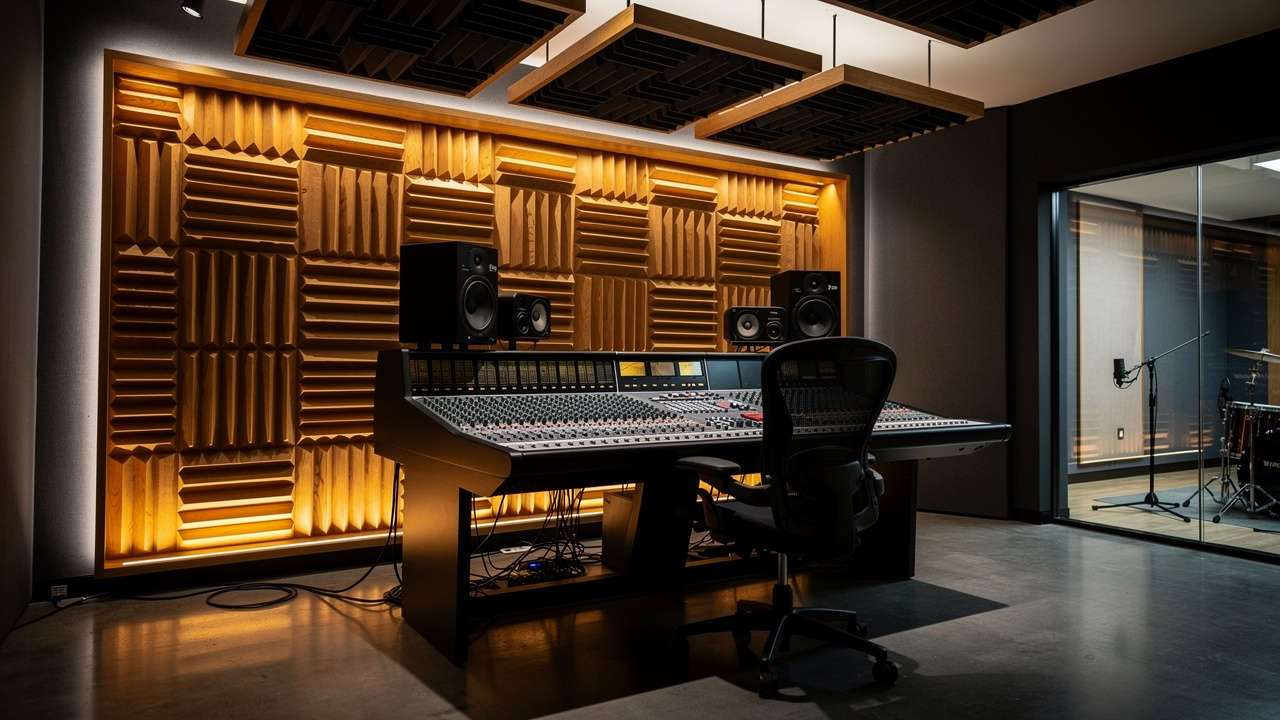
Sound diffuser panels usually work best on the rear wall and upper side walls of a control room, with some designs also installed on the ceiling. This layout supports the LEDE approach, where the front of the room is more absorbed and the rear stays more lively and spacious. When placed correctly, diffusers give you clear direct sound from your monitors, joined by pleasant late reflections.
I
Key zones usually look like this:
Rear wall is the main area for sound diffuser panels. They sit roughly from ear height up to near the ceiling and break up reflections that would otherwise bounce straight back to the mix position. This helps stereo imaging, headroom, and reverb depth.
Upper side walls benefit from a mix of absorption at ear level and diffusion higher up. Diffusers in the upper band scatter late reflections sideways. That gives singers and clients near the back of the room a more even sound and avoids a narrow, boxed feel near the mix chair.
Ceiling above the mix area often holds a cloud of combined absorbers and diffusers. In podcast and voice-over rooms across Dubai and Sharjah, ceiling treatment cuts vertical reflections that can blur speech, a principle also explored in studies on Noise Reducing Textile Diffuser systems for building ventilation that demonstrate how diffuser geometry shapes directional sound control. Shaheen Acoustic often uses lightweight ceiling panels in studios where structural drilling is limited.
Corners and boundaries are ideal places for bass traps rather than diffusers. Once the low end is under control with proper traps, mid and high frequency diffusers can work far more accurately. The full system behaves like one tuned instrument instead of random parts.
Tip from the Shaheen Acoustic design team:
“Start with the rear wall and bass traps. Once those are right, it becomes much easier to hear where extra diffusion or absorption is really needed.”
Before any drilling or mounting starts, Shaheen Acoustic runs a room analysis that checks dimensions, speaker position, and listening spots so diffusers land exactly where physics says they matter most.
How Shaheen Acoustic Delivers Professional Sound Diffuser Panel Systems in Dubai

Shaheen Acoustic delivers recording studio acoustic treatment by blending sound diffuser panels with absorbers, bass traps, and ceiling elements in one planned system. The team focuses on Dubai and UAE buildings, so they already understand how concrete cores and glass partitions behave. That local experience shortens the path from first call to finished room.
Shaheen Acoustic usually designs studio packages with several core elements:
Sound diffuser panels on rear walls, upper side walls, and sometimes ceilings. Each panel type and depth is chosen for the room size and target frequency range, informed by research such as Acoustic performance optimization of natural-fiber micro-perforated panels, which highlights how composite materials can be tuned for specific frequency outcomes. This keeps reverb natural and creates believable stereo and surround fields for formats from stereo to Dolby Atmos.

Acoustic ceilings and clouds that manage vertical reflections above mix positions and vocal zones. In high-ceiling lofts in Al Quoz or Jebel Ali, lightweight clouds create a lower acoustic ceiling without heavy construction, which shortens reverb time and tightens timing cues for engineers.
Bass traps and absorber panels that treat low and mid frequencies along corners and first reflection points. By calming boom and ringing in roughly the 60 to 300 Hz range, producers hear kick drums, 808 lines, and spoken voice tone more accurately on monitors like Genelec or Yamaha.
Custom finishes and printed panels that keep studios photogenic for Instagram, YouTube, and client sessions. Panels can match corporate colors, wood veneer schemes, or podcast brand artwork, which matters for rooms in coworking hubs and media centers.
With more than 15 years in the UAE market and over 5,500 completed projects, Shaheen Acoustic has already worked in many of the same tower types and villa layouts that new clients own. That history lets them predict common issues before they appear and stand behind their work with clear warranties and realistic installation timelines.
“Good studios are not silent rooms. They are rooms where every reflection is shaped to support the work.”
— Trevor Cox, Professor of Acoustic Engineering, University of Salford
For Dubai creators who want reliable, repeatable sound, that careful shaping is exactly where Shaheen Acoustic focuses its effort.
Wrapping Up
For recording studios in Dubai, sound diffuser panels are not a luxury add-on. They are a key part of taming concrete and glass while keeping rooms musical and comfortable. When combined with bass traps and well-placed absorbers, they give you mixes that travel well from Business Bay to Berlin.
Shaheen Acoustic designs and installs this full acoustic picture for home studios, podcast rooms, and commercial facilities across the UAE. If you are tired of guessing how your tracks will sound outside your room, a free consultation is a practical step toward a studio that finally tells you the truth.
Frequently Asked Questions
What Is the Difference Between a Sound Diffuser Panel and an Acoustic Foam Panel?
A sound diffuser panel scatters sound in many directions, while acoustic foam mainly absorbs sound energy. Diffusers keep rooms lively and natural, which is ideal for music and voice work. Foam panels reduce echo and reverberation but can make a room feel dull if overused. Most professional studios use both in planned positions.
Can Sound Diffuser Panels Be Used in Small Home Recording Studios in Dubai Apartments?
Yes. Sound diffuser panels work well in small Dubai apartments when sized and placed correctly. Shallow diffusers above the mix position and on the rear wall can control flutter echo without crowding the room. Shaheen Acoustic often combines them with slim bass traps and ceiling panels to suit tower layouts and building rules.
How Long Does It Take to Install Sound Diffuser Panels in a Dubai Recording Studio?
Small podcast rooms or vocal booths usually finish within one or two days. Medium control rooms may need several days, especially if ceiling clouds and bass traps are included. Shaheen Acoustic shares a clear schedule before work begins so studio owners can plan around sessions and keep downtime low.
Do Sound Diffuser Panels Also Help With Soundproofing?
No. Sound diffuser panels treat sound inside the room but do not stop noise passing through walls. Soundproofing uses dense layers, sealed gaps, and structural details to block transmission. According to OSHA, high noise levels over time harm hearing, so many studios need both isolation and internal treatment. Shaheen Acoustic designs each part separately.
Are Sound Diffuser Panels Customizable to Match Studio Interior Designs in Dubai?

Yes. Sound diffuser panels from Shaheen Acoustic can match almost any studio design style. Clients choose colors, wood finishes, and patterns that fit branding or home decor. Custom printed acoustic panels can show logos or artwork while they control echo. This keeps studios camera-ready for streaming and client visits without giving up acoustic performance.