
Introduction
Office floors and hotel corridors across the UAE often feel loud, echo-filled, and tiring. Hard marble and tile let every footstep travel. Acoustic carpets change that experience by absorbing sound before it spreads through the building.
Noise in shared spaces keeps staff distracted and guests awake. Sleep suffers, calls sound messy, and every trolley in a corridor becomes a problem for sleep quality and concentration.
Acoustic carpets are engineered carpets that reduce impact and airborne noise while still looking refined. In offices they support focus and privacy, and in hotels they support quiet rooms and premium guest comfort. This article explains how acoustic carpets work, why they matter so much in offices and hospitality venues, how to select the right system, and how Shaheen Acoustic helps projects across Dubai and the wider Gulf.
Next comes a quick snapshot of the main points, then a closer look at how these carpets support business goals on every floor.
Key Takeaways
Key points from this guide help decision makers compare flooring options quickly. They highlight how acoustic carpets support comfort, productivity, and guest satisfaction without major construction work.
Acoustic carpets reduce both impact and airborne noise. They absorb footsteps at floor level and also soften voices and general background sound.
Offices feel calmer and more focused with acoustic carpets. Staff hear colleagues more clearly and experience fewer distractions between workstations.
Hotels protect sleep and privacy with acoustic carpets. Corridors stay quieter during busy periods and guest rooms feel more private and restful.
Acoustic carpets offer rich design options and simple installation. They support phased renovation programs so business activity continues with minimal disruption.
What Are Acoustic Carpets and How Do They Work?

Acoustic carpets are engineered floor coverings that absorb sound and limit noise transfer inside busy buildings. They rely on layered construction to deal with footsteps, rolling trolleys, and voices in offices and hotels. Compared with hard floors such as marble or porcelain tile, acoustic carpets reduce echo and vibration instead of reflecting it back into the room.
Most high performance acoustic carpets use three main layers working together:
Surface fiber layer cushions footsteps and slows the impact energy from shoes, chair wheels, and luggage.
Backing layer adds stability so the carpet sits flat and supports the fiber face while helping with basic sound control.
Insulation core beneath those layers targets impact sound that would otherwise pass straight into the concrete slab.
When a footstep lands on hard tile in a Dubai office tower, the impact sends vibration through the slab and into neighboring rooms. With acoustic carpets on top, the fiber and insulation layers turn a large share of that vibration into a small amount of heat. Research into the acoustic performance of tufted carpets, including the Acoustic Performance of Tufted carpets study published in Materials (2025), confirms that engineered carpet systems with underlayment can reach Noise Reduction Coefficient (NRC) values around 0.30 or higher, meaning they absorb a meaningful share of sound that hits them.
Shaheen Acoustic designs acoustic carpets with thickness between 6 and 12 millimeters and Noise Reduction Coefficient ratings up to 0.30. In real UAE projects that means smaller echoes in open office floors and calmer corridors in high rise hotels. Hard floors still appear in lift lobbies or wet areas, yet acoustic carpets in work and guest zones carry most of the acoustic workload.
How Do Acoustic Carpets Benefit Offices Specifically?

In office buildings, acoustic carpets reduce floor impact noise, soften echo, and support steady concentration. They also help speech privacy in open plan areas and meeting rooms, which cuts distraction and stress for teams that share space.
Modern offices across Dubai, Abu Dhabi, and Sharjah rely on glass, concrete, and open ceilings. These finishes look modern but bounce sound in every direction. A ringing phone at one desk reaches several nearby teams. Chair wheels on hard flooring add constant impact noise, and footsteps near circulation paths disturb people on calls or in focused work.
Acoustic carpets interrupt that cycle at floor level. The fiber surface slows the pressure of each step, while the insulated backing limits how much of that energy reaches the slab. Research from Leesman shows that noise ranks among the most common complaints in open offices, and softer flooring is one of the most effective physical changes for staff comfort.
Office acoustics are not only about comfort. Clear speech helps teams make better decisions and protect sensitive information. Lower background noise helps meeting room microphones pick up voices without raising volume, which helps remote participants as well. Guidance from World Green Building Council links better acoustics with higher reported productivity and well being in workplaces, which supports the case for acoustic carpets on large office floors.
Shaheen Acoustic supplies acoustic carpets and underlays for corporate offices, government buildings, and co working spaces across the UAE and the Gulf. Their systems help reduce floor noise between levels and across open plan floors so teams can focus on work rather than constant sound, and facility managers gain a practical upgrade that fits within regular refurbishment cycles.
What Makes Acoustic Carpets Different From Standard Office Flooring?
Acoustic carpets differ from standard carpet and hard flooring because they are engineered around sound control rather than only appearance. They pair dense Nylon 6 and Polyester fiber with multi layer felt, rubber, or foam backing that targets both impact and airborne noise.
Here is a simple comparison that shows the gap between options often seen in UAE offices.
| Feature | Acoustic Carpet | Standard Carpet | Hard Flooring Tile or Marble |
|---|---|---|---|
| Noise control | Engineered layers absorb impact and airborne sound well | Thin pile softens some sound only | Reflects most sound back into the room |
| Underfoot comfort | Noticeable cushioning that reduces fatigue | Moderate comfort under light use | Hard surface with no give for feet |
| Thermal insulation | Extra layers help keep cooled air near floor level | Basic insulation only | Conducts heat quickly through the slab |
| Design flexibility | Wide color and pattern range with acoustic backing options | Style options yet limited acoustic performance | Polished look with strong reflections and little noise control |
According to the Carpet and Rug Institute, cushioned carpet improves comfort and reduces muscle fatigue compared with hard surfaces, which matters on large office floors where staff spend long hours on their feet. In open plan layouts this extra comfort combines with better sound control to support more settled, productive teams.
Why Are Acoustic Carpets Essential for Hotels and Hospitality Venues?

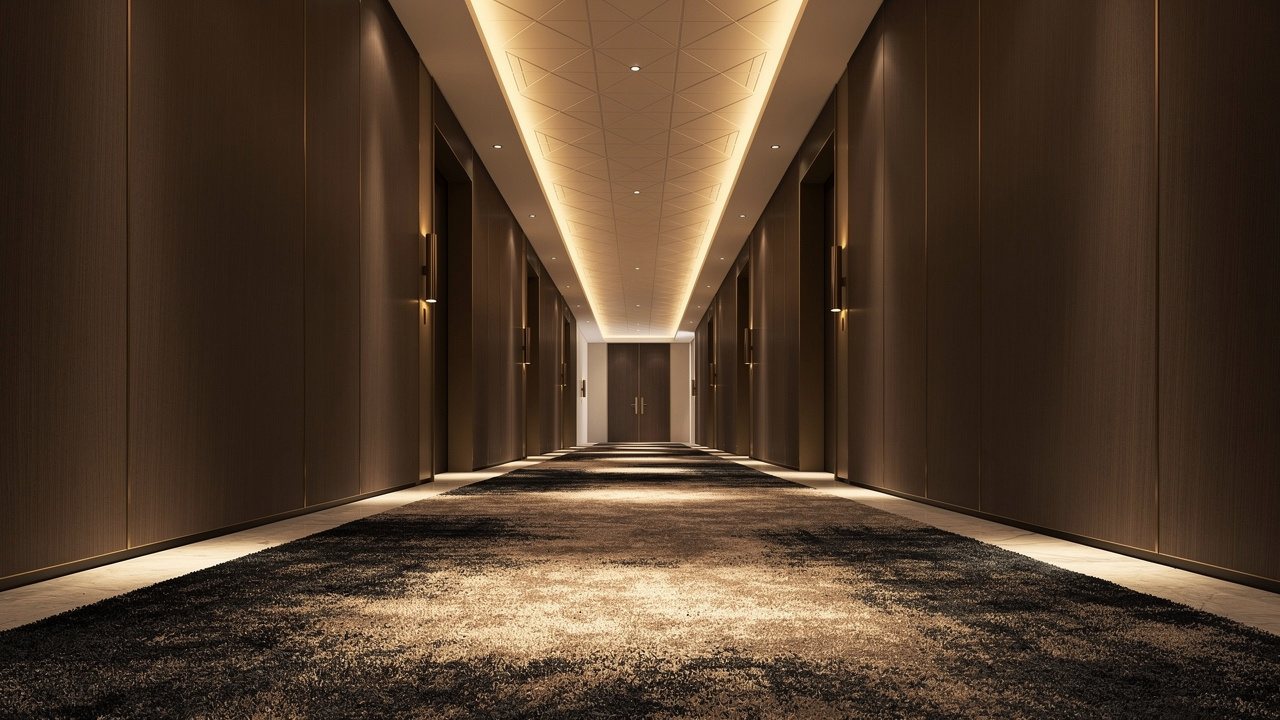
In hotels and hospitality venues, acoustic carpets protect guest sleep, privacy, and perceived quality. They cut corridor footstep noise, reduce sound between floors, and still allow interior designers to reach the luxury style expected across UAE properties.
Noise complaints appear often in guest reviews. A study by J.D. Power on hotel guest satisfaction highlights unwanted noise as one of the most common issues that lowers scores. In high rise hotels along Sheikh Zayed Road or on Palm Jumeirah, noise from corridor traffic, lifts, and housekeeping trolleys can travel easily through hard floors and walls.
“The World Health Organization highlights sleep disturbance as one of the most harmful effects of noise exposure in buildings.” – World Health Organization, Guidelines for Community Noise
Acoustic carpets change how those corridors behave. Dense fiber and backing absorb energy from rolling luggage and high heels before it reaches guest room doors. Inside rooms, wall to wall acoustic carpets work with underlay to reduce the sound that passes through the slab from the floor above. Guests hear less of the room above them, which directly supports deeper sleep and better reviews.
Hospitality spaces also need visual warmth. Guests expect lobbies, lounges, and ballrooms in Dubai or Abu Dhabi to feel refined and memorable. Shaheen Acoustic offers acoustic carpets in a wide color and texture range so designers can follow brand palettes without losing acoustic performance. Their products meet international fire safety standards, which is essential for hotel operators working under UAE Civil Defense rules and global brand guidelines.
Thermal comfort forms another advantage. Carpeted floors feel less cold underfoot, which allows more relaxed set points for air conditioning. Guidance from World Green Building Council notes that efficient envelopes and finishes support lower energy use in buildings, and carpeted areas can contribute by limiting unwanted heat transfer through slabs.
What Should You Look for When Choosing Acoustic Carpets for Commercial Spaces?

Choosing acoustic carpets for offices or hotels means balancing acoustic performance, durability, safety, and design. The right combination depends on where the carpet sits, how many people use the area, and how much privacy that zone needs.
Several core factors help project teams make a confident choice.
Acoustic rating comes first. Look for published Noise Reduction Coefficient values, and remember that around 0.30 already delivers clear benefits in offices and hotels. Check impact sound test data when possible, especially for multi story projects. Combined carpet and underlay systems often cut impact sound by more than twenty decibels according to studies shared by the Acoustical Society of America.
Backing material and thickness shape real world performance. Felt, rubber, and foam backings all cushion impact differently, and thicker systems in the 6 to 12 millimeter range from Shaheen Acoustic work well in corridors and open office floors. Thinner profiles may suit doors with limited clearance, while thicker builds support heavy traffic and trolley routes.
Fiber type, pile density, and fire performance matter in busy buildings. Dense Nylon 6 and Polyester blends keep their shape under frequent use, so the carpet maintains its sound absorbing pile height. Always ask for international fire test reports, which are mandatory for offices and hotels in Dubai and across the Gulf. Safer fibers and backing help building owners meet approvals smoothly.
Maintenance needs and installation method affect lifetime cost. Acoustic carpets that clean easily and resist stains handle sand and dust common in the UAE. Modular tiles simplify carpet changes under workstations, while broadloom products suit guest rooms and corridors. Non disruptive installation methods let hotels and offices upgrade floors zone by zone without closing entire levels.
Shaheen Acoustic supports these choices with a full acoustic package around the floor. Projects can combine acoustic carpets with acoustic floor underlay, stretch fabric wall panels, sound insulation panels, and custom printed acoustic panels for branding. That mix serves offices in DIFC, hotels along Dubai Marina, and mixed use buildings across Saudi Arabia, Qatar, and Kuwait.
“Acoustic carpet deals with one of the most common and overlooked sources of commercial noise, floor level impact sound in multi story buildings. Shaheen Acoustic engineers every layer of the carpet system to intercept that sound before it spreads.” – Shaheen Acoustic Technical Team
Guidance from the World Health Organization links long term noise exposure with higher stress and sleep disturbance, which shows why serious acoustic planning pays off in staff wellbeing and guest comfort.
Putting It All Together

Acoustic carpets give offices calmer, more productive floors and give hotels quieter, more restful rooms and corridors. They handle impact noise at the source, soften echo inside busy spaces, and still support the refined interior designs expected across the UAE and wider Gulf.
Shaheen Acoustic combines engineered carpet systems, acoustic underlays, and complementary wall treatments with local installation teams who understand regional building styles. Their carpets deliver tested Noise Reduction Coefficient values up to 0.30, durable Nylon 6 and Polyester blends, and fire performance that fits commercial and hospitality codes.
For office towers, co working spaces, or hotels planning upgrades, acoustic carpets form a practical path to quieter spaces without major structural work. To discuss a project, contact Shaheen Acoustic at +971 50 209 7517 or visit shaheenacoustic.com for a detailed acoustic flooring consultation.
Frequently Asked Questions
A few common questions often arise when offices and hotels first look at acoustic carpets. These answers summarize key points so project teams can move forward with more confidence.
Question 1: What is the difference between acoustic carpet and regular carpet?
Acoustic carpet uses a multi layer structure that actively absorbs impact and airborne noise, while regular carpet mainly softens footsteps a little. Acoustic products combine dense pile, engineered backing, and an insulation core — a construction approach validated by published research including the Acoustic Performance of Tufted carpets study — and they carry published performance ratings such as Noise Reduction Coefficient that regular carpets rarely achieve. Regular carpets rarely provide that level of tested control or documented performance.
Question 2: Can acoustic carpets be installed in hotels without major renovation?
Yes, acoustic carpets usually install without structural changes or heavy construction work. Existing hard floors often stay in place, and new carpet plus underlay sits on top. Installers can work floor by floor or wing by wing, which lets hotels operate almost normally during the upgrade and makes it easier to program work around occupancy.
Question 3: How much noise can acoustic carpets reduce in an office building?
Acoustic carpets in offices can reduce impact noise from footsteps by more than twenty decibels when paired with quality underlay, based on industry test data. Shaheen Acoustic carpets reach Noise Reduction Coefficient values up to 0.30, so they also reduce echo and background sound on the same floor, which helps focus, speech clarity, and call quality in open plan areas.
Question 4: Are acoustic carpets available in designs suitable for luxury hotel interiors?
Yes, acoustic carpets come in many colors, textures, and patterns that work well in luxury interiors. Shaheen Acoustic offers options for grand lobbies, calm guest rooms, and premium corridors, so designers can match brand palettes while still meeting acoustic goals. Performance stays high even with very refined visual styles and complex layouts.
Question 5: Do acoustic carpets meet UAE and international fire safety standards?
Quality acoustic carpets for commercial projects do meet strict fire safety requirements. Shaheen Acoustic designs its carpet range to comply with international fire tests, which supports approvals for offices, hotels, and mixed use projects across the UAE and the wider Gulf region. Regular checks with local authorities and fire consultants help project teams keep documentation up to date.