
Introduction
Hearing every footstep, chair scrape, or dropped toy from the apartment above can make even a luxury tower in Dubai feel stressful. For many residents, it starts as a small annoyance and slowly turns into a daily frustration.
The cause is simple: concrete slabs covered with hard tile and almost no soft finishes. That build style lets impact noise move straight through the structure, so even reasonable neighbors sound loud.
Acoustic floating floors add a new layer that sits on a resilient cushion instead of on the slab. This decoupled system stops vibrations before they reach the structure, which cuts both impact and some airborne noise and makes high‑rise living far more peaceful. In this guide you will see what acoustic floating floors are, why Dubai homes need them, the lifestyle and property benefits, and how Shaheen Acoustic designs and installs these systems across the UAE.
If you want a long‑term way to quiet your apartment, keep reading for clear, practical answers.
Key Takeaways
Acoustic floating floors place a resilient layer between the concrete slab and the finished floor. This break in contact blocks most impact vibrations, so footstep and furniture noise no longer pass easily into the apartment below.
Dubai and wider UAE construction often pairs concrete slabs with ceramic tile and limited soft finishes. That combination gives almost no natural sound insulation, which makes a floating floor far more effective than light underlay alone.
Shaheen Acoustic uses rubber, cork, and other acoustic materials that are rated for Gulf heat and humidity. These products keep their shape over time, so the sound control you pay for today still works years from now.
Pairing an acoustic floating floor with acoustic carpet on top adds another level of comfort. The floating floor reduces structure noise, while the carpet softens surface impacts and trims mid and high frequency sound inside the room.
Skilled installation by Shaheen Acoustic avoids acoustic bridges, which are rigid contact points that let noise sneak around the isolating layer. Careful detailing around edges, pipes, and columns keeps the full acoustic benefit of the system.
What Are Acoustic Floating Floors and How Do They Work?

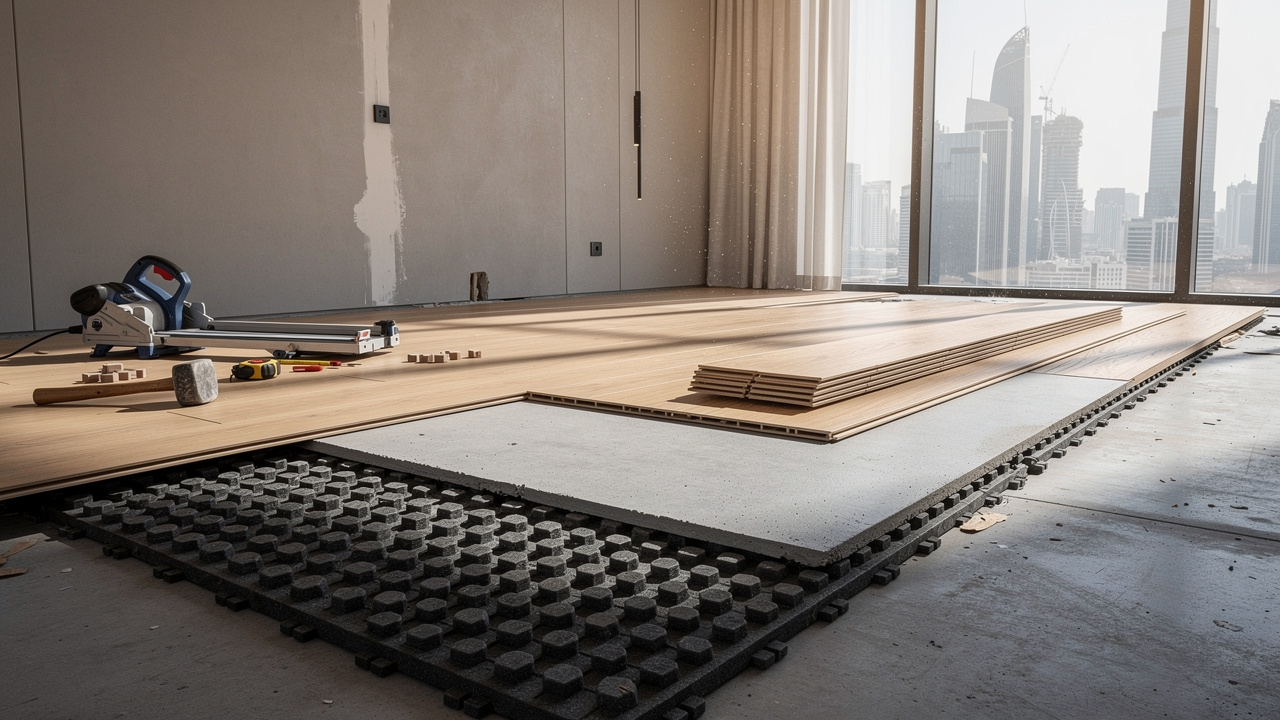
Acoustic floating floors are multi‑layer systems that separate the walking surface from the concrete slab so sound cannot pass easily between them. The main idea is simple: the finished floor no longer touches the structure directly, so impact vibrations die out in the soft layer instead of shaking the slab.
In a typical Dubai apartment, tile or wood sits right on screed or concrete. Every footstep sends energy straight into the structure. A floating floor adds a resilient underlay under a new screed or board layer, then the visible finish goes on top. That new sandwich changes how the floor behaves and cuts noise at its source.
A common build looks like this:
| Layer | What It Is | What It Does |
|---|---|---|
| Finished floor | Tile, wood, vinyl, or carpet | Gives the look and feel you want |
| Floating layer | Screed or dense boards | Adds mass and spreads impact energy |
| Resilient layer | Rubber, cork, or foam pads or mats | Acts as a spring to absorb vibration |
| Structural slab | Concrete | Carries the building load |
The resilient layer is the star of the system. Materials such as recycled rubber or mineral wool have a tested dynamic stiffness value that shows how they respond to vibration, as demonstrated in research on a floating floor resilient layer development approach for high impact sound insulation wood-based solutions. Lower stiffness usually means better isolation at troublesome low frequencies like heavy footfall.
Proper edge detailing matters as much as the main area. Shaheen Acoustic uses acoustic perimeter strips so the floating screed does not touch the walls. That stops flanking paths where sound can jump around the isolator and travel through the wall‑floor junction instead.
According to the International Code Council, many multi‑family buildings target impact sound and airborne sound ratings of at least 50 for IIC and STC. Shaheen Acoustic floating floor systems support these goals and can reach an STC rating of 49 on an 8‑inch concrete slab, while also holding a Class A flammability rating under ASTM E 84 testing.
For reference:
STC (Sound Transmission Class) rates how well a floor or wall reduces airborne sound such as voices or television.
IIC (Impact Insulation Class) rates how well a floor reduces impact sound such as footsteps, dropped items, and chair movement.
Why Dubai Apartments Need Acoustic Floating Floors More Than Most

Dubai and other UAE cities rely heavily on reinforced concrete structures with ceramic or porcelain tile on top. That mix is strong and easy to clean, yet it gives very poor acoustic comfort because hard surfaces reflect and transmit sound instead of softening it.
When someone walks in heels on a tiled floor, the impact energy goes into the tile and straight into the slab. The slab then acts like a large speaker that radiates that energy into the apartment below. No one is misbehaving, it is just how physics works in this kind of structure.
As towers fill up, those small impacts stack together. Weekend mornings often bring a background hum of movement from several levels above and below. Research from the World Health Organization links long term noise exposure with stress, sleep problems, and even higher risks of heart disease, which shows that this is more than a minor comfort issue.
Property owners now look beyond marble finishes and gym access. Buyers and tenants in areas such as Dubai Marina, Downtown Dubai, and Jumeirah Village are starting to ask how quiet an apartment feels, not only how large it is. That shift creates clear winners and losers as residents compare buildings.
Apartments that include proper acoustic design gain an edge. A floating floor system from Shaheen Acoustic treats the problem at slab level, which gives measurable improvement that agents can describe and residents can feel from day one. Over time, that can support higher rents, fewer complaints, and lower churn for landlords and building owners.
The Two Types of Noise Acoustic Floating Floors Address
Acoustic floating floors handle both impact noise and part of the airborne noise that troubles apartment residents. Understanding the difference makes it easier to pick the right system and any extra treatments you might need.
Here is a quick comparison.
| Noise Type | Typical Examples | Effect of a Floating Floor |
|---|---|---|
| Impact | Footsteps, chairs sliding, dropped items | Resilient layer absorbs the hit before it reaches the slab, so neighbors below hear far less thumping |
| Airborne | Conversation, television, music bass | Added mass in the floating layer plus the slight air gap makes it harder for sound waves to pass through |
Impact noise is the main complaint in high‑rise living, and floating floors are one of the best ways to cut it at source, a finding supported by vibro-acoustic testing on impact sound performance of novel floating floor systems with polyurethane cushions. Airborne noise is harder, especially deep bass, but the extra mass and decoupling within the floor still provide useful improvement.
When Shaheen Acoustic adds acoustic carpet over the floating floor, the combination goes further. The system deals with floor‑to‑floor transfer, and the carpet softens sound inside the room, which is ideal for bedrooms and living spaces.
Key Benefits of Acoustic Floating Floors for Apartment Residents

Acoustic floating floors bring quiet, comfort, and long term value to apartments across Dubai and the wider UAE. The system turns a bare concrete and tile structure into a layered floor that works with you instead of against you.
The first and biggest benefit is impact noise control. Engineered rubber isolator pads under the floating screed reduce structure vibration by interrupting the path between the finish and the slab. According to the World Health Organization, environmental noise ranks among the top public health risks in Europe, which shows how important this kind of control can be for daily wellbeing.
Here are the benefits that matter most in day to day apartment life:
Strong impact noise reduction means fewer thuds and scrapes from above. Shaheen Acoustic selects rubber isolators that keep their spring under Gulf heat instead of slowly flattening like many foam products. That steady performance protects you from that sharp heel click that once echoed into your bedroom or your child’s room.
Better everyday comfort shows up as calmer evenings, deeper sleep, and less tension between neighbors. Studies shared by the World Health Organization suggest that around one in five people in Europe lives with noise levels that can harm health. When an apartment controls structure noise well, residents often describe a lighter mood and a stronger feeling of privacy.
Improved property value follows from that comfort. Quiet units tend to attract families, remote workers, and long term tenants who pay a fair rate and stay. In markets watched by groups such as the Dubai Land Department and firms like Knight Frank, acoustic comfort is starting to appear in buyer wish lists along with parking and views.
Design freedom stays intact, because the acoustic system hides under your chosen finish. Shaheen Acoustic floating floors can carry tile, engineered wood, vinyl, or carpet, so architects and interior designers keep full control of the look while still meeting acoustic goals.
Long term reliability gives peace of mind. Shaheen Acoustic uses climate‑adapted materials, provides a standard warranty that covers both product and workmanship, and has completed more than 5,500 projects across the Gulf region. That level of experience reduces the risk of callbacks or hidden problems later.
“In high‑rise buildings where cumulative impact from multiple floors creates an unavoidable structural noise floor, a properly engineered floating floor system is the most direct way to deal with the problem at its source.”
— Shaheen Acoustic Technical Team
How Shaheen Acoustic Installs Acoustic Floating Floors in UAE Apartments

Shaheen Acoustic treats every acoustic floating floor as a small engineering project, not just a flooring swap. The goal is simple: a quiet apartment that keeps performing year after year in UAE conditions.
The process starts with a site visit. The team checks the existing slab, measures levels, listens to current noise, and asks about how the space is used. A home office in Dubai Silicon Oasis, a penthouse in Palm Jumeirah, and a serviced apartment in Business Bay all face different noise and layout challenges.
Next comes careful installation, which follows clear steps informed by established research on the impact noise insulation performance of vinyl floor with the floating floor technique:
Site preparation and leveling
The crew cleans the slab, removes loose material, and corrects major uneven spots. A flat base helps the resilient layer work evenly across the whole room. Any existing cracks or moisture issues are addressed so the new system sits on a sound structure.Layout of the resilient layer and edge strips
Acoustic mats or isolator pads are laid across the floor in a planned pattern, and soft perimeter strips are fixed along every wall and column. These strips prevent the new screed from touching the walls, which stops flanking paths that would let vibration bypass the isolator.Floating layer and finish installation
A screed or dense board layer is placed on top of the isolators to form a solid platform. After proper curing, the chosen finish such as tile, vinyl, or wood is installed without rigid fixings that pierce into the slab below. The team checks all joints, trims excess perimeter strip, and confirms that no acoustic bridges remain.
For existing apartments where a full screed is not possible, Shaheen Acoustic uses thinner acoustic floor underlay products beneath new finishes. These systems fit into tight floor build‑ups, which is useful where ceiling height is limited or doors and cabinets cannot move.
Tip from Shaheen Acoustic: plan your acoustic floating floor before finalizing built‑in wardrobes, kitchen units, and door heights. Small layout changes at this stage can save costly adjustments later.
Green building programs now value this type of planning. The U.S. Green Building Council gives up to two LEED points for acoustic performance in some projects, and proper flooring design helps reach those targets alongside wall and ceiling measures.
Choosing the Right System for Your Apartment

Picking the right acoustic floor starts with how much change the apartment can accept and what level of quiet you need. A full floating floor with a new screed gives the best impact isolation for new fit‑outs and major renovations.
If you want less disruption in a finished unit, an acoustic underlay below new tile, vinyl, or engineered wood still makes a clear difference. For maximum comfort, many clients choose a floating floor paired with acoustic carpet in bedrooms and living rooms.
When you speak with Shaheen Acoustic, it helps to think about:
Which rooms cause or receive the most noise (for example, bedrooms under living rooms).
How long you can be without the space during installation.
Any limits on added floor height because of doors, cabinets, or existing steps.
Every building has different slab thickness, ceiling height, and existing finishes. A quick site assessment by Shaheen Acoustic helps match the system to your space and budget. You can call the team on +971 50 209 7517 to discuss your apartment and arrange a visit.
The Bottom Line
Acoustic floating floors give Dubai apartments a practical way to control impact and part of the airborne noise that travels through concrete slabs. Instead of treating noise only from the ceiling below or walls around you, the system works where the vibrations start at floor level in the source unit.
Hard tile on concrete may look bright and clean, yet it leaves residents exposed to constant structure noise. A properly designed floating floor from Shaheen Acoustic swaps that harsh response for a calmer, more private living space while keeping the finishes you like.
With climate‑ready materials, experienced installation teams, and a clear warranty, Shaheen Acoustic turns acoustic design into a dependable upgrade rather than a risky experiment. One call or message can start the change from restless nights to a quieter apartment above and below.
Conclusion
High rise living in Dubai and across the UAE does not have to mean hearing every movement from neighbors. Acoustic floating floors give apartments the missing layer that standard construction leaves out, so slabs no longer act as drums for impact noise.
When that system comes from Shaheen Acoustic and uses rubber isolators suitable for Gulf temperatures, the improvement lasts. Add smart finish choices such as acoustic carpet, and you gain a peaceful home without giving up style. For many residents, that mix of comfort and value makes an acoustic floating floor feel less like a luxury and more like a basic part of modern apartment design.
Frequently Asked Questions
Do acoustic floating floors work in apartments that are already built?
Yes, acoustic floating floors and underlay systems can work very well in completed apartments. Shaheen Acoustic installs thin acoustic underlays beneath new finishes with minimal disruption. For residents below noisy neighbors, adding underlay and acoustic carpet in the lower unit can still improve comfort even when the upper unit stays untouched.
How much height does an acoustic floating floor add to an apartment floor?
An acoustic floating floor with screed usually adds between 60 and 120 millimeters to the total build‑up. Slim underlay systems add far less height, which helps where ceilings are low or doors cannot move. Shaheen Acoustic measures your existing levels to confirm which option fits safely.
What is the STC rating of Shaheen Acoustic’s floating floor systems?
Shaheen Acoustic floating floor systems can reach an STC rating of 49 when installed on an 8‑inch concrete slab. That rating reflects how well the assembly blocks airborne sound between floors. Exact results may change with slab type, ceiling build, and any extra acoustic finishes in the space.
Why do rubber isolators perform better than foam in UAE apartments?
Rubber isolators keep their resilience across Dubai’s wide temperature swings, so they continue to work as springs under long term load. Many common foam products slowly compress in high heat, which quietly reduces acoustic performance over time. Shaheen Acoustic chooses rubber grades tested for Gulf conditions to avoid that hidden loss.
Can acoustic floating floors be installed under any flooring type?
Yes, Shaheen Acoustic systems sit under tile, wood, vinyl, and carpet without limiting design choices. The acoustic layers stay hidden while you pick the look that suits your apartment. This flexibility helps architects, interior designers, and homeowners reach both style and sound goals in one coordinated floor build.