
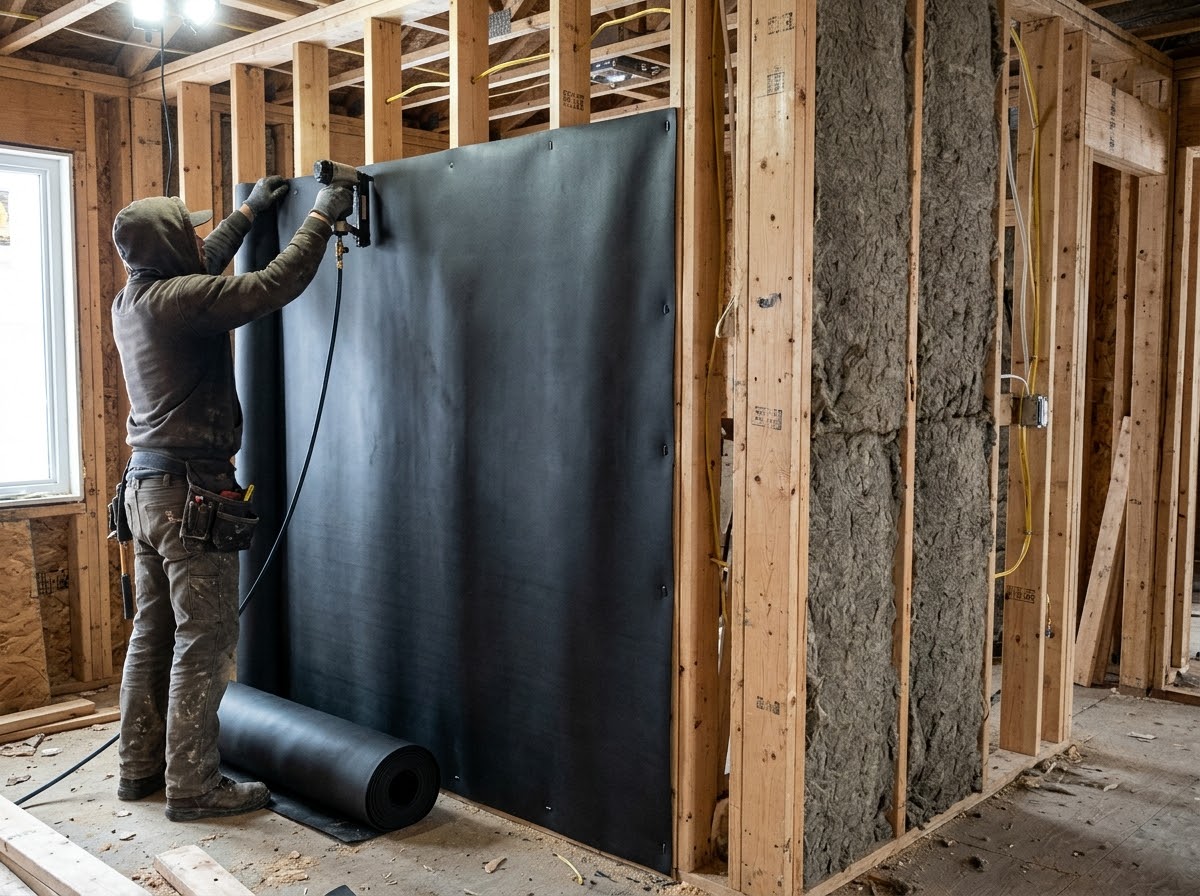
Noise is a common challenge in residential, commercial and industrial environments. In busy urban areas such as Djibouti City, sound from traffic, neighbouring properties, mechanical equipment, generators and building services can affect privacy, comfort and productivity. As buildings become more densely developed and businesses rely on increasingly complex equipment, effective noise-control materials are becoming an important part of modern construction and renovation projects.
One material used in sound insulation systems is acoustic mass loaded vinyl (MLV). This flexible, high-density membrane is designed to help reduce airborne sound transmission through building structures and equipment enclosures. Unlike traditional rigid sound barriers, mass loaded vinyl can be incorporated into relatively thin wall, ceiling and floor assemblies, making it useful in projects where space and installation flexibility matter.
For property owners, contractors, architects and facility managers in Djibouti, understanding how MLV works can help when selecting materials for noise-control projects. Whether the objective is to improve separation between rooms, reduce noise from machinery or upgrade an existing partition, acoustic mass loaded vinyl can be a practical component of a properly designed sound insulation system.
What Is Acoustic Mass Loaded Vinyl?
Mass loaded vinyl is a dense, flexible sheet material manufactured to provide a barrier against sound transmission. It is commonly produced using a vinyl or polymer-based compound combined with mineral fillers that increase its mass while allowing it to remain flexible.
The material is designed to make it more difficult for airborne sound energy to pass through a partition. Its flexibility allows it to be installed over different substrates, incorporated into wall cavities or used around certain types of equipment and mechanical services.
Unlike conventional acoustic foam, which is primarily used to absorb sound reflections inside a room, MLV is mainly intended to help control sound travelling through a structure.
This distinction is important when choosing an acoustic material. If a room suffers from excessive echo, sound-absorbing wall or ceiling panels may be more appropriate. If noise is passing from one room to another, a sound barrier such as MLV may form part of the solution.
How Does Mass Loaded Vinyl Help Reduce Noise?
The effectiveness of mass loaded vinyl is associated with its surface mass and its role within a complete building assembly. In general, adding mass to a partition can make it harder for airborne sound to vibrate and pass through that construction.
MLV is particularly useful because it provides additional mass without requiring the thickness of a comparable rigid barrier. It can be positioned within a wall system, behind a finishing layer or around selected noise-producing equipment.
However, sound insulation depends on more than the membrane itself. The final result is affected by several factors:
- The surface weight and thickness of the selected MLV.
- The construction and number of layers in the wall or ceiling.
- The presence of insulation within cavities.
- The quality of joints, seams and perimeter sealing.
- Gaps around doors, windows, electrical outlets and service penetrations.
- Structural connections that may allow vibration to travel around the barrier.
A small unsealed opening can weaken an otherwise well-designed sound insulation assembly. For this reason, MLV should be selected and installed as part of a coordinated acoustic system rather than treated as a standalone solution.
Why Consider Acoustic Mass Loaded Vinyl in Djibouti?
Djibouti City includes residential developments, offices, hotels, commercial facilities, workshops and infrastructure-related buildings. These environments can have different noise-control requirements, from improving room privacy to managing equipment noise.
Mass loaded vinyl offers flexibility for projects where a dense barrier is needed without adding a particularly bulky construction layer.
1. Noise Control in Residential Buildings
In apartments, villas and multi-unit properties, noise can travel through shared walls, ceilings and floors. Conversations, television sound and other everyday activities may disturb occupants in neighbouring rooms or properties.
When incorporated into a suitable partition, MLV can help improve the sound insulation of the assembly. It may be installed behind plasterboard or another finishing layer, depending on the construction design.
For existing properties, the installation approach should consider available wall depth, access, electrical services and the condition of the original structure.
2. Commercial Offices and Meeting Rooms
Privacy is important in offices, conference rooms and administrative spaces. Sound travelling between meeting rooms can affect conversations, concentration and confidentiality.
MLV can be used as a barrier layer within selected partition systems to help reduce sound transmission. It is particularly relevant when a project requires additional barrier mass without significantly increasing the thickness of the wall.
For best results, the complete partition should also address door gaps, ceiling connections and other sound leakage paths.
3. Hotels and Hospitality Properties
Hotels require comfortable indoor environments where guests can rest without unnecessary disturbance from adjoining rooms, corridors or service areas.
Acoustic mass loaded vinyl may be considered in wall and ceiling assemblies separating guest rooms from neighbouring spaces or certain mechanical areas. Its suitability depends on the required acoustic performance and the design of the complete construction.
It should be combined with appropriate insulation, sealed joints and suitable doors where necessary.
4. Industrial Workshops and Machinery Rooms
Mechanical equipment, generators, compressors, pumps and workshop machinery can produce continuous or intermittent noise. In some applications, MLV can be incorporated into equipment enclosures, barrier curtains or acoustic lagging systems.
Its flexible form makes it useful for selected irregular surfaces and enclosed structures. The correct installation must account for equipment access, ventilation, operating temperatures and maintenance requirements.
MLV should not obstruct cooling systems, ventilation openings or safety-related equipment.
5. Building Services and HVAC Systems
Noise from ducts, pipes and mechanical services can spread into occupied areas. A suitable barrier layer may help reduce airborne noise radiated from selected components.
Mass loaded vinyl products are used in some ductwork and mechanical noise-control applications. Product selection should consider temperature limits, moisture exposure, mechanical protection and the specific requirements of the installation.
Common Applications of MLV Sound Barriers
One of the advantages of mass loaded vinyl is its ability to fit into different acoustic construction systems.
MLV for Walls
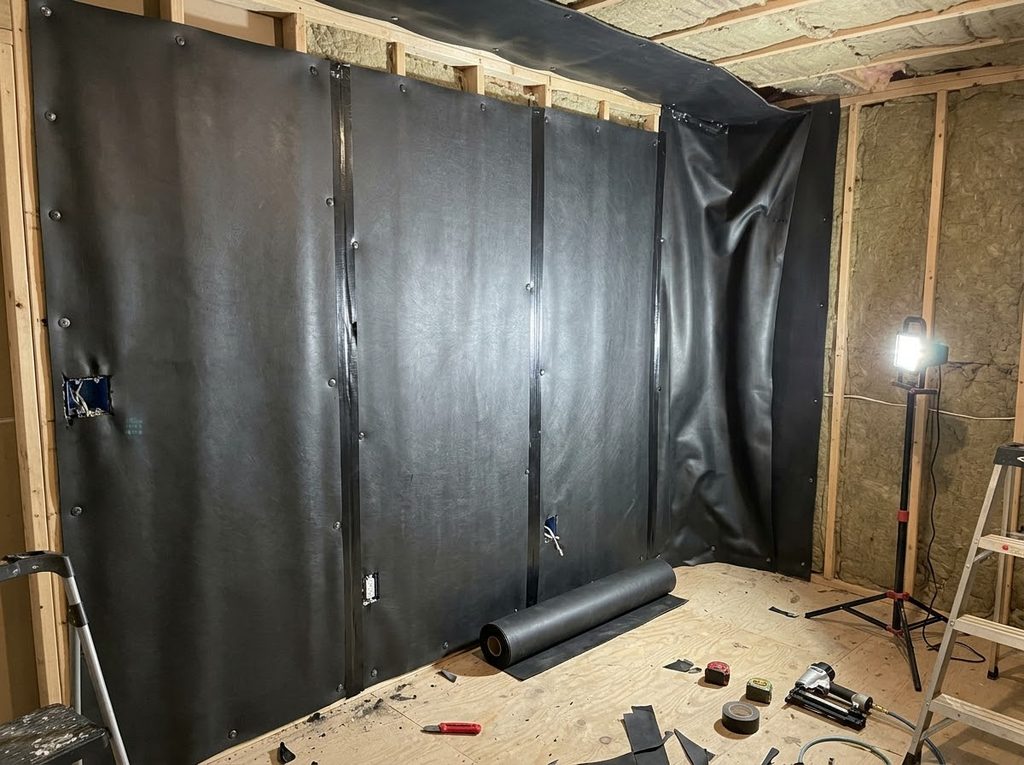
Wall assemblies are among the most common applications. MLV can be installed over wall framing before plasterboard is fitted, or incorporated into selected retrofit arrangements.
A typical construction may include:
- Metal or timber framing.
- Cavity insulation where specified.
- Mass loaded vinyl barrier.
- One or more plasterboard layers.
- Acoustic sealant around joints and perimeter details.
The exact layer sequence should be designed for the required performance. A tested wall assembly is more reliable than selecting materials individually and assuming their performance will simply add together.
MLV for Ceilings
Noise can travel through ceiling voids and lightweight ceiling constructions, particularly in buildings containing mechanical equipment or shared spaces.
MLV may be installed within a suitable ceiling assembly to increase barrier mass. Overhead installations require proper support because the material has considerable weight compared with lightweight acoustic foam.
The ceiling structure must be checked to ensure it can safely carry the additional load.
MLV for Floors
Mass loaded vinyl can be incorporated into certain floor constructions to help reduce airborne sound transmission. It may be used as one component of a layered floor assembly.
However, impact noise from footsteps, dropped objects and furniture movement requires a different design approach. Resilient underlays, floating floors and isolation details may be necessary depending on the source of the noise.
MLV alone should not be assumed to solve impact-noise problems.
MLV for Machinery Enclosures
Machinery enclosures can benefit from additional barrier mass when airborne noise escapes through lightweight panels or access covers.
MLV may be attached to suitable enclosure surfaces or incorporated into a layered construction. Installers must ensure that the material is compatible with the equipment’s temperature, ventilation and operating conditions.
MLV for Ductwork and Pipes
Some MLV products are designed for use in mechanical noise-control systems. They may be incorporated into duct or pipe lagging assemblies to help control noise radiated from building services.
The correct product and installation method depend on the service environment, including temperature, moisture, vibration and maintenance access.
Important Factors When Selecting Mass Loaded Vinyl
Not all MLV products are identical. Before choosing a material for a project in Djibouti, it is important to review its technical documentation and confirm that it suits the intended application.
Surface Weight and Thickness
MLV is available in different surface weights and thicknesses. Heavier products generally provide greater barrier mass, but the appropriate choice depends on the complete construction and the required acoustic performance.
For example, manufacturer data may list products by weight per square foot or mass per square metre. These measurements should be checked carefully rather than comparing thickness alone.
Acoustic Test Results
Ask for documented acoustic test information. Depending on the product and test, documentation may include transmission loss by frequency or a rating for a specific tested assembly.
A rating measured on a standalone sample should not be presented as the rating of an entire wall, floor or ceiling. The complete assembly has its own performance characteristics.
Flexibility and Reinforcement
Some applications require a flexible, non-reinforced membrane, while others may benefit from reinforced versions. Reinforcement can affect handling, durability and installation suitability.
The correct option depends on whether the material will be installed inside a wall, around machinery or in another exposed application.
Fire and Temperature Performance
Fire performance must be verified for the exact product being specified. Different MLV formulations can have different fire classifications and temperature limits.
For projects in commercial buildings, hotels or industrial facilities, confirm that the product documentation meets the applicable project and regulatory requirements.
Moisture and Environmental Conditions
Djibouti’s coastal environment and local building conditions may expose some installations to humidity, heat or other environmental factors. The selected product should be suitable for the intended location and protected where required.
Check the manufacturer’s guidance for storage, installation temperature, long-term exposure and compatibility with adjoining materials.
Installation Considerations for Better Acoustic Performance
Correct installation is essential because even a high-quality barrier can underperform if the surrounding construction contains gaps or weak connections.
Prepare the Surface
Before installation, check that the receiving surface is clean, dry and suitable for the selected fixing method. Identify electrical boxes, service penetrations, joints and other details that could affect the continuity of the barrier.
Plan the Membrane Layout
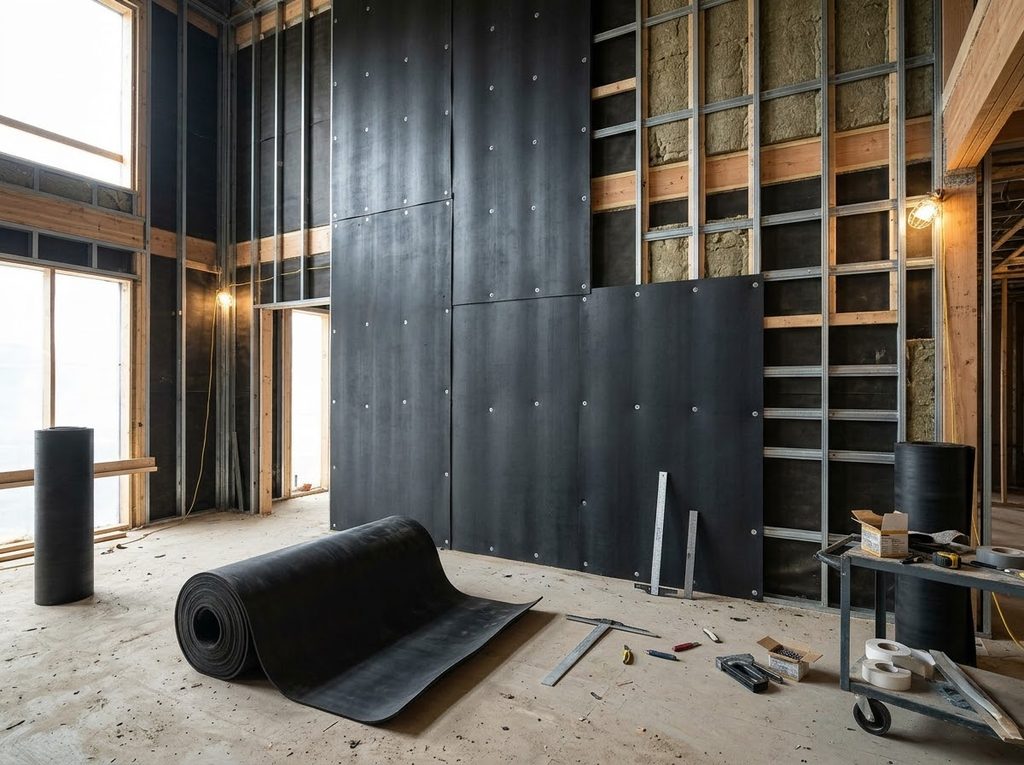
MLV is commonly supplied in rolls or sheets. Plan the layout to reduce unnecessary joints and offcuts. The material should be handled carefully to avoid tears or damage during installation.
Secure the Material Properly
Depending on the product and application, MLV may be mechanically fixed or installed using an approved adhesive system. The manufacturer’s instructions should determine the fixing method and spacing.
For wall applications, the membrane is often installed against the framing before the finishing board is attached.
Seal Joints and Openings
Overlapping or joining the membrane correctly is important. Suitable acoustic tape, sealant or other manufacturer-approved accessories may be required.
Pay particular attention to:
- Sheet joints and overlaps.
- Wall-to-floor and wall-to-ceiling junctions.
- Electrical boxes and service openings.
- Pipe and duct penetrations.
- Door and window perimeter details.
Protect the Completed Assembly
Once the barrier is installed, it is often covered by plasterboard, a protective layer or another specified finish. Avoid damaging the membrane during subsequent construction work.
Overhead and machinery applications require additional attention to mechanical support and safe access.
Mass Loaded Vinyl vs. Acoustic Foam: Understanding the Difference
MLV and acoustic foam are both used in acoustic projects, but they solve different problems.
| Feature | Mass Loaded Vinyl | Acoustic Foam |
|---|---|---|
| Main purpose | Helps reduce sound transmission | Absorbs sound reflections |
| Typical form | Dense, flexible membrane | Lightweight porous material |
| Common location | Inside walls, ceilings and enclosures | Exposed room walls and ceilings |
| Main acoustic role | Sound barrier | Sound absorption |
| Typical objective | Improve separation between spaces | Reduce echo and reverberation |
A room may require both materials. MLV can help improve the sound insulation of a partition, while acoustic absorbers can reduce reflections within the room itself.
Choosing between them should begin with identifying the actual noise problem.
Benefits of Using MLV in Acoustic Projects
When correctly specified and installed, mass loaded vinyl can offer several practical advantages:
- High mass in a flexible format: Provides additional barrier weight without requiring a thick rigid panel.
- Versatile installation: Can be incorporated into different wall, ceiling and enclosure designs.
- Space-conscious construction: Useful where adding substantial wall thickness is difficult.
- Multiple application options: Suitable for selected residential, commercial and industrial noise-control systems.
- Compatibility with layered assemblies: Can be combined with insulation, plasterboard and other construction materials.
- Retrofit potential: May be considered when upgrading existing partitions, subject to access and structural conditions.
Its suitability still depends on the product’s specifications and the design of the complete system.
Factors That Influence the Cost of MLV in Djibouti
The cost of an acoustic mass loaded vinyl project in Djibouti depends on more than the price of the membrane itself. Several factors can influence the overall budget.
Product weight and thickness: Higher surface-weight materials may have different material costs and handling requirements.
Required coverage: Total wall, floor or ceiling area determines the quantity needed, including allowances for overlaps and cutting waste.
Installation complexity: Irregular surfaces, overhead work, machinery enclosures and service penetrations can increase labour requirements.
Additional materials: Acoustic sealants, tapes, insulation, framing, plasterboard and protective finishes may form part of the complete system.
Transportation and supply: Product origin, shipping arrangements, order quantity and delivery requirements can affect the final project cost.
For a meaningful quotation, project teams should provide dimensions, application details, photographs where possible and any available acoustic performance requirements.
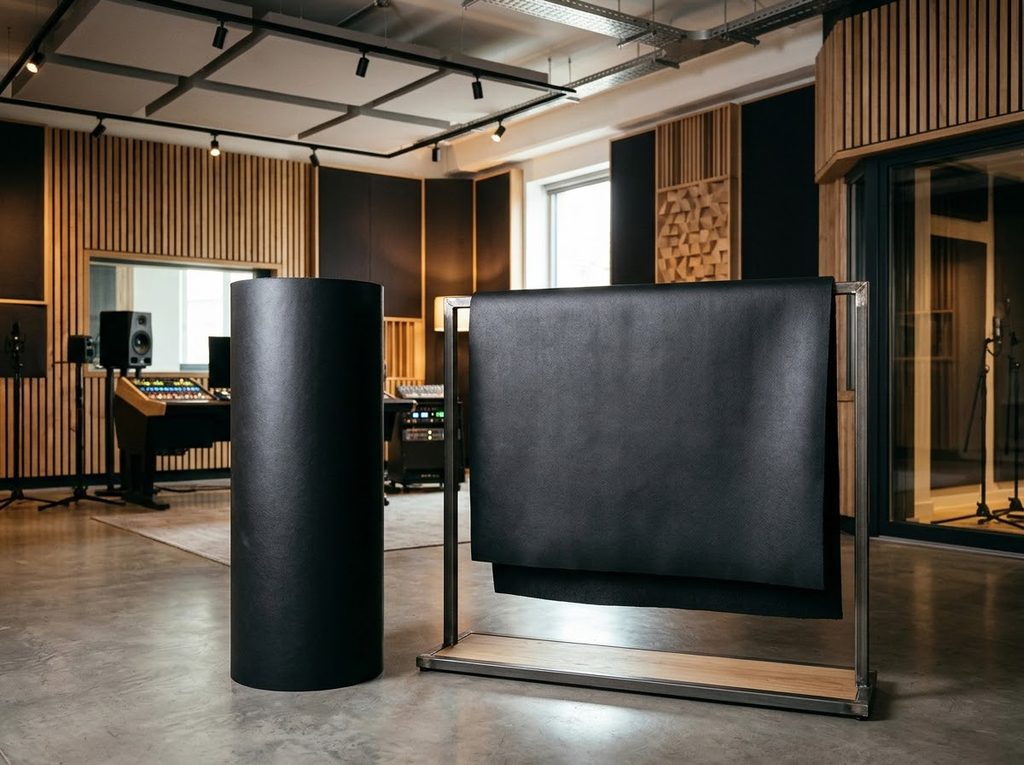
Choosing the Right Acoustic Sound Barrier for Your Project
Before specifying MLV, identify where the noise originates and how it travels. Airborne sound passing through a partition requires a different solution from vibration travelling through a machine base or impact noise moving through a floor.
A suitable assessment should consider:
- The source and type of noise.
- The existing wall, ceiling or floor construction.
- The available installation space.
- The required level of sound insulation.
- Fire, temperature and environmental requirements.
- The need for additional insulation, isolation or sound-absorbing materials.
For complex projects, an acoustic consultant or experienced sound-insulation contractor can help determine the correct assembly and review relevant test documentation.
Conclusion: Improve Sound Insulation with Acoustic Mass Loaded Vinyl in Djibouti
Effective noise control requires materials that match the actual problem. Acoustic mass loaded vinyl offers a flexible, high-density barrier option for selected wall, ceiling, floor, machinery and building-services applications.
For residential properties, offices, hotels, workshops and industrial facilities in Djibouti City, MLV can be considered as part of a properly designed sound insulation system. Its performance depends on product weight, installation quality, surrounding construction and the treatment of gaps and other sound leakage paths.
When selecting acoustic mass loaded vinyl, review technical specifications, verify test documentation and consider the complete assembly rather than relying on the membrane alone. With appropriate planning and installation, MLV can contribute to more comfortable and functional indoor environments.
Frequently Asked Questions
1. What is mass loaded vinyl used for?
Mass loaded vinyl is a dense, flexible acoustic barrier used to help reduce airborne sound transmission through walls, ceilings, floors, machinery enclosures and selected ductwork systems.
2. Does MLV completely soundproof a room?
No. MLV can improve the sound insulation of a properly designed assembly, but it does not make a room completely soundproof. Gaps, doors, windows, structural connections and other weak points can still allow noise to pass through.
3. Can mass loaded vinyl be installed inside walls?
Yes. It is commonly incorporated into wall assemblies, often over framing and behind plasterboard. The installation method should follow the manufacturer’s instructions and the design of the complete wall system.
4. Is MLV suitable for industrial noise control?
It can be used in selected industrial applications, including machinery enclosures and mechanical-service systems. Product compatibility with temperature, ventilation, moisture and operating conditions must be checked.
5. Is MLV the same as acoustic foam?
No. MLV is mainly used as a sound barrier to help reduce transmission between spaces. Acoustic foam is mainly used to absorb reflections and reduce echo within a room.
6. Can MLV help reduce generator noise?
It may help reduce airborne noise when incorporated into a properly designed generator enclosure or barrier system. The design must also provide suitable ventilation, heat management, access and vibration control.
7. What should I check before buying MLV in Djibouti?
Review surface weight, thickness, acoustic test documentation, fire performance, temperature limits, installation requirements and suitability for the intended environment. Also consider the other materials needed to complete the acoustic assembly.
8. Can MLV be used for ceiling sound insulation?
Yes, where the ceiling system is designed to support its weight. Proper mechanical fixing, structural assessment and careful sealing are important, particularly for overhead applications.