
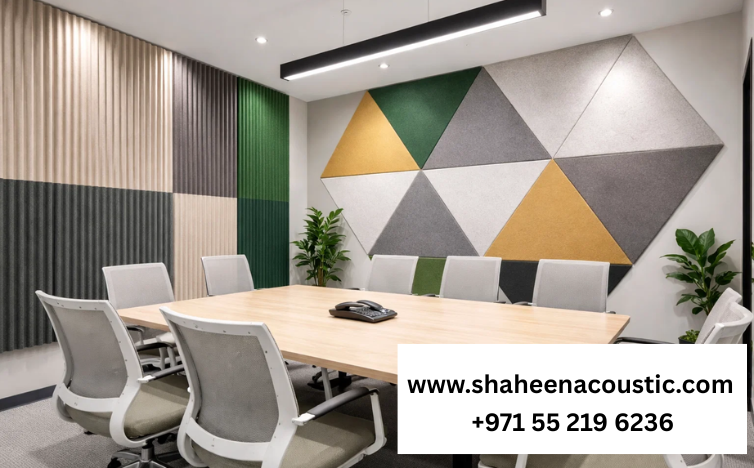
A meeting room can look modern, well-designed, and fully equipped—but if the sound isn’t clear, the entire purpose of the space breaks down. Poor acoustics lead to echo, overlapping voices, and constant repetition during discussions. This is why acoustic panels for meeting rooms are no longer optional; they are essential for clear communication and professional performance.
Most meeting rooms today are built with materials like glass, concrete, and polished surfaces. While visually appealing, these materials reflect sound instead of absorbing it, creating a noisy and uncomfortable environment. Acoustic panels solve this problem by controlling how sound behaves inside the room.
Why Meeting Room Acoustics Matter More Than You Think
In any meeting, clarity is everything. Whether it’s a team discussion, client presentation, or video conference, poor acoustics can disrupt communication and reduce productivity.
Sound waves constantly bounce between walls, ceilings, and floors. Without proper treatment, this creates reverberation, which makes speech harder to understand. Research shows that reducing echo significantly improves speech intelligibility and overall communication quality in meeting environments.
In hybrid meetings, the problem becomes even more critical. Remote participants rely entirely on audio clarity, and even small acoustic issues can lead to misunderstandings and fatigue.
How Acoustic Panels for Meeting Rooms Work
Acoustic panels are designed to absorb sound rather than reflect it. They are made from porous materials such as fiberglass, mineral wool, or acoustic foam, which trap sound energy and reduce the amount of noise bouncing back into the room.
When sound waves hit these panels, a portion of the energy is absorbed and converted into minimal heat, reducing reflections and improving clarity.
This process doesn’t make the room silent—it makes it controlled. The goal is not to eliminate sound, but to make speech clear and comfortable.
Understanding NRC Ratings for Better Performance
One of the most important factors when selecting acoustic panels is the Noise Reduction Coefficient (NRC). This rating measures how much sound a material can absorb on a scale from 0 to 1.
- NRC 0.5 = absorbs 50% of sound
- NRC 0.8–1.0 = high-performance absorption
For meeting rooms, experts generally recommend panels with an NRC of 0.7 or higher to achieve noticeable improvements in speech clarity.
Higher NRC ratings mean better sound control, especially in rooms with hard surfaces and minimal furnishings.
Types of Acoustic Panels Used in Meeting Rooms
Different types of acoustic panels are used depending on design and performance requirements.
Fabric-wrapped panels are among the most common, offering high sound absorption along with customizable designs. These panels can achieve NRC ratings up to 1.0, making them highly effective for professional environments.
PET felt panels are another popular option, known for being lightweight and eco-friendly while still providing strong acoustic performance.
Wooden acoustic panels combine aesthetics with functionality, using slotted designs backed by sound-absorbing materials to balance design and performance.
Each type serves a specific purpose, but all aim to improve clarity and reduce noise within the room.
Where to Place Acoustic Panels for Maximum Effect
Installing acoustic panels randomly will not deliver proper results. Placement is critical.

The most effective areas include:
- Side walls where sound reflects directly
- Rear walls where echo builds up
- Ceilings to control vertical sound reflection
Ceiling panels or suspended solutions are especially useful in meeting rooms with high ceilings, where sound tends to bounce and spread.
Proper placement ensures that sound is absorbed at key reflection points, significantly improving overall acoustics.
Acoustic Panels vs Soundproofing: A Common Confusion
One of the biggest misunderstandings is assuming acoustic panels will block external noise.
They don’t.
Acoustic panels improve sound quality inside the room by reducing echo and reverberation. Soundproofing, on the other hand, requires dense materials and structural changes to block sound from entering or leaving a space.
For meeting rooms, the primary goal is usually clarity—not complete isolation.
Benefits of Acoustic Panels in Meeting Rooms
Installing acoustic panels offers multiple practical advantages.
First, they improve speech clarity, making conversations easier to follow without repetition. Second, they reduce listening fatigue, allowing longer meetings without discomfort. Third, they enhance professionalism by creating a controlled and comfortable environment.
In addition, better acoustics improve performance in video conferencing, where audio quality directly affects communication effectiveness.
Choosing the Right Acoustic Solution
Selecting the right acoustic panels depends on several factors, including room size, surface materials, and usage type. Small meeting rooms may require fewer panels with moderate NRC ratings, while larger boardrooms need more coverage and higher-performance materials.
The key is to create a balanced acoustic environment rather than relying on a single product. A well-planned setup ensures consistent sound quality across the entire room.
Call us: Contact Shaheen Acoustic Soundproofing Expert in Dubai For Soundproofing: +971 50 209 7517
Final Thought
A meeting room is built for communication. If people can’t hear clearly, everything else—design, furniture, technology—loses value.
Acoustic panels for meeting rooms solve this problem at its core by controlling sound where it matters most. Instead of louder conversations and repeated sentences, the space becomes clear, focused, and efficient.