
Introduction
Comfortable interiors depend on more than attractive furniture, lighting, and wall finishes. The way sound travels through a room can significantly influence how people communicate, work, learn, and relax. In offices, educational facilities, hospitality venues, meeting rooms, and residential interiors, excessive echo and reverberation can make ordinary conversations difficult to follow.
For architects, contractors, interior designers, and property owners planning interior spaces in Bangui, Central African Republic, acoustic PET panels offer a practical way to improve indoor sound quality while maintaining a contemporary appearance. Made from polyester fibres, these panels are available in different thicknesses, colours, shapes, and configurations, allowing them to complement a wide range of interior designs.
Unlike ordinary decorative wall coverings, acoustic PET panels are designed to absorb some of the sound energy that would otherwise reflect from hard surfaces. Their effectiveness depends on the panel specifications, mounting method, coverage, and acoustic requirements of the room.
This guide explains how acoustic PET panels work, where they can be used, what to consider when selecting them, and how to plan an effective acoustic treatment solution in Bangui.
What Are Acoustic PET Panels?
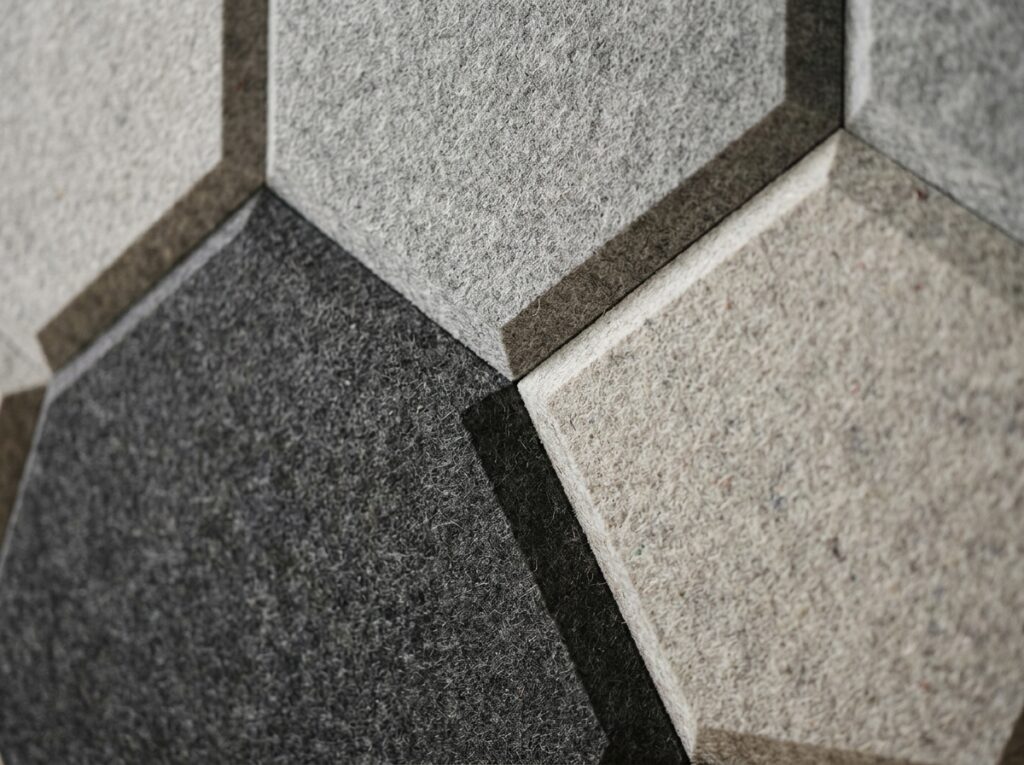
PET stands for polyethylene terephthalate, a type of polyester used in numerous products, including textile fibres and plastic packaging. Acoustic PET panels are manufactured from polyester fibres formed into a porous, sound-absorbing material. Some manufacturers use recycled PET content, although the percentage varies by product.
Their fibrous structure helps convert some sound energy into small amounts of heat as sound waves travel through the material. This reduces reflected sound and can help control reverberation inside a room.
PET acoustic panels are commonly available as:
- Flat wall-mounted acoustic boards.
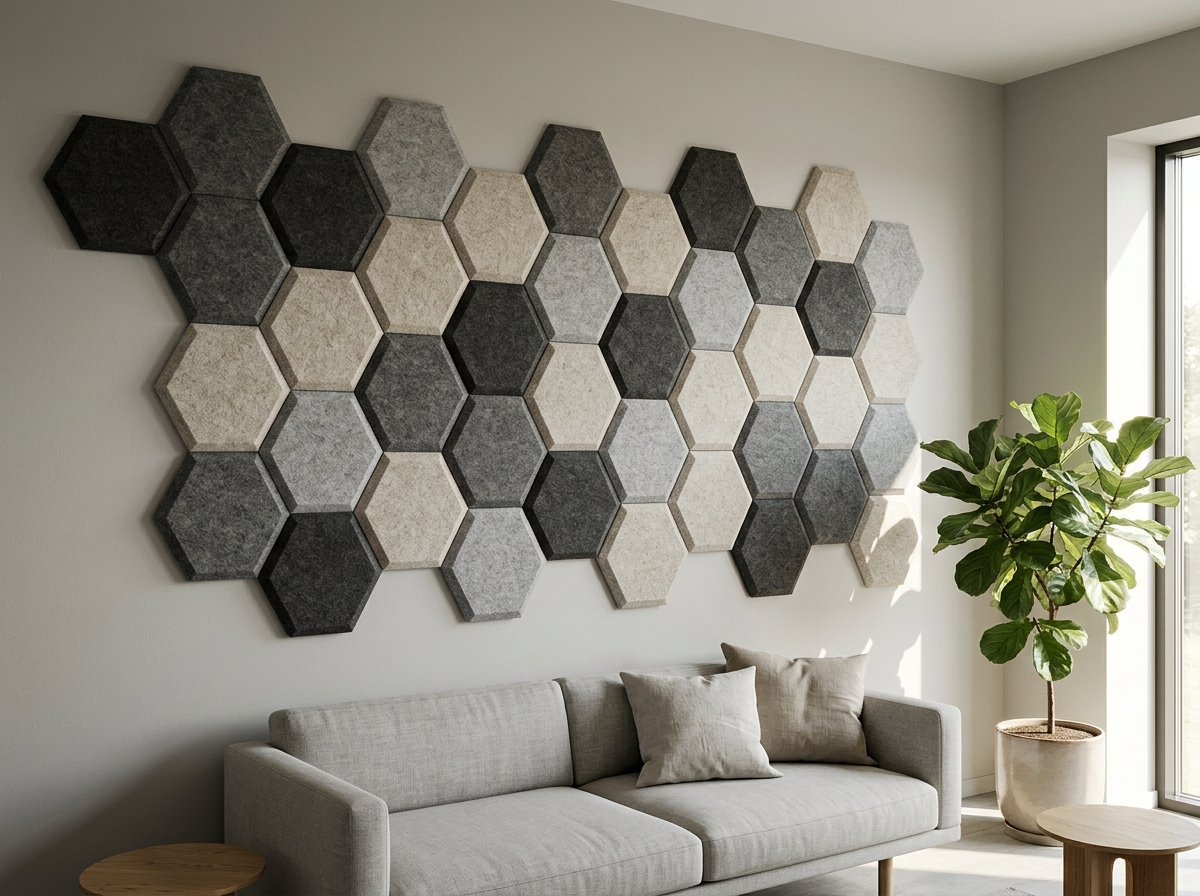
- Decorative geometric and three-dimensional panels.
- Ceiling-mounted acoustic clouds and baffles.
- Freestanding acoustic screens and partitions.
- Custom-cut panels for feature walls and branded interiors.
- Panels integrated into selected furniture or interior design elements.
Product specifications differ considerably. For example, one manufacturer’s published data lists PET felt panels in thicknesses from 9 mm to 24 mm, with different sound absorption ratings according to thickness and mounting configuration. These figures should be treated as product-specific rather than universal performance standards. Source: MMT Acoustix technical data
Why Consider Acoustic PET Panels in Bangui?
Interior spaces with concrete walls, tiled floors, glass partitions, and other hard surfaces can experience noticeable sound reflections. When several people speak at once, these reflections may accumulate, making speech less distinct and the environment feel louder.
Acoustic PET panels can help address this problem by absorbing sound within the room.
1. Improve Speech Clarity
Speech clarity is important in meeting rooms, classrooms, reception areas, training spaces, and consultation rooms. Excessive reverberation can cause spoken words to overlap, forcing people to repeat themselves or raise their voices.
Strategically positioned PET panels help reduce reflected sound and may make conversations easier to understand.
2. Create More Comfortable Workspaces
Open-plan offices often contain multiple conversations, telephone calls, and collaborative activities. Although acoustic panels do not eliminate every sound travelling between workstations, they can help reduce reverberation within the shared environment.
Wall panels, ceiling clouds, and acoustic screens can be combined with suitable room planning to create a more comfortable working atmosphere.
3. Enhance Interior Appearance
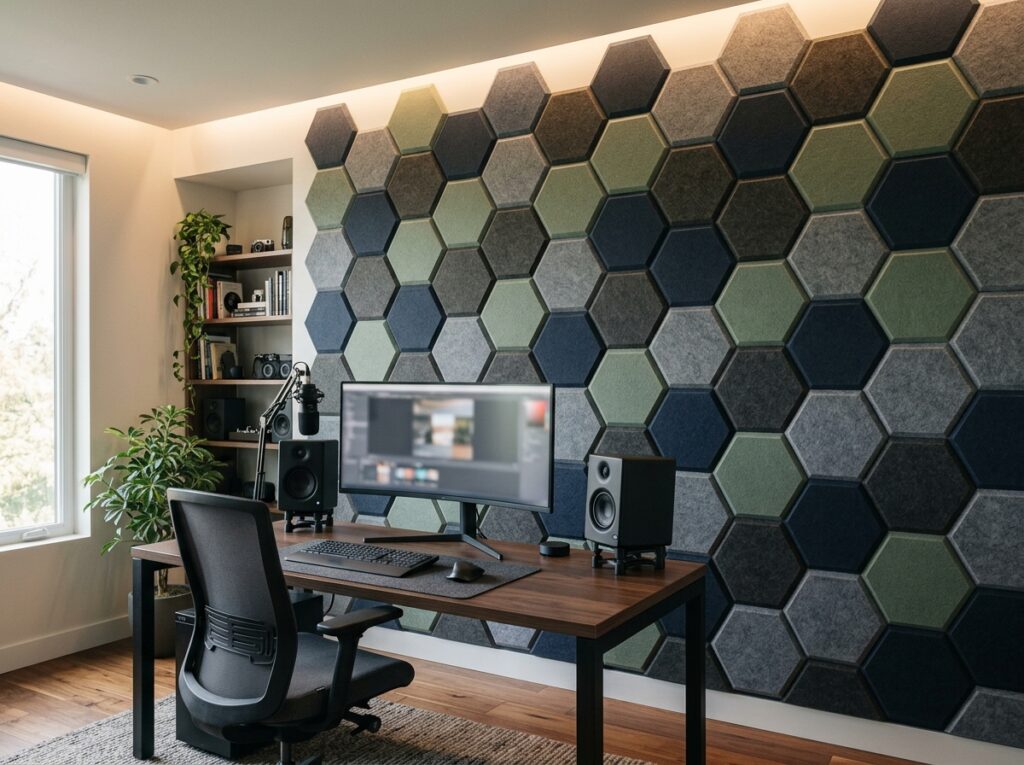
Acoustic treatment does not need to look industrial or purely functional. PET panels can be cut into geometric patterns, installed in contrasting colours, or arranged as decorative wall features.
This makes them suitable for interiors where sound absorption and visual presentation need to work together.
4. Support More Flexible Interior Design
Many PET panel systems can be cut or shaped to suit specific layouts. Designers may use them around workstations, on selected wall sections, above meeting tables, or as part of a coordinated ceiling treatment.
The appropriate arrangement depends on the room’s dimensions, existing finishes, access requirements, and acoustic objectives.
Applications of Acoustic PET Panels
Acoustic PET panels can be considered for several types of interior projects in Bangui. The right choice depends on how the room is used and the acoustic problems that need to be addressed.
Offices and Corporate Interiors
In offices, sound reflections can make meetings, telephone conversations, and video conferences less comfortable. PET wall panels can be positioned near major reflective surfaces, while suspended acoustic elements may provide additional absorption where ceiling construction permits.
For shared workspaces, the objective should be to improve overall acoustic comfort rather than assume that wall panels alone will provide complete speech privacy.
Schools and Training Facilities
Classrooms and training rooms require clear communication between instructors and learners. When sound persists after a person finishes speaking, students may find it harder to follow explanations.
Acoustic PET panels can be installed on suitable wall areas or incorporated into ceiling systems to help control reverberation.
Selection should also account for durability, cleaning requirements, fire performance, and the way the room is maintained.
Hotels, Restaurants, and Reception Areas
Hospitality interiors frequently combine hard floors, glass, stone, and decorative surfaces. These finishes may look appealing but can contribute to unwanted sound reflections.
PET panels can introduce a softer acoustic surface without requiring every wall to be covered. Carefully selected colours and patterns can complement reception counters, dining areas, waiting spaces, and lounge interiors.
Healthcare and Consultation Spaces
Reception areas, waiting rooms, consultation rooms, and administrative spaces may benefit from reduced reverberation. Acoustic panels can support a calmer auditory environment when selected for the specific requirements of the facility.
In healthcare settings, the panel’s cleanability, hygiene requirements, installation details, and fire documentation should be assessed before specification.
Homes and Residential Interiors
Residential rooms with large windows, tiled floors, and minimal soft furnishings can sometimes sound harsh or echo-prone. PET acoustic panels may be suitable for living rooms, home offices, study areas, and entertainment rooms.
Decorative panels can be used on selected walls to complement the interior without overwhelming the room’s appearance.
Studios and Media Rooms
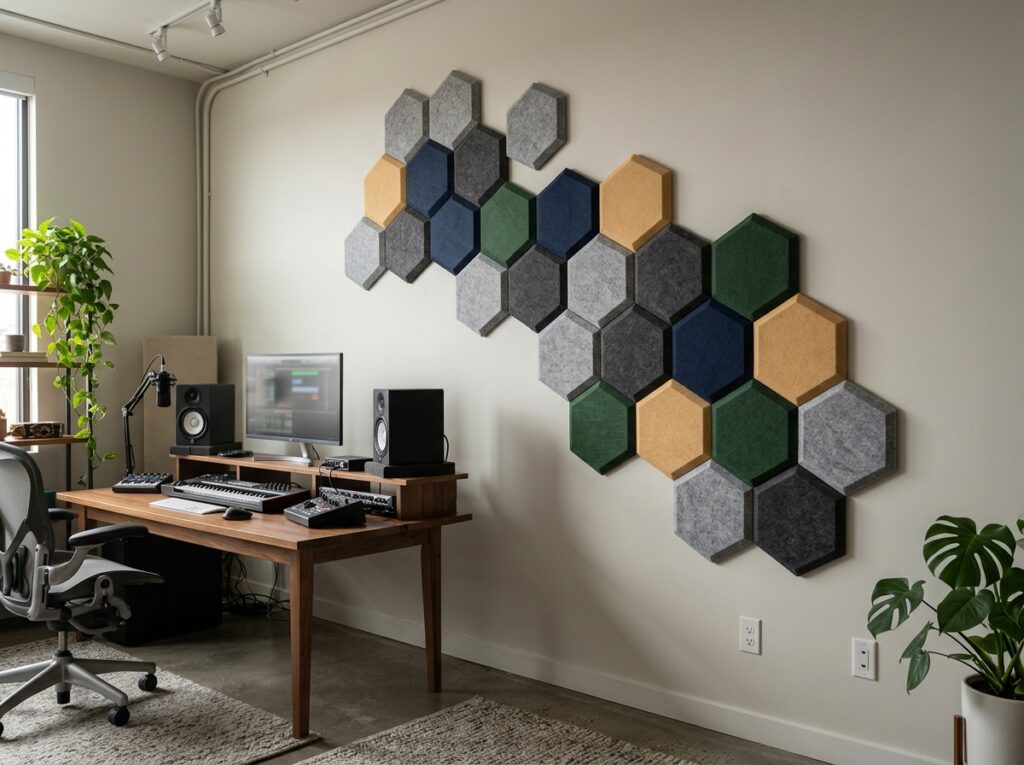
Recording spaces, editing rooms, podcast areas, and media rooms need more carefully planned acoustic treatment. PET panels may contribute to controlling mid- and high-frequency reflections, but the required performance depends on the application.
Low-frequency control, isolation from neighbouring rooms, and the desired room response may require additional acoustic products and a more comprehensive design.
Acoustic Absorption Versus Soundproofing
Before choosing acoustic PET panels, it is important to understand the difference between sound absorption and soundproofing.
Sound absorption concerns the sound reflected within a room. Acoustic PET panels are primarily used to reduce reverberation and improve the way a space sounds.
Soundproofing concerns reducing sound transmission from one space to another. This usually requires a suitable building assembly involving elements such as mass, airtightness, structural separation, and appropriate insulation or resilient components.
PET panels installed directly on a wall should not be assumed to prevent conversations, traffic noise, or machinery noise from entering a room.
For a project in Bangui, the correct solution depends on the actual problem. If a room has excessive echo, acoustic absorption may be appropriate. If outside noise passes through windows, doors, walls, or gaps, those transmission paths need separate investigation.
Choosing the Right PET Acoustic Panels
Not all PET panels provide the same acoustic performance. A reliable selection process should begin with the room’s requirements rather than colour or price alone.
Panel Thickness and Density
Thickness and density influence a panel’s performance, but neither should be considered in isolation. The material construction and mounting arrangement also matter.
Thicker panels or assemblies with an appropriate air gap may provide greater absorption in certain frequency ranges. However, the exact result should be confirmed using the manufacturer’s acoustic test data.
Noise Reduction Coefficient (NRC)
The Noise Reduction Coefficient, or NRC, is a single-number rating used to summarise sound absorption performance across specified frequencies.
A higher NRC generally indicates greater average absorption within the test’s frequency range. However, the rating does not describe every aspect of acoustic behaviour, especially at low frequencies.
For example, published data from MMT Acoustix lists NRC values of 0.30 for a 9 mm panel, 0.40 for a 12 mm panel, 0.50 for an 18 mm panel, and 0.60 for a 24 mm panel in the stated mounting configuration. The same source lists a higher value for a particular panel installed over an additional backing layer. These figures illustrate why the complete tested assembly matters. Source: MMT Acoustix
Mounting Method and Air Gap
PET panels may be mounted directly to walls or installed with a gap behind them, depending on the product and design.
An air gap can change absorption performance, but it also affects the required installation depth. The design should therefore consider the available space, fixing method, substrate, and tested assembly.
Colour, Shape, and Finish
PET panels are available in a variety of colours and can be arranged in patterns or custom shapes. For commercial interiors, colour selection can complement brand identity, furniture, lighting, and other finishes.
The chosen finish should also suit the room’s cleaning and maintenance requirements.
Fire Performance and Indoor Air Quality
Fire ratings and emissions information must be verified for the exact product being considered. Do not assume that every PET panel has the same fire classification or indoor-air-quality performance.
For commercial, educational, healthcare, and public-use projects in Bangui, request relevant test reports, technical data sheets, and installation instructions before specifying the material.
Comparison of Common PET Panel Configurations
| Configuration | Potential application | Important consideration |
|---|---|---|
| Thin wall panels | Decorative treatment and selected reflective surfaces | Confirm tested absorption and coverage requirements |
| Thicker wall panels | Rooms requiring greater absorption from wall-mounted treatment | Compare frequency-specific test data |
| Panels with an air gap | Projects where the mounting assembly can provide additional absorption | Check the tested depth and backing arrangement |
| Ceiling clouds or baffles | Rooms with suitable ceiling height and suspension options | Confirm structural support and safe installation |
| Decorative custom-cut panels | Feature walls, offices, and reception interiors | Ensure the design still provides the required acoustic coverage |
This comparison is intended as a planning guide. Final performance depends on the actual product and complete installation.
Installation Considerations for Projects in Bangui
Good installation is essential for achieving the intended result and maintaining a professional appearance.
Assess the Room Before Installation
Identify the room’s dimensions, ceiling height, hard reflective surfaces, furniture arrangement, and main sound sources. Where possible, use an acoustic assessment to establish whether reverberation or sound transmission is the primary issue.
Plan Panel Coverage
Installing more panels is not automatically the best solution. Their placement should target the surfaces contributing most to the problem while maintaining a balanced interior design.
Meeting rooms, classrooms, and dining spaces may require different arrangements even if their floor areas are similar.
Check the Substrate and Fixings
The wall or ceiling must be suitable for the selected adhesive, clips, anchors, or suspension system. The installation method should follow the manufacturer’s instructions and account for the weight of the complete assembly.
Ceiling-mounted panels require particular attention to secure fixing and overhead safety.
Confirm Product Availability and Documentation
For projects in Bangui, confirm panel dimensions, colour availability, delivery arrangements, lead times, replacement options, and access to technical documentation before placing an order.
If panels are sourced internationally, include shipping, handling, and any applicable import requirements in the project schedule and budget.
Follow Cleaning and Maintenance Guidance
Cleaning methods vary by panel composition and finish. Establish a suitable maintenance routine using the manufacturer’s guidance, particularly in busy commercial or institutional environments.
Common Mistakes to Avoid
Several avoidable mistakes can reduce the effectiveness or value of an acoustic PET panel installation.
- Expecting complete soundproofing: PET panels primarily absorb sound within a room; they are not a substitute for a sound-isolating wall or ceiling assembly.
- Selecting panels based only on appearance: Attractive colours and patterns do not establish acoustic performance.
- Comparing NRC figures without checking the mounting method: A rating achieved with an air gap or additional backing may not apply to a panel mounted directly on a wall.
- Ignoring low-frequency noise: Bass, heavy machinery, and structural vibration may require different acoustic measures.
- Overlooking fire and maintenance requirements: Commercial projects should verify the documentation and care instructions for the exact panel.
- Installing without assessing the room: Poor placement or insufficient coverage can leave significant reflections untreated.
Avoiding these mistakes helps ensure that the selected panels are appropriate for the intended use.
Frequently Asked Questions
1. What are acoustic PET panels used for?
Acoustic PET panels are mainly used to absorb reflected sound, reduce reverberation, and improve speech clarity in offices, classrooms, hospitality interiors, homes, and other spaces.
2. Are PET acoustic panels suitable for offices in Bangui?
They can be suitable for offices where echo and reflected speech are concerns. The panel type, quantity, placement, and mounting method should be selected according to the room’s acoustic requirements.
3. Do PET panels completely block outside noise?
No. Standard PET acoustic panels are primarily sound absorbers. Blocking outside noise usually requires improvements to the relevant walls, windows, doors, seals, or other parts of the building envelope.
4. Can PET panels be used as decorative wall features?
Yes. Many products are available in different colours, shapes, and cut patterns. The specific design options depend on the manufacturer and panel construction.
5. Does a thicker PET panel always perform better?
Not in every situation. Thickness, density, frequency range, mounting method, and the complete acoustic assembly all influence performance. Compare the relevant test data before choosing.
6. Are all PET acoustic panels made from recycled plastic?
No. Recycled content varies by product. Check the manufacturer’s material declaration if recycled content is important to the project.
7. How should PET acoustic panels be installed?
Depending on the product, installation may use adhesive, mechanical fixings, clips, or suspended mounting systems. Follow the manufacturer’s instructions and ensure that walls and ceilings can safely support the selected system.
8. How can buyers compare PET panels before purchasing?
Compare material composition, thickness, density, tested acoustic performance, mounting configuration, fire documentation, cleaning requirements, dimensions, colour availability, and total delivered cost.
Conclusion
Acoustic PET panels offer a useful combination of sound absorption and contemporary design for interior projects in Bangui, Central African Republic. When selected appropriately, they can help reduce excessive reverberation and create more comfortable environments for work, education, hospitality, and everyday living.
The key is to choose panels according to the room’s actual acoustic needs. Thickness, mounting method, tested absorption performance, fire documentation, and installation quality all deserve attention before a purchase decision is made.
For architects, contractors, designers, and property owners, comparing complete product specifications and planning panel placement carefully can help achieve a more effective and visually coordinated acoustic treatment solution.
Explore acoustic PET panel options, compare technical specifications, and select a configuration suited to your next interior project in Bangui.