
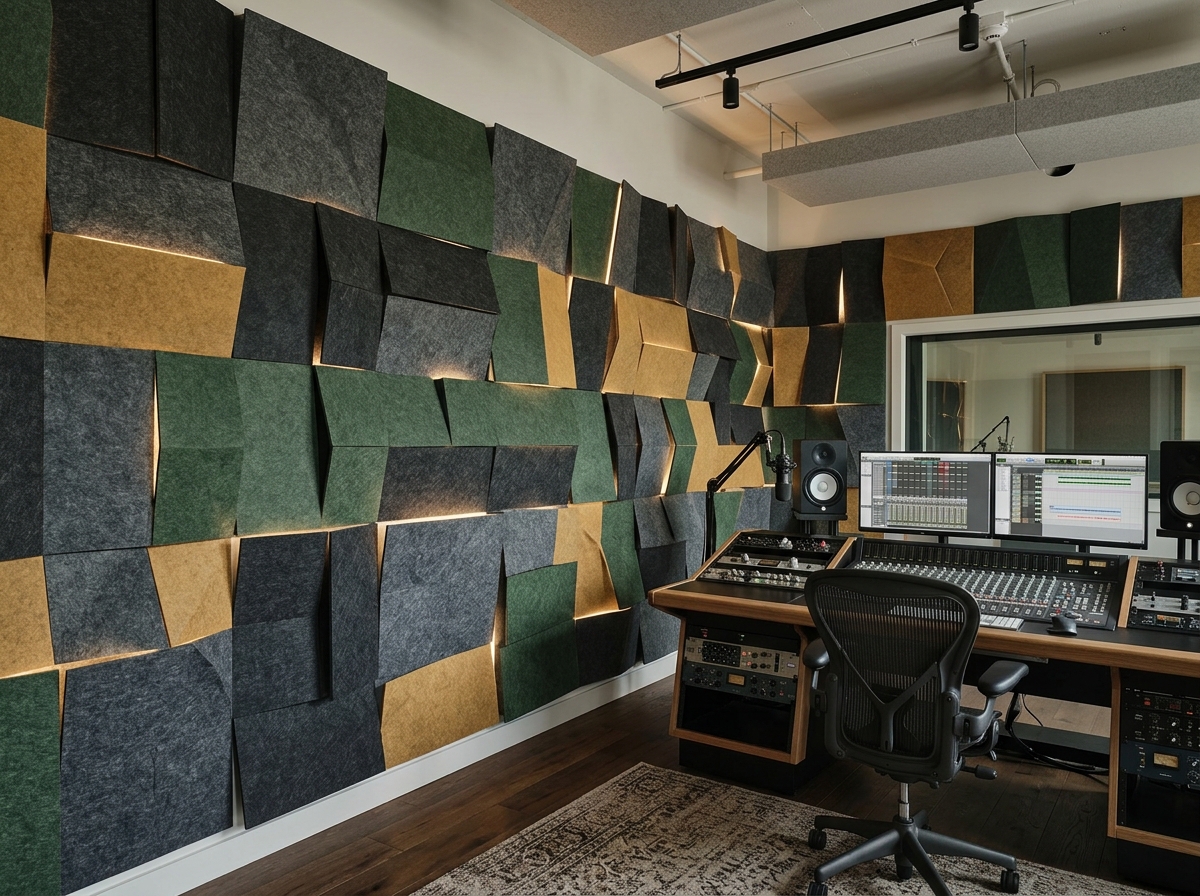
Creating a comfortable indoor environment involves more than choosing attractive furniture, flooring, and lighting. The way sound behaves inside a room can significantly influence communication, concentration, privacy, and the overall experience of a space. In offices, restaurants, classrooms, meeting rooms, and residential interiors, excessive sound reflections can make conversations difficult and create an uncomfortable acoustic environment.
Acoustic PET panels in Bujumbura, Burundi, offer a contemporary solution for managing indoor echo while introducing versatile colours, textures, and decorative designs. Manufactured from polyester fibres, these panels are used in wall treatments, ceiling applications, partitions, and customised interior features.
As commercial spaces and modern interiors evolve, acoustic materials can help architects, contractors, interior designers, and property owners balance aesthetics with practical sound control.
This guide explores how acoustic PET panels work, their benefits, available designs, applications, installation methods, and the important factors to consider when selecting them for a project in Bujumbura.
What Are Acoustic PET Panels?
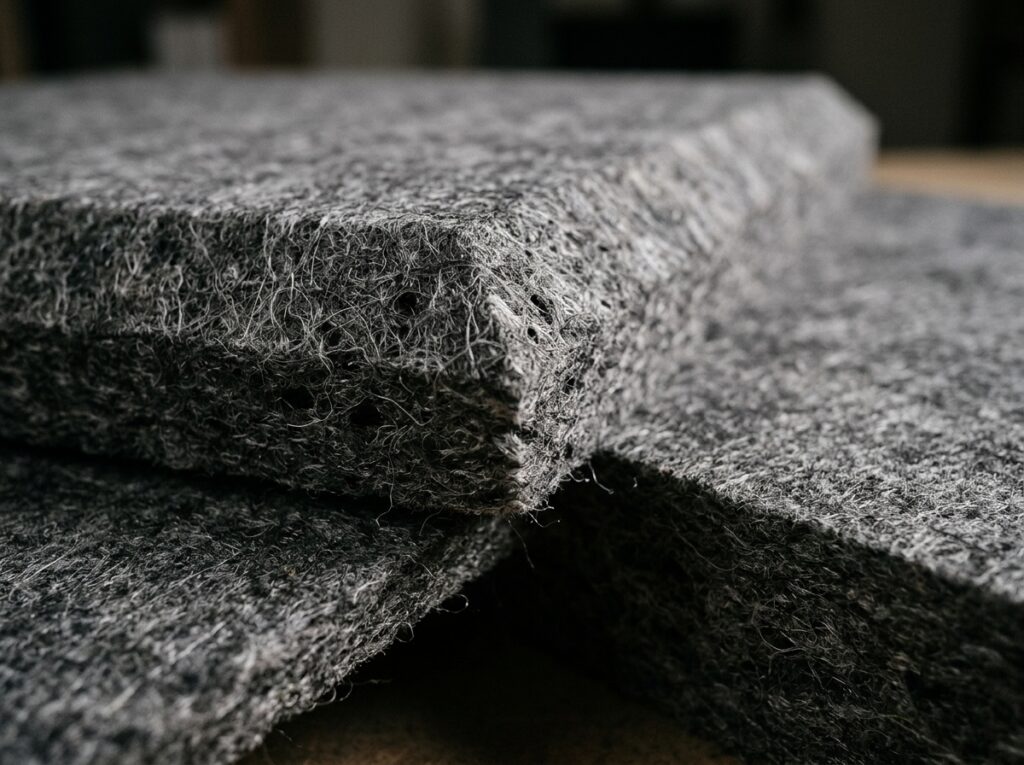
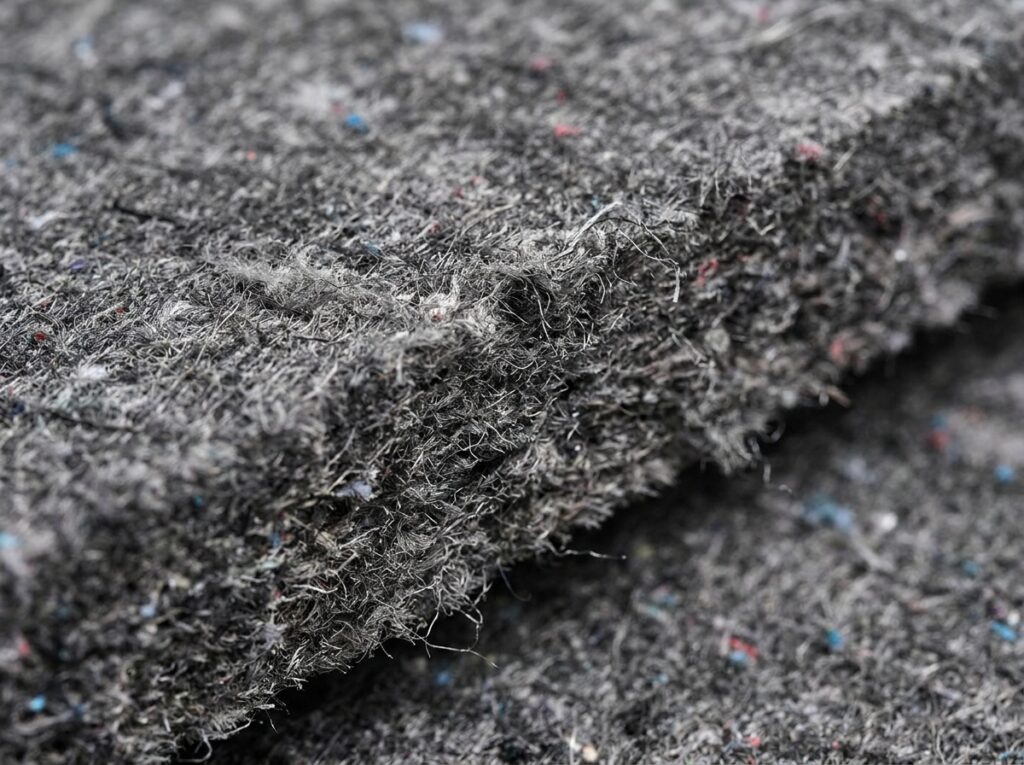
Acoustic PET panels are sound-absorbing panels made from polyester fibres, commonly known as polyethylene terephthalate (PET). Some products incorporate recycled PET material, including fibres recovered from plastic bottles, while the precise recycled content depends on the manufacturer.
During manufacturing, the fibres are processed into a dense, felt-like material. The resulting panels can be supplied in different thicknesses, colours, shapes, and surface finishes.
Unlike decorative wall coverings designed primarily for appearance, acoustic PET panels are intended to help absorb sound energy and reduce unwanted reflections within an enclosed space.
Their lightweight construction and flexibility make them suitable for a variety of interior applications, including:
- Office walls and meeting rooms
- Classroom and educational interiors
- Restaurant and hospitality spaces
- Reception areas and commercial lobbies
- Residential living rooms and home offices
- Decorative acoustic partitions
- Ceiling features and suspended acoustic elements
Many PET panels can also be cut into geometric patterns, branded designs, lettering, and custom shapes. This allows designers to incorporate acoustic treatment into the visual identity of a space.
It is important to distinguish sound absorption from soundproofing. PET panels can help reduce reverberation inside a room, but they do not automatically prevent sound from travelling through walls, windows, doors, or floors.
Why Consider Acoustic PET Panels in Bujumbura?
Bujumbura includes offices, educational facilities, hospitality venues, retail interiors, and residential properties where indoor acoustic comfort may be an important design consideration.
Hard surfaces such as glass, concrete, plaster, tile, and exposed ceilings can reflect sound. When several reflective surfaces are present, voices and other sounds may continue bouncing around the room, making the environment feel louder or less clear.
Acoustic PET panels can help manage these reflections without requiring extensive structural changes.
1. Reduce Echo and Reverberation
One of the main purposes of acoustic PET panels is to absorb some of the sound that would otherwise reflect from walls and ceilings.
In a meeting room, this can help improve speech clarity. In a restaurant, it may contribute to a more comfortable dining environment. In a classroom, it can help students hear a teacher more clearly when the overall acoustic design is appropriate.
The amount of improvement depends on panel thickness, material properties, coverage, placement, room dimensions, and existing surfaces.
2. Improve Speech Clarity in Offices
Open offices and shared workspaces often contain conversations from several people at once. Sound reflections can make these conversations more intrusive and contribute to an acoustically distracting environment.
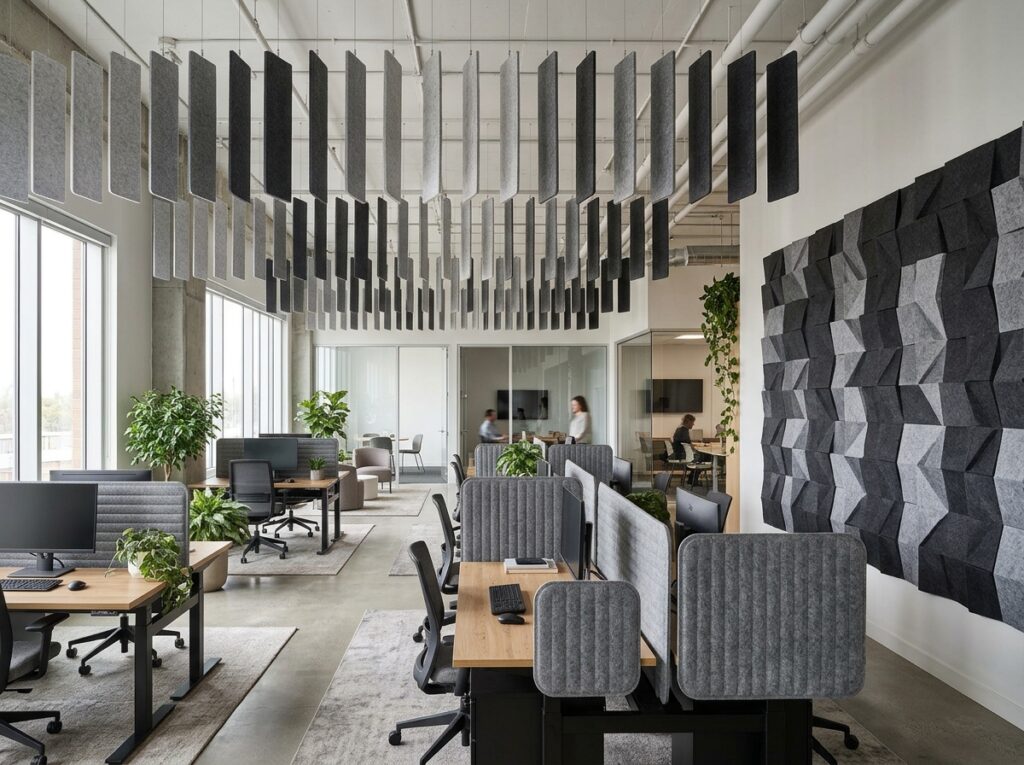
PET panels can be installed on selected walls or incorporated into workstation dividers to absorb some reflected sound.
For best results, panel placement should consider the room layout, desk arrangement, ceiling height, and main sources of speech.
3. Support Better Learning Environments
Classrooms, training centres, libraries, and educational meeting spaces benefit from clear communication.
When sound reverberates excessively, students may struggle to understand spoken instructions, especially in larger rooms or spaces with hard finishes.
Acoustic PET panels can form part of a broader acoustic treatment strategy, helping educational designers balance durable interior finishes with improved listening conditions.
4. Enhance Interior Design
PET felt panels are available in a variety of colours, thicknesses, shapes, and patterns, depending on the manufacturer.
Designers can use contrasting colours to create feature walls, geometric layouts, decorative partitions, or coordinated ceiling designs. Panels may also be cut to incorporate logos, signage, or visual motifs.
This makes them suitable for projects where acoustic performance and architectural appearance must work together.
5. Explore Recycled Material Options
Some PET acoustic panels contain recycled polyester fibres, which may help reduce reliance on virgin raw materials.
However, recycled content varies between products. Buyers should request a manufacturer’s declaration or technical documentation if recycled content, recyclability, or other environmental characteristics are important to the project.
A sustainability claim should be based on the actual product specification rather than assuming that all PET panels contain the same percentage of recycled material.
Types of Acoustic PET Panels Available
Different panel formats serve different design and acoustic requirements. The most suitable option depends on the intended installation location, desired appearance, available space, and sound absorption target.
Flat PET Felt Panels
Flat panels feature a simple, uniform surface and can be mounted on walls or incorporated into suitable ceiling systems.
Their understated appearance makes them useful for offices, classrooms, meeting rooms, and other spaces where acoustic treatment should blend into the interior.
Flat panels can be arranged across selected wall sections or combined into a larger composition. The amount of coverage should be determined according to the room’s acoustic needs rather than appearance alone.
Decorative and Geometric PET Panels
Decorative PET panels are cut or formed into shapes such as hexagons, circles, strips, triangles, and other geometric patterns.
They allow designers to introduce visual interest while treating selected reflective surfaces.
Different shapes can be combined to create feature walls in reception areas, retail environments, restaurants, and collaborative workspaces.
The decorative profile does not independently determine acoustic performance. The underlying material, thickness, mounting method, and installed coverage remain important.
CNC-Cut PET Panels
Computer numerical control (CNC) cutting allows PET felt sheets to be manufactured into precise patterns and custom shapes using digital design files.
This approach can be useful for projects that require consistent repeated elements, branded wall designs, decorative screens, or detailed cut-out patterns.
Before production, designers should confirm the material thickness, minimum feature sizes, panel dimensions, and manufacturing tolerances with the supplier.
PET Acoustic Baffles and Ceiling Elements
In suitable systems, PET material can be used to create vertical baffles, suspended acoustic elements, or ceiling features.
These products add sound-absorbing surfaces without requiring every wall to be covered. Their placement can be particularly useful in selected open-plan spaces and rooms with large reflective ceilings.
Suspended installations require appropriate fixing methods and consideration of ceiling structure, clearances, maintenance access, and applicable fire-safety requirements.
Custom-Coloured and Branded Panels
Some manufacturers offer a broad colour range and custom cutting options. This can help businesses coordinate acoustic panels with their branding, furniture, signage, and interior finishes.
For large orders, request physical samples before confirming the final colour and finish. Different production batches may exhibit slight variations in shade or texture.
How Do Acoustic PET Panels Work?
Sound travels through a room as pressure waves. When these waves encounter hard surfaces, some energy is reflected back into the space.
Repeated reflections can cause reverberation, making speech and other sounds overlap. This is especially noticeable in rooms with many hard surfaces and limited sound-absorbing materials.
Porous PET felt materials can absorb part of the sound energy as air movement within the material interacts with its fibre structure. Some of the acoustic energy is dissipated rather than being reflected back into the room.
The resulting performance depends on several factors.
Panel thickness: Thicker panels may provide improved absorption over a broader range of frequencies, depending on their construction.
Mounting arrangement: Panels installed with an appropriate air gap can perform differently from panels fixed directly to a wall.
Surface coverage: The total area of installed absorption influences the room’s overall acoustic response.
Room characteristics: Ceiling height, room volume, furniture, windows, flooring, and other surfaces affect reverberation.
Product construction: Fibre density, material composition, and manufacturing details influence performance.
For this reason, buyers should review acoustic test results for the actual panel and installation arrangement rather than relying on a general statement that a product is “soundproof.”
Where Can Acoustic PET Panels Be Used in Bujumbura?
Offices and Corporate Interiors
Offices can use PET panels to manage sound reflections in meeting rooms, boardrooms, reception areas, and shared workspaces.
Panels can be mounted behind meeting tables, installed on selected walls, or integrated into partitions where appropriate. In open-plan environments, wall panels may be combined with ceiling absorption and other acoustic measures.
For confidential conversations, additional sound-isolation measures may be necessary because absorption alone does not guarantee speech privacy between rooms.
Restaurants and Cafés
Restaurants often contain hard flooring, tables, windows, and other reflective surfaces. When many people speak at once, reflected sound can increase the overall noise level.
PET panels installed on suitable walls or ceilings can help reduce some reflections, supporting a more comfortable dining atmosphere.
The panels should be selected according to cleaning needs, expected wear, fire requirements, and the operating conditions of the venue.
Schools and Training Facilities
Classrooms, libraries, lecture rooms, and training centres can benefit from acoustic treatment that helps reduce reverberation.
PET panels may be installed on selected walls or incorporated into suitable ceiling designs. Their position should reflect the room’s dimensions, teacher location, student seating, and main reflective surfaces.
Hotels and Hospitality Interiors
Hotels, reception areas, lounges, and conference rooms need to balance visual design with acoustic comfort.
Decorative PET panels can support contemporary interior concepts while helping manage reflections from hard finishes.
For hospitality projects, designers should also consider cleaning procedures, durability, fire performance, and any requirements for public-building interiors.
Homes and Residential Interiors
Home offices, living rooms, entertainment areas, and other residential spaces can use PET panels to improve acoustic comfort.
A feature wall behind a desk or television may provide both a decorative element and additional sound absorption. The final layout should be selected according to the room’s actual acoustic needs.
If the main problem is noise travelling from one room to another, the source may require improved wall construction, door seals, or another sound-isolation solution rather than wall-mounted PET panels alone.
How to Choose the Right Acoustic PET Panels
Selecting the right product involves comparing acoustic performance, design, installation requirements, and long-term suitability.
Check Thickness and Acoustic Test Results
PET panels are available in various thicknesses, with exact options depending on the supplier.
Thicker material may provide stronger absorption in certain frequency ranges, but thickness alone does not tell the whole story. Review the manufacturer’s acoustic test report and check the test method, mounting arrangement, sample size, and reported ratings.
The Noise Reduction Coefficient (NRC), where provided, is a useful summary measure, but it should not be treated as a guarantee of performance in every room or at every frequency.
Confirm the Material Composition
Ask whether the panels are made from virgin polyester, recycled PET, or a combination of fibres.
If environmental claims matter to your project, request supporting documentation for recycled content and end-of-life recyclability.
Review Fire Performance
Fire performance is an important consideration in commercial and public interiors.
Confirm the applicable fire classification for the exact product, colour, thickness, and configuration being proposed. A fire rating for one product should not automatically be applied to another panel from the same supplier.
Where required, request a valid test report or certificate and confirm that the product meets the project’s applicable building requirements.
Select a Suitable Colour and Finish
Colour selection can influence how panels integrate with furniture, lighting, branding, and architectural finishes.
Neutral colours may suit understated office interiors, while contrasting shades can create visual features in hospitality and retail environments.
Samples are useful for checking colour, texture, and appearance under the project’s actual lighting conditions.
Evaluate Installation Requirements
Consider whether the panels will be installed using suitable adhesive, mechanical fixings, concealed supports, or a suspended mounting system.
The correct method depends on the panel, substrate, installation location, weight, and manufacturer’s recommendations. Ceiling installations may require additional structural checks and suitable fixing hardware.
Installation and Maintenance of Acoustic PET Panels
Correct installation helps ensure that PET panels remain secure and provide the intended acoustic function.
Before installation, the surface should be checked for cleanliness, dryness, flatness, and suitability for the selected fixing method. The panel layout should be marked out so that joints, edges, cut-outs, and decorative patterns align as intended.
Panels should be cut using an appropriate tool and technique for the specific material. For detailed patterns or large quantities, CNC cutting may help achieve consistent dimensions.
Adhesives should only be used when compatible with the panel and substrate. Mechanical fixings may be more appropriate in certain situations, especially where removability or additional support is required.
For ceiling baffles and suspended elements, the installer should verify the supporting structure, fixing capacity, and applicable safety requirements before installation.
Routine care generally involves removing dust with a suitable vacuum attachment or soft brush. Minor marks may be addressed using the cleaning method recommended by the manufacturer. Excessive moisture or aggressive cleaning products should be avoided unless the product documentation specifically permits them.
What Affects the Cost of Acoustic PET Panels?
The cost of acoustic PET panels in Bujumbura will depend on the product specification and the overall project requirements. Obtain a quotation based on the actual material, dimensions, quantity, and installation method.
Common cost factors include:
- Panel thickness and density: Different constructions may have different material and performance characteristics.
- Panel dimensions: Large sheets, custom sizes, and unusual shapes can affect material usage and cutting requirements.
- Design complexity: CNC-cut patterns, logos, and intricate profiles may require additional design and production time.
- Colour selection: Standard colours and custom finishes may have different availability and pricing.
- Installation method: Adhesive fixing, mechanical mounting, and suspended systems have different labour and material requirements.
- Quantity: The number of panels can influence production efficiency, packaging, and transport costs.
- Shipping and handling: For imported products, freight, packaging, lead times, and applicable import charges may affect the delivered cost.
- Supporting materials: Battens, fixings, suspension hardware, and other accessories may need to be included in the quotation.
For an accurate comparison, request an itemised quotation that identifies the panel specification, acoustic documentation, delivery terms, accessories, and installation scope.
Common Mistakes to Avoid When Buying PET Acoustic Panels
One frequent mistake is expecting PET panels to block all incoming noise. Their primary role is sound absorption within a space, not complete sound isolation through a building structure.
Another mistake is choosing panels based only on colour or appearance. Decorative panels should also meet the project’s acoustic and safety requirements.
Buyers should avoid assuming that every panel with the same thickness offers identical sound absorption. Material composition, density, mounting arrangement, and tested construction can produce different results.
It is also important not to overlook installation details. Gaps, unsuitable adhesives, weak substrates, or inadequate ceiling fixings can compromise the finished installation.
Finally, avoid accepting general sustainability or fire-safety claims without checking the documentation for the exact product being supplied.
Frequently Asked Questions
Are acoustic PET panels suitable for offices in Bujumbura?
Yes. They can be used in offices, meeting rooms, reception areas, and shared workspaces to help reduce sound reflections. The appropriate panel specification and coverage depend on the room’s acoustic conditions.
Do PET panels completely soundproof a room?
No. PET acoustic panels primarily absorb reflected sound and help reduce reverberation. Sound travelling through walls, windows, doors, and floors may require separate sound-isolation measures.
Are acoustic PET panels made from recycled plastic bottles?
Some products contain recycled PET from plastic bottles, while others use different proportions of recycled and virgin polyester. Check the manufacturer’s material declaration to establish the recycled content of a specific panel.
Can PET panels be customised?
Many products can be cut into custom shapes, sizes, and patterns. CNC cutting may be used for detailed designs, decorative screens, and branded installations, depending on the panel material and manufacturer’s capabilities.
How do I know which thickness to choose?
Start with the acoustic objective and the room’s dimensions. Compare manufacturer test data for the available thicknesses and mounting arrangements. For demanding projects, an acoustic assessment can help establish the required absorption and coverage.
Can PET panels be installed on ceilings?
Certain PET panel systems are suitable for ceiling mounting, suspended baffles, or acoustic ceiling features. The installation method must be appropriate for the product and supporting structure.
Are PET acoustic panels easy to maintain?
Many products require relatively simple maintenance, such as dust removal and occasional spot cleaning. Follow the manufacturer’s instructions because cleaning suitability varies by material and finish.
Conclusion: Choose Acoustic PET Panels for Better Indoor Sound Control
Acoustic PET panels provide a flexible way to improve indoor acoustic comfort while introducing contemporary colours, patterns, and textures. For offices, educational facilities, hospitality interiors, commercial premises, and homes in Bujumbura, they can help reduce unwanted sound reflections and support clearer communication.
Choosing the right solution requires more than selecting an attractive panel. Buyers should compare thickness, acoustic test results, material composition, fire performance, mounting arrangements, and maintenance requirements before making a decision.
It is equally important to understand the difference between sound absorption and soundproofing. PET panels can help manage echo within a room, but buildings with significant noise transmission problems may need additional construction or sound-isolation measures.
Planning an acoustic interior project in Bujumbura, Burundi? Explore acoustic PET panel options, request technical documentation and material samples, and compare specifications to identify a product that suits your design, performance, and budget requirements.