
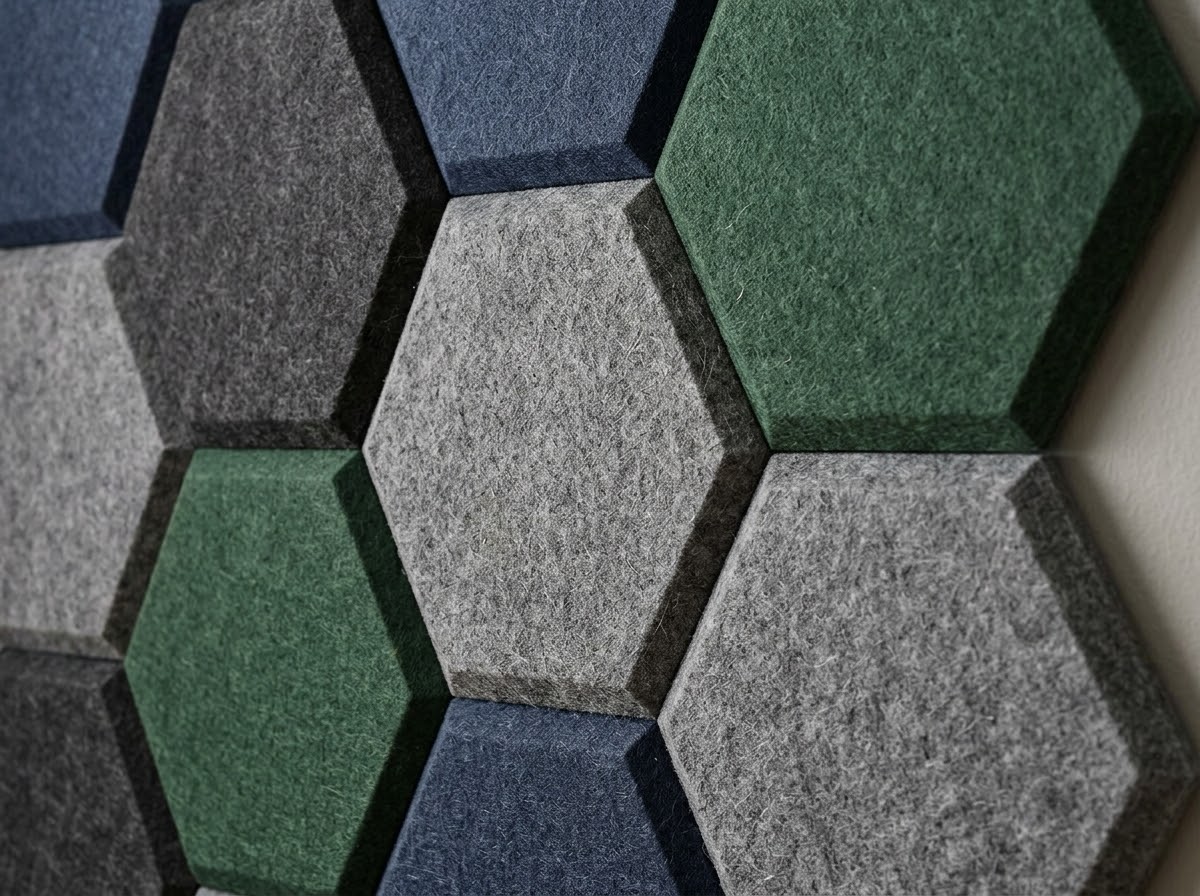
Modern interiors are expected to do more than look attractive. Offices need to support focused work, meeting rooms need clear communication, restaurants need a comfortable atmosphere, and educational spaces need to make speech easier to understand. When hard surfaces dominate a room, sound can reflect repeatedly, creating unwanted echo and excessive reverberation.
This is where acoustic PET panels in Lomé, Togo can provide a practical solution.
Made from polyester fibres, often incorporating recycled PET material, these panels are designed primarily to absorb unwanted sound reflections. Their lightweight construction, broad colour selection, and ability to be CNC-cut into different shapes make them suitable for both acoustic treatment and interior design.
However, choosing an acoustic panel should not be based on appearance alone. The thickness, density, mounting method, coverage area, and air gap behind the panel can all influence acoustic performance. A properly planned acoustic treatment system can therefore achieve much better results than simply placing decorative panels randomly on a wall.
What Are Acoustic PET Panels?
Acoustic PET panels are sound-absorbing boards manufactured from polyester fibres. Many products use recycled PET bottles as part of their raw material, which are processed into fibres and formed into semi-rigid acoustic panels.
Unlike hard surfaces such as glass, concrete, plaster, and untreated timber, the fibrous structure of PET acoustic material allows sound energy to enter the panel rather than being reflected entirely back into the room.
The result is a reduction in excessive reflections and reverberation.
PET panels are available in different thicknesses and configurations. Current products commonly include options such as 9 mm, 12 mm, 18 mm and 24 mm, although exact specifications differ between manufacturers.
This variety allows acoustic professionals to select a suitable configuration according to the requirements of a particular room.
Acoustic Treatment Is Different From Soundproofing
One of the most important points to understand before installing PET panels in Lomé is the difference between sound absorption and sound isolation.
PET acoustic panels primarily improve the acoustics inside a room.
They can:
- Reduce echo
- Control reverberation
- Improve speech clarity
- Reduce excessive sound reflections
- Improve acoustic comfort
- Make conversations easier to understand
They are not normally intended to completely prevent sound from travelling through a wall into another room.
For example, if an office has a severe echo problem, PET panels may significantly improve the acoustic environment. If the problem is loud noise coming through an adjoining wall, however, a soundproofing system involving mass, decoupling, cavity treatment and sealing may be required.
This distinction is essential when planning an acoustic project.
Why PET Panels Work Well in Modern Interiors
One reason PET acoustic panels have become popular is that they combine acoustic functionality with design flexibility.
Traditional acoustic treatments can sometimes make an interior look overly technical. PET panels provide another option because the material can be manufactured in different colours, patterns, profiles and shapes.
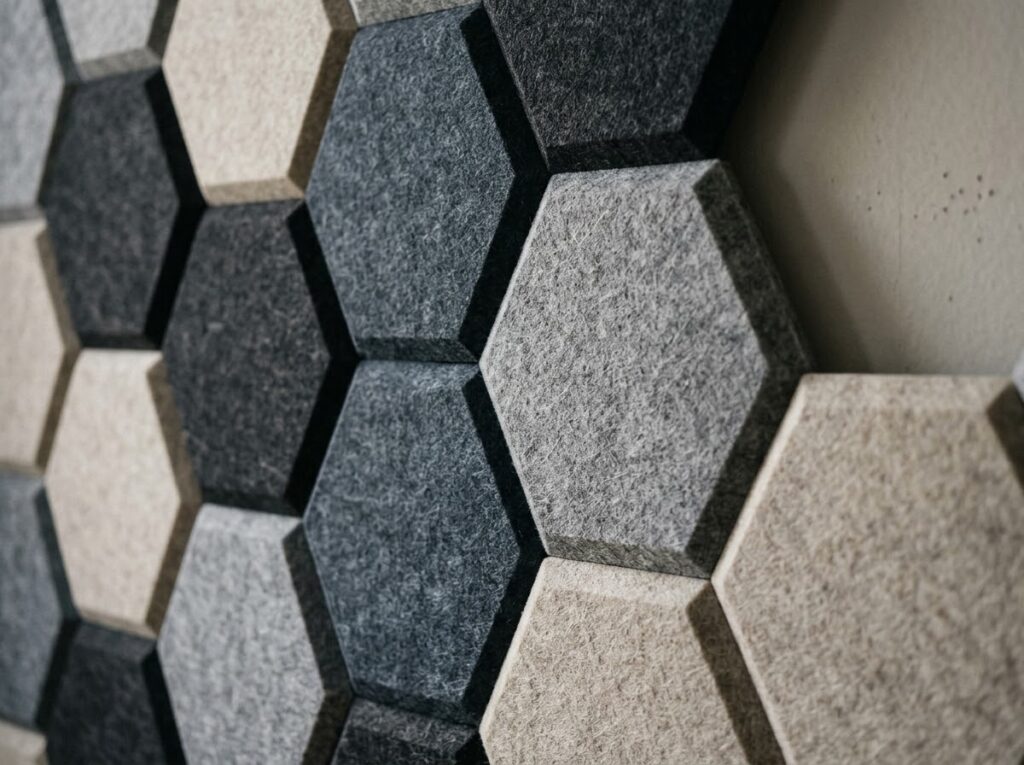
Some PET systems can be CNC-cut into geometric designs, curves, perforations, fluted profiles and custom patterns. This makes it possible to create an acoustic feature wall rather than simply covering a wall with conventional rectangular panels.
For commercial interiors in Lomé, this can be particularly useful when the acoustic treatment needs to complement the architectural identity of a space.
Acoustic PET Panels for Offices in Lomé
Open-plan offices can be acoustically challenging.
Employees may be working close to one another while simultaneously participating in phone calls, meetings and conversations. Hard ceilings, glass partitions, tiled floors and large windows can create multiple reflective surfaces.
Instead of allowing sound to continuously bounce around the room, strategically positioned PET acoustic panels can absorb some of those reflections.
They can be installed as:
- Wall panels
- Acoustic ceiling panels
- Hanging baffles
- Suspended acoustic features
- Desk or workstation screens
- Decorative acoustic partitions
PET panels are already used across office environments because they can combine sound absorption with lightweight architectural design.
For a larger office in Lomé, acoustic planning should consider the entire room rather than treating only the most visibly noisy wall.
Improving Meeting Room Speech Clarity
Meeting rooms require particularly good speech intelligibility.
When a person speaks, the sound should reach other participants clearly without excessive reflections from the walls and ceiling.
A room with too much reverberation can make conversations tiring, particularly when several people are speaking.
PET acoustic panels can be positioned at strategic reflection points to help control these unwanted reflections.
A professional acoustic assessment can consider:
- Room dimensions
- Ceiling height
- Existing floor finishes
- Wall construction
- Glass surfaces
- Furniture
- Number of occupants
- Expected use of the room
- Existing reverberation
- Required acoustic improvement
The objective is not necessarily to cover every surface. Instead, the treatment should be designed according to the room’s acoustic requirements.
PET Panels for Restaurants and Hospitality Spaces
Restaurants, cafés and hospitality interiors often contain a combination of highly reflective surfaces.
Tables, glass, ceramic flooring, decorative walls and ceilings can all contribute to sound reflection.
As occupancy increases, conversations can become louder. This can create an uncomfortable acoustic environment even when the interior design itself looks excellent.
PET panels can be incorporated into walls or ceilings without forcing the designer to compromise heavily on aesthetics.
For hospitality projects in Lomé, they can be designed as:
- Decorative wall patterns
- Ceiling features
- Suspended baffles
- Branded acoustic artwork
- Partition elements
- Geometric feature walls
The objective is to reduce excessive reverberation while preserving the intended architectural character of the restaurant, café, hotel or reception area.
Acoustic PET Panels for Schools and Educational Spaces
Classrooms depend heavily on speech clarity.
Students need to hear teachers clearly, while teachers need to communicate without constantly increasing their voice level.
Excessive reverberation can make speech less distinct, particularly in rooms with hard floors, walls and ceilings.
PET acoustic treatment can help reduce some of those reflections.
Educational applications can include:
- Classrooms
- Training rooms
- Lecture spaces
- Libraries
- Activity rooms
- Multipurpose halls
- Meeting areas
PET is also attractive for these applications because many products are lightweight and can be manufactured in different colours and shapes.
Ceiling Applications Can Make a Major Difference
Walls are not the only surfaces that can contribute to acoustic problems.
In large commercial interiors, ceilings can provide an important opportunity for sound absorption.
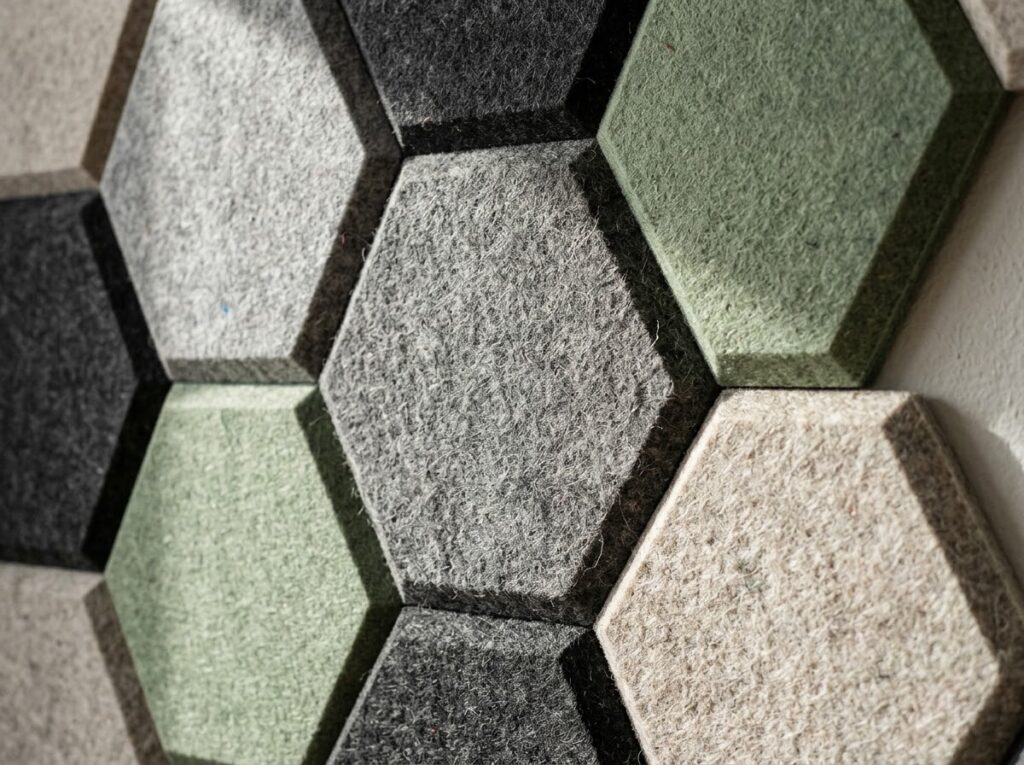
PET panels can be used as suspended acoustic baffles or ceiling elements. Suspended systems increase the exposed acoustic surface area and can also create an air cavity behind the material.
The mounting arrangement matters.
For example, published data from one PET product range shows that a 24 mm panel has a listed NRC of 0.75 when directly configured, increasing to 0.85 with a 25 mm air gap and 0.90 with a 50 mm air gap. These figures are specific to that product and test configuration, but they demonstrate why installation conditions matter when specifying acoustic materials.
Therefore, an acoustic design should consider both the panel and the way it will be installed.
Thickness and Acoustic Performance
There is no universal PET panel specification that is ideal for every project.
Thicker panels can generally provide greater sound absorption, but performance also depends on density, mounting configuration, air gap and the frequencies being targeted.
For example, an environmental product declaration covering different PET acoustic panel configurations lists NRC values ranging from approximately 0.30 for a 9 mm flat wall panel to 0.70 for a 24 mm flat wall panel, while some three-dimensional configurations reach higher values.
This demonstrates why simply asking for the panel with the highest advertised NRC may not always produce the best solution.
The correct approach is to match:
Room requirements + panel specification + coverage + mounting method = acoustic result
The Importance of Air Gaps
The space behind an acoustic panel can influence its effectiveness.
A PET panel installed directly against a hard wall behaves differently from the same panel installed with a deliberate cavity behind it.
The air gap allows the acoustic system to interact differently with sound waves and can improve absorption at certain frequencies.
Published testing from PET panel manufacturers shows that adding an air gap can increase the stated NRC of certain products.
This is why professional acoustic installation should not treat every wall as a simple adhesive installation.
The mounting method should be selected according to the acoustic objective.
Custom Designs for Architectural Interiors
One of the strongest advantages of PET acoustic panels is their ability to become part of the visual design.
Because PET felt can be cut and shaped, acoustic treatment can be created around an existing interior concept.
Possible designs include:
- Geometric wall patterns
- Vertical linear panels
- Curved acoustic elements
- Hexagonal arrangements
- Branded logos
- Decorative partitions
- Layered wall installations
- Custom ceiling features
- Acoustic artwork
CNC fabrication can also allow panels to be produced in highly customized forms.
For offices and commercial interiors in Lomé, this means acoustic treatment does not necessarily have to look like conventional technical equipment.
PET Panels and Sustainable Interior Design
Another reason PET acoustic panels are attracting attention is their use of recycled polyester in many product ranges.
The exact recycled content varies by manufacturer. Some products use substantial amounts of post-consumer PET material, while others specify different recycled-content percentages.
For example, one current PET acoustic range states that its material contains at least 75% recycled plastic bottle content, while other manufacturers report recycled content of up to 65% or higher depending on the product.
Therefore, sustainability claims should always be checked against the technical documentation of the selected product.
For projects pursuing environmentally conscious interior design, recycled PET can be one component of a broader material strategy.
Professional Acoustic PET Panel Installation in Lomé
Good acoustic materials still require proper planning and installation.
A professional project can begin with an assessment of the existing room and its acoustic problems.
The process may include:
1. Site Assessment
The room dimensions, surfaces, occupancy and sources of unwanted reflections are evaluated.
2. Acoustic Planning
The required treatment areas and appropriate panel types are determined according to the room’s purpose.
3. Material Selection
Panel thickness, density, colour, shape and mounting method are selected.
4. Layout Design
Panels are positioned to provide useful acoustic coverage while maintaining the desired interior appearance.
5. Installation
Panels may be mechanically fixed, bonded, suspended or installed using a purpose-designed mounting system, depending on the selected product.
6. Final Inspection
The completed installation is checked for alignment, secure fixing, finish quality and coordination with lighting, HVAC and other building services.
This approach produces a more reliable result than simply purchasing panels and installing them wherever wall space is available.
Common Mistakes When Using PET Acoustic Panels
Several mistakes can reduce the effectiveness of an acoustic treatment project.
Treating PET Panels as Soundproofing
PET panels mainly control room acoustics. They should not automatically be specified as a solution for noise travelling through walls.
Using Too Little Coverage
A few decorative panels may have limited impact in a highly reverberant room.
Ignoring the Ceiling
Large ceilings can represent a significant reflective surface, particularly in commercial spaces.
Choosing Panels Only by Colour
A visually attractive panel may not have the required thickness, density or acoustic performance.
Ignoring Mounting Conditions
Direct mounting and an air-gap installation can produce different acoustic results.
Installing Without a Plan
Random placement may not address the most important reflection paths.
A professional acoustic assessment helps avoid these problems.
Acoustic PET Panels vs Traditional Decorative Finishes
PET acoustic panels offer a different combination of properties compared with conventional interior finishes.
| Feature | PET Acoustic Panels | Hard Decorative Surfaces |
|---|---|---|
| Sound absorption | Designed for absorption | Generally reflective |
| Echo control | Effective when properly specified | Limited |
| Design flexibility | High | Depends on material |
| Custom shapes | Often possible | Depends on fabrication |
| Wall application | Yes | Yes |
| Ceiling application | Yes | Yes |
| Lightweight options | Available | Varies |
| Recycled-content options | Widely available | Material dependent |
| Soundproofing between rooms | Not their primary function | Not their primary function |
The key advantage is that PET panels can combine acoustic treatment with architectural flexibility.
Why Professional Acoustic Design Matters in Lomé
Every room behaves differently.
A small meeting room, large restaurant, open-plan office and classroom can have completely different acoustic requirements.
Simply selecting the thickest or most expensive PET panel does not automatically guarantee the best result.
A professional acoustic service can determine:
- Where absorption is needed
- How much surface coverage is appropriate
- Whether walls or ceilings should be treated
- Which panel thickness is suitable
- Whether an air gap should be incorporated
- Whether additional soundproofing is required
- How acoustic treatment can integrate with the interior design
This creates a complete acoustic strategy instead of a purely decorative installation.
Frequently Asked Questions
Are acoustic PET panels soundproof?
No. PET panels are primarily sound-absorbing materials used to control echo and reverberation inside a room. Soundproofing requires a different construction approach designed to reduce sound transmission between spaces.
Are PET acoustic panels made from recycled plastic?
Many PET acoustic panels use recycled polyester derived from PET bottles, although the exact recycled content varies by manufacturer and product. Always check the technical documentation for the selected material.
Can PET panels be installed on ceilings?
Yes. PET acoustic materials can be used for suspended baffles and other ceiling systems, depending on the product and mounting method.
Can PET panels be customized?
Many PET products can be CNC-cut, shaped, patterned or printed, allowing custom acoustic designs for commercial and architectural interiors.
What thickness should be used?
There is no single thickness suitable for every room. Selection should consider the acoustic target, frequency range, mounting arrangement, air gap and required coverage.
Are PET panels suitable for offices?
Yes. They are commonly used in offices, meeting rooms and open-plan workspaces to improve acoustic comfort and speech clarity.
Can PET panels improve restaurant acoustics?
Yes. They can help reduce excessive reverberation and reflections in restaurants and hospitality environments when properly designed and installed.
Conclusion
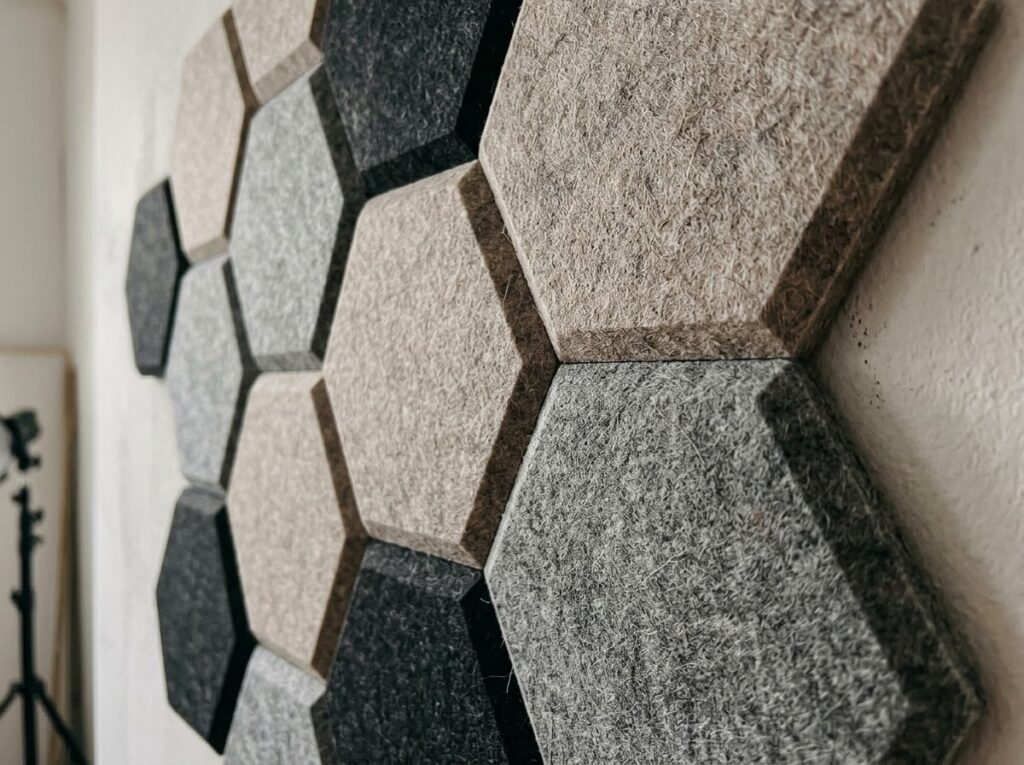
Acoustic PET panels offer a flexible way to improve the sound environment of modern interiors in Lomé, Togo. Their combination of sound absorption, lightweight construction, custom design potential and recycled-material options makes them suitable for offices, meeting rooms, restaurants, educational spaces, hospitality interiors and other commercial environments.
However, the best results come from treating PET panels as part of a complete acoustic treatment strategy, rather than simply as decorative wall materials.
Thickness, density, coverage, mounting method and air gaps all influence performance. Just as importantly, PET panels should be distinguished from true soundproofing systems when the objective is to prevent noise transmission between rooms.
With professional acoustic planning, carefully selected materials and correctly positioned wall or ceiling treatments, PET panels can transform a hard, echoing interior into a more comfortable and functional acoustic environment.