
Introduction
Noise in Dubai apartments, villas, and offices often ruins sleep, focus, and privacy. Fiberglass acoustic insulation in Dubai gives a direct way to cut that noise inside walls, ceilings, and partitions.
Many buildings have lightweight partitions and constant HVAC hum, so sounds travel much farther than people expect. Fiberglass acoustic insulation uses dense glass fibers to absorb sound energy and slow heat flow, so it raises comfort and reduces wasted cooling energy at the same time. In this guide, you will see what it is, how it works, where it fits best, and how Shaheen Acoustic designs the right system for UAE projects.
Read on to see how a well planned fiberglass design can turn a noisy space into a calmer one without major changes to your layout.
Key Takeaways
Fiberglass acoustic insulation uses dense glass fibers to soak up sound energy. It turns part of the noise into tiny amounts of heat. This reduces echoes inside rooms and cuts sound travel through walls and ceilings.
Dubai’s high rises, highways, and round the clock HVAC use create constant background noise. Without proper acoustic planning, residents and staff face sleep problems, stress, and poor focus. Fiberglass insulation reduces both street noise and mechanical sound inside buildings.
Key performance ideas include NRC (Noise Reduction Coefficient) for sound absorption and STC (Sound Transmission Class) for sound blocking. Density and thickness also matter a lot. Higher density and thicker sections usually give better low frequency control in walls and ceilings.
Common uses include apartments, villas, offices, meeting rooms, hotels, home theaters, studios, HVAC ducts, and mechanical rooms. Each area needs the right mix of thickness, density, and layout to deal with its main noise sources.
Shaheen Acoustic brings local UAE experience and engineering based design to every project. The team selects the right fiberglass grade, installs it with sealed joints, and supports clients across Dubai, Abu Dhabi, Sharjah, and the wider UAE.
What Is Fiberglass Acoustic Insulation and How Does It Work?

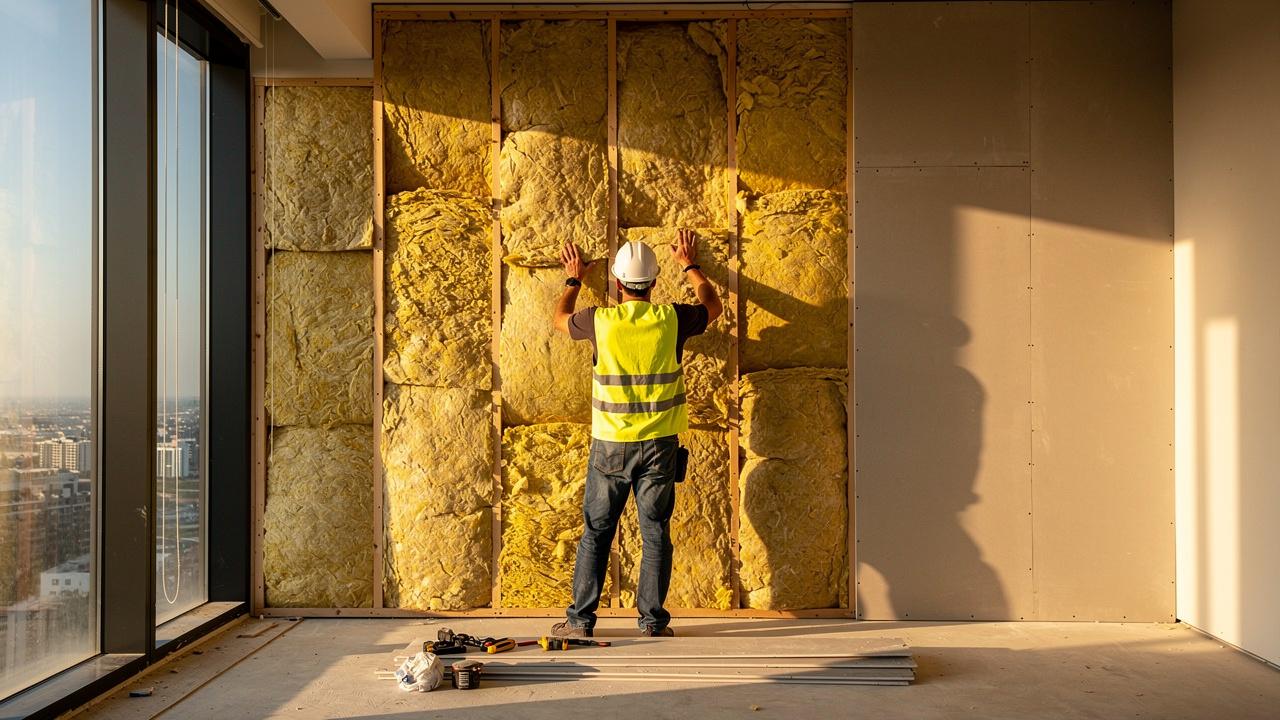
Fiberglass acoustic insulation is a sound absorbing material made from very fine glass fibers packed into rolls, batts, or panels. In Dubai projects, it sits inside wall and ceiling cavities so it can intercept noise before that noise reaches the next room. Instead of bouncing sound back, fiberglass lets sound enter the fiber network and then slows it down.
When sound waves move through the porous glass matrix, air molecules rub against the fibers, a process documented in research on Fiber Fabric-Reinforced Laminated Veneer lumber used as insulation material for green buildings. That friction turns part of the acoustic energy into a small amount of heat, which the material spreads out safely. In practice, this means voices, TV noise, and HVAC hum lose strength as they pass through the insulated cavity, so less sound reaches your neighbor or the next office.
You can think of fiberglass acoustic insulation working through three simple steps:
Sound enters the open, porous structure between glass fibers.
Air movement meets resistance, and friction converts some sound energy into heat.
The weaker remaining sound continues through the structure, so far less noise comes out the other side.
Two main performance metrics help compare fiberglass products:
Noise Reduction Coefficient (NRC) – shows how much sound the surface absorbs. NRC between 0.70 and 1.15, which Shaheen Acoustic achieves with the right density and mounting method, means the surface absorbs most of the sound that hits it.
Sound Transmission Class (STC) – describes how well a full wall or floor build up blocks sound from one side to the other.
Research from National Research Council Canada shows that adding fiberglass into a standard stud wall can improve STC by around 8 to 10 points compared with an empty cavity. That change is very noticeable to occupants. In short, fiberglass acoustic insulation in Dubai improves both the quality of sound inside a room and the privacy between rooms.
Why Acoustic Insulation Is a Priority in Dubai’s Built Environment

Acoustic insulation is a priority in Dubai because dense high rises, busy roads, and powerful HVAC systems all add to constant background noise. Without proper acoustic control, that noise travels through structures and air gaps, reducing comfort in homes and workspaces.
Common complaints from residents and tenants include:
Footsteps and furniture noise from floors above
Loud TV sound or conversations from neighboring units
Traffic, aircraft, or construction noise from outside
Mechanical noise from lifts, pumps, and air conditioning
Residential towers in areas like Dubai Marina, Downtown Dubai, and Jumeirah Lakes Towers often share thin walls and floor slabs. Sounds from neighbors, lifts, and traffic can keep families awake or disturb remote work. According to the World Health Organization, long term exposure to high urban noise levels raises the risk of sleep disturbance and heart problems, so this is more than a simple annoyance.
According to guidance from the World Health Organization (WHO), long term environmental noise exposure is linked with sleep disturbance and higher risk of cardiovascular disease.
Source: World Health Organization – Environmental Noise Guidelines
Workplaces also feel the impact. Open plan offices in Business Bay or DIFC mix phone calls, printers, and conversations in the same open space. Research from Oxford Economics found that employees lose up to 86 minutes per day due to noise and other distractions in open offices. Proper fiberglass acoustic insulation inside partitions and ceilings helps cut speech transfer between rooms and reduces overall sound build up.
Dubai’s hot climate adds one more layer. Air conditioning and mechanical ventilation run most of the year in towers, villas, malls, and factories. Fans, compressors, and ducts add low frequency noise on top of regular building sounds. The U.S. Department of Energy notes that heating and cooling account for around 40 percent of energy use in commercial buildings, so insulation that reduces both heat flow and noise, like fiberglass, supports comfort and energy goals at the same time.
Key Properties and Specifications: What to Look for When Selecting Fiberglass Insulation
Key properties for fiberglass acoustic insulation in Dubai include density, thickness, NRC, STC impact, fire behavior, and moisture resistance. Understanding these points helps owners and designers choose the right product for each room instead of guessing from price alone.
The main properties to review are:
Density – how much glass fiber mass sits in each cubic meter
Thickness – the depth of the batt or panel
NRC rating – how much sound the surface absorbs
STC impact – how the material improves the full wall or ceiling system
Fire performance – flame spread, smoke development, and combustibility
Moisture behavior – resistance to humidity and condensation
Density describes how much glass fiber mass sits in each cubic meter, often 48, 64, or 96 kg per cubic meter in Shaheen Acoustic projects. Higher density usually improves performance at mid and low frequencies, which matter for footsteps, bass notes, and HVAC rumble. Thickness also counts. A 50 millimeter panel with the right density can absorb deeper sounds than a 25 millimeter layer of the same material.
NRC tells you how much sound the visible surface absorbs. For general apartments and offices, fiberglass with NRC of 0.70 or higher works well in walls and ceilings. With the correct core density, thickness, and mounting, Shaheen Acoustic panels reach NRC up to 1.15, so they handle demanding spaces like studios, boardrooms, and home theaters. STC, on the other hand, depends on the full build up: drywall layers, air gaps, fiberglass in the cavity, and any extra mass layer.
Tip: When you compare insulation products, ask for independent lab reports showing NRC and STC data for full wall or ceiling systems, not just the raw material.
Fire and moisture behavior matter a lot in UAE high rises and coastal areas. Fiberglass is non combustible, and acoustic products from Shaheen Acoustic follow international fire test standards such as ASTM E84. Unlike some foam materials, glass fibers do not feed flames and do not create molten drips. With the right facing, fiberglass also resists humidity and helps limit condensation inside walls and ducts.
Compared with rockwool, acoustic foam, mass loaded vinyl sheets, or spray foam, fiberglass gives a strong mix of acoustic performance, fire safety, thermal resistance, and price. Mineral wool can be heavier and more costly. Acoustic foam helps with mid and high frequencies but offers no useful fire benefit and no thermal value. Mass loaded vinyl gives extra mass but almost no absorption by itself, so many UAE consultants pair it with fiberglass rather than see it as a stand alone answer.
Fiberglass Insulation Specifications at a Glance

When selecting fiberglass acoustic insulation in Dubai, many projects fall into a few common density and thickness ranges. The table below shows how Shaheen Acoustic usually aligns these ranges with real site uses.
| Density (kg/m³) | Thickness Options | Recommended Application |
|---|---|---|
| 48 kg/m³ | 25mm, 50mm | Wall cavities in apartments and villas, lightweight gypsum partitions |
| 64 kg/m³ | 25mm, 50mm, custom | Ceilings, offices, classrooms, hospitality corridors and guest areas |
| 96 kg/m³ | 50mm, custom | Home theaters, music studios, mechanical rooms, industrial enclosures |
Shaheen Acoustic also provides custom thickness and panel sizes on request, which helps architects match acoustic performance with specific details in their drawings.
Where Is Fiberglass Acoustic Insulation Used in Dubai?

Fiberglass acoustic insulation in Dubai appears in apartments, villas, offices, hotels, schools, studios, malls, and industrial sites. In each case, the goal is to control sound between rooms, reduce echo inside rooms, or quiet noisy equipment.
In residential buildings, fiberglass sits in wall cavities between units, around bedrooms, and above suspended ceilings. This setup helps families in communities such as Jumeirah Village Circle or Silicon Oasis reduce TV noise, children playing, and plumbing sounds between floors. Villa owners also use fiberglass around home offices and majlis rooms so conversations stay private.
Corporate offices and meeting spaces use fiberglass inside stud partitions, behind acoustic wall panels, and above acoustic ceiling tiles. This improves speech privacy for meeting rooms, clinics, law firms, and financial offices. Hotels and serviced apartments across Dubai and Abu Dhabi rely on fiberglass between guest rooms, lift shafts, and mechanical shafts so guests are not disturbed by neighbors or equipment.
Technical areas need special attention. Fiberglass duct liners and wraps reduce fan and airflow noise from HVAC systems in towers along Sheikh Zayed Road and in industrial zones like Jebel Ali and Dubai Industrial City, a technique supported by studies on Improving Building Acoustics with sustainable fiber composites that demonstrate measurable noise reduction in built environments. According to OSHA, long exposure to noise above 85 decibels can damage hearing, so factories and workshops often use high density fiberglass around machines to help keep working areas within safe levels. With the right design, a single fiberglass system can serve comfort, privacy, and occupational health needs at once.
Why Choose Shaheen Acoustic for Fiberglass Insulation in Dubai?

Shaheen Acoustic is a dedicated acoustic contractor that focuses on fiberglass acoustic insulation in Dubai and across the UAE. The company pairs strong product performance with careful design and installation so clients get real, measured noise reduction rather than a quick material sale.
Every project starts with a site visit and an acoustic assessment, not a guess from a catalog. Shaheen Acoustic engineers and technicians study the main noise sources, room shapes, and existing wall or ceiling build ups. They then select the right density, such as 48, 64, or 96 kg per cubic meter, and the correct thickness for each area, instead of using the same product everywhere.
To keep projects smooth for homeowners, office managers, and contractors, Shaheen Acoustic follows a clear end to end process:
Consultation and study come first. The team meets on site, listens to the noise samples, measures key dimensions, and reviews any existing drawings. This avoids the common mistake of treating echo inside a room and sound transfer between rooms as the same problem.
Design and supply follow next. Based on the study, Shaheen Acoustic recommends specific fiberglass grades, panel layouts, and coverings, including decorative acoustic fabrics where needed. Materials are then cut and prepared to match the project schedule, which helps contractors keep to tight UAE timelines.
Professional installation and aftercare complete the system. Installers place fiberglass without gaps, seal edges and penetrations with acoustic sealant, and protect any FSK facings from damage. Most residential projects finish within two to five days, and all work comes with warranty support, reflecting more than 15 years of local experience and over 5,500 completed projects in the region.
Tip: Involving an acoustic contractor early in a fit out or renovation usually costs less than fixing noise complaints after tenants move in.
Because Shaheen Acoustic works daily with UAE building codes, fire rules, and the Gulf climate, clients gain a partner who understands both noise behavior and local site realities.
The Bottom Line
Fiberglass acoustic insulation in Dubai gives homeowners, businesses, and designers a practical way to cut noise while also improving thermal comfort and fire safety. With the right density, thickness, and wall build up, it reduces sound transfer between rooms and calms echo inside busy spaces.
Shaheen Acoustic takes this proven material and matches it to each project through careful study, correct specification, and precise installation. For a quieter apartment, office, hotel, or industrial site anywhere in the UAE, you can request a site inspection or quote from Shaheen Acoustic at +971 50 209 7517.
Frequently Asked Questions
A few common questions come up when people consider fiberglass acoustic insulation in Dubai. The answers below give quick, practical guidance you can use before a detailed site visit.
Question 1: What NRC Rating Should I Look For In Fiberglass Acoustic Insulation For A Dubai Apartment?
For a Dubai apartment, an NRC of 0.70 or higher works well for most walls and ceilings. Higher NRC values mean more sound absorption at speech frequencies, as demonstrated in research on Sound Absorption Performance of ultralight fiber-filled panels, which confirms the relationship between fiber density and absorption across frequency ranges. Shaheen Acoustic fiberglass systems can reach NRC up to 1.15 in suitable layouts. A short site review helps match NRC to your exact room and noise level, especially for bedrooms and study areas.
Question 2: Is Fiberglass Acoustic Insulation Fire-Safe For Use In UAE High-Rise Buildings?
Yes, fiberglass acoustic insulation is fire safe for UAE high rise buildings because glass fibers are non combustible. They do not support flame spread or produce molten drips. Shaheen Acoustic products follow international fire test standards, and data sheets with test reports are available to help with local building approvals and consultant reviews.
Question 3: Can Fiberglass Insulation Be Installed In An Existing Apartment Without Major Structural Work?
Yes, fiberglass insulation can often be added to an existing apartment without heavy structural work. Installers usually place it inside new gypsum partitions, behind feature walls, or above suspended ceilings. Many Shaheen Acoustic residential projects finish within two to five days. A site assessment shows which areas give the best improvement with the least disruption to daily life.
Question 4: How Does Fiberglass Acoustic Insulation Compare To Rockwool In Dubai’s Climate?
Fiberglass and rockwool both give strong acoustic control, but fiberglass often costs less per square meter for similar performance. Fiberglass is lighter, easier to handle, and has very good moisture resistance, which suits Dubai’s humid coastal air and intense cooling loads. Many UAE projects use fiberglass as the main acoustic infill and keep rockwool for special cases such as very high temperature areas.
Question 5: What Thickness Of Fiberglass Insulation Is Right For A Home Theater Or Music Studio In Dubai?
For a home theater or music studio in Dubai, high density fiberglass at 50 millimeters thickness is a strong starting point. Many projects use 96 kg per cubic meter cores for better low frequency control. Shaheen Acoustic also offers custom sizes and decorative fabric faces. A detailed inspection helps fine tune the thickness and layout for your target sound level and the type of music or film content you play most often.