
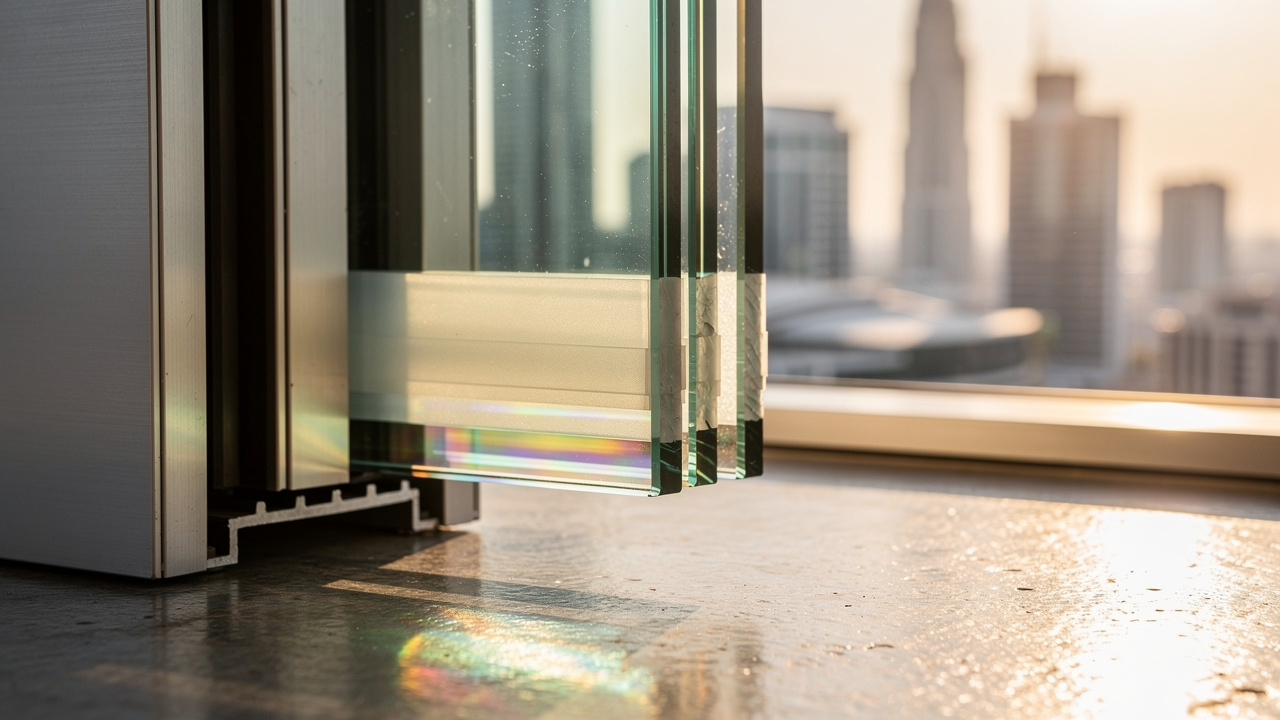
Noise in Dubai homes and offices often comes down to a simple choice of glass. When you compare acoustic laminated glass vs regular glass, the difference in day‑to‑day comfort is huge. One type of glass simply separates you from wind and dust, while the other is engineered to block sound, add safety, and protect interiors.
Regular glass is a single layer that lets traffic, neighbors, and construction noise pass through with little resistance. Acoustic laminated glass combines several glass panes with a special acoustic interlayer, so it absorbs and reduces sound instead of passing it straight into your room. This article explains how each glass type works, where the gap in performance shows up in UAE buildings, and how Shaheen Acoustic designs glass systems that actually quieten busy spaces.
Keep reading to see how your current windows compare, and when an upgrade makes sense for your home, office, or project in the UAE.
Key Takeaways
Choosing between acoustic laminated glass and regular glass shapes how quiet, private, and safe a space feels. The points below highlight the main differences so you can scan the benefits quickly before you look at the details.
Regular glass and acoustic laminated glass react very differently when sound hits them. A single pane vibrates almost freely, so noise passes through with little resistance. Acoustic laminated glass adds a soft interlayer between glass plies, which reduces vibration and cuts noise by a noticeable margin in city settings.
The acoustic interlayer, usually PVB or EVA, is the hidden hero inside the glass build‑up. It has viscoelastic properties, which means it flexes slightly and turns vibration into a tiny amount of heat. That change gives glass from Shaheen Acoustic the ability to reduce noise by up to 42 dB while still looking like normal glazing.
STC and Rw ratings let you compare sound performance in numbers instead of guesswork. A typical single pane sits around STC 28 to 30, while Shaheen Acoustic’s acoustic laminated glass reaches STC 45 to 50, which to the human ear sounds much quieter. Research summarized by the Acoustical Society of America explains that a 10 dB change feels roughly like half as loud.
Acoustic laminated glass delivers both noise control and safety in one product. The interlayer holds broken pieces in place during impact, so it meets safety glazing requirements that regular glass simply cannot match. In busy Dubai buildings, that matters for both people and property.
Real‑world performance depends heavily on installation quality, not only the glass itself. Shaheen Acoustic uses acoustic gaskets, gap‑free sealing, and protected edges so frames in Dubai, Sharjah, and Abu Dhabi do not leak sound around the glass. Without this level of care, even the best acoustic glass can behave more like regular glass.
What Is Acoustic Laminated Glass And How Is It Built Differently?
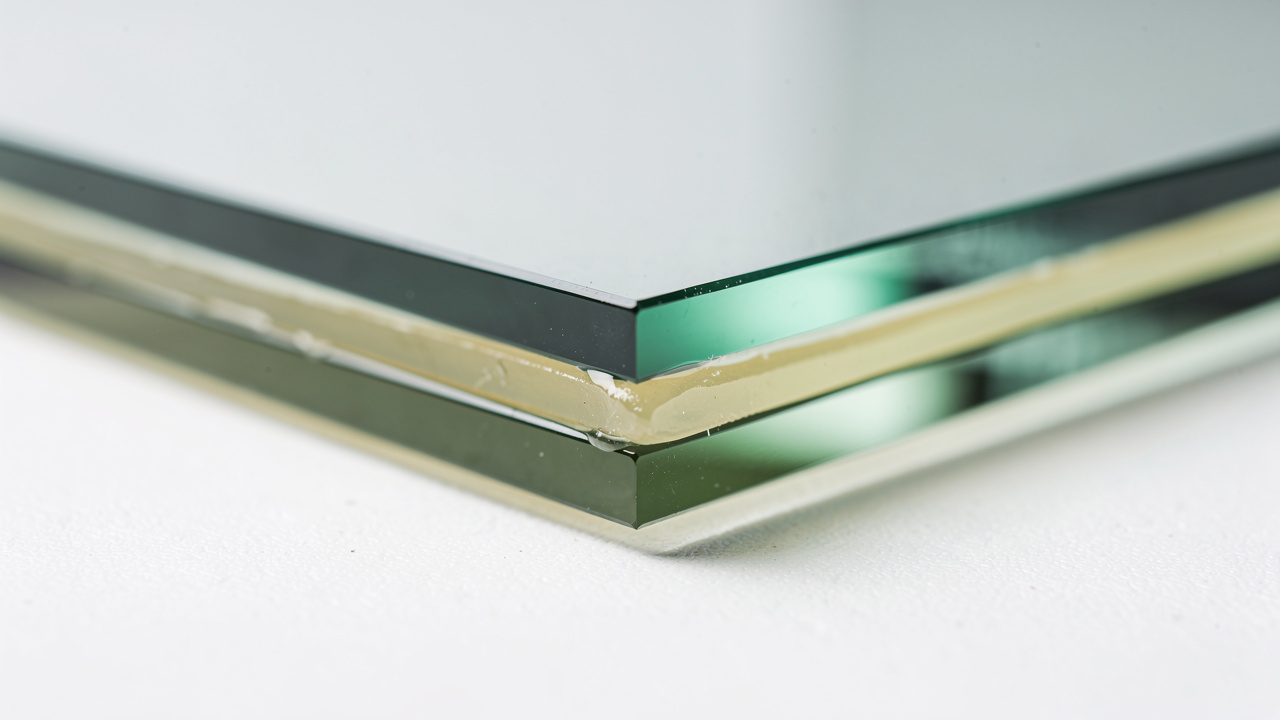
Acoustic laminated glass is a multi‑layer glass unit with a noise‑dampening interlayer, built very differently from regular glass. Regular glass is usually a single sheet of annealed or float glass that separates indoors from outdoors but barely reduces sound. In busy parts of Dubai, that simple sheet still acts like an open door for traffic and street noise.
Regular glass is monolithic, which means one solid layer of material. It is transparent, affordable, and easy to source across the UAE, so it appears in many older windows and low‑budget partitions. The trade‑off is that when a sound wave from Sheikh Zayed Road or Al Khail Road hits the pane, the glass vibrates and passes that vibration straight into the room.
Acoustic laminated glass uses at least two glass panes bonded under heat and pressure with a special acoustic interlayer, usually PVB or EVA film, as explored in A comprehensive review of ultraviolet radiation and functionally modified textile fabric research that also examines protective interlayer technologies. This interlayer is softer than glass and has internal friction, so it resists vibration and absorbs sound energy. The result feels like a normal window to the eye, yet it noticeably calms down the noise from traffic, aircraft near Dubai International Airport, or loud neighbors.
Shaheen Acoustic designs acoustic glass systems built for UAE conditions, such as a 6 mm glass pane, 1.5 mm acoustic PVB, another 6 mm pane, a 12 mm spacer, and a further 6 mm glass layer in a complete window unit. Thickness usually falls between 12 and 20 mm, with clear, tinted, or frosted finishes for different projects. According to Shaheen Acoustic, this configuration can reduce noise by up to 42 dB and reach STC ratings around 45 to 50 when installed correctly.
Standard Laminated Safety Glass Vs Acoustic Laminated Glass: Not The Same Thing
Standard laminated safety glass and acoustic laminated glass look similar, yet they serve very different priorities. Safety glass uses a thin, standard PVB interlayer so that, on impact, broken shards stay stuck to the film instead of falling and cutting people. Noise reduction is only a small side effect of the extra layer.
Acoustic laminated glass, on the other hand, uses a thicker acoustic‑grade PVB or EVA with special viscoelastic behavior; A UV-Protective Textile Coating study on recycled PVB illustrates how this polymer’s unique material properties make it effective as a functional interlayer in protective applications. That interlayer is tuned to absorb sound over a wide band of frequencies, especially in the range of speech and traffic noise. You still gain all the safety benefits of standard laminated glass, but you also gain far higher noise reduction.
For a project near Dubai Marina or the Abu Dhabi Corniche, choosing standard laminated safety glass alone can lead to disappointment because the sound performance does not match expectations. Acoustic laminated glass from Shaheen Acoustic avoids that mistake by combining safety and serious acoustic performance in one glass build‑up.
How Does Sound Travel Through Glass And Why Does Regular Glass Fail?
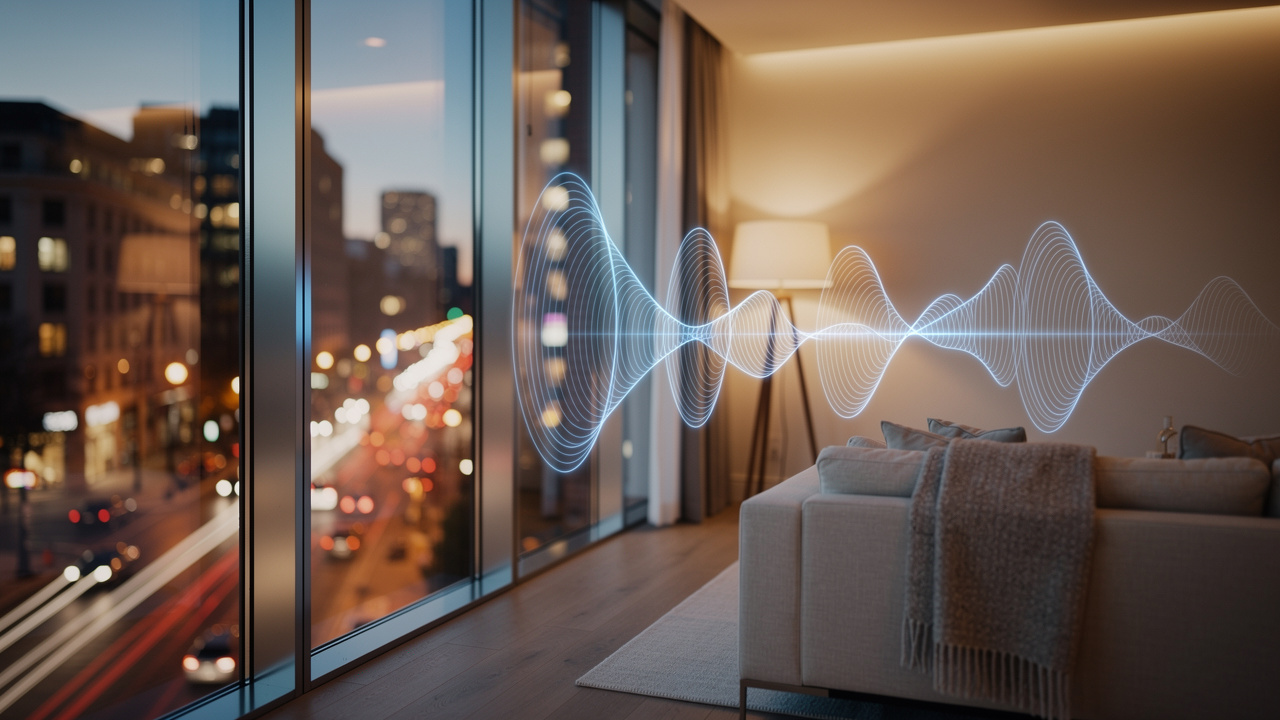
Sound through glass is simply vibration passing from air into the glass pane and back out again on the other side. Regular glass fails because it vibrates almost freely with the sound waves that strike it, so the pane works a bit like a speaker cone that replays the noise indoors. Acoustic laminated glass breaks that path and weakens the vibration before it reaches your ears.
Sound moves as pressure waves in air from sources like cars on Sheikh Zayed Road, aircraft near Al Maktoum Airport, or loud conversations in an open‑plan office in Business Bay. When those waves hit a single glass pane, the glass moves back and forth in step with the wave. That movement then pushes the air inside your room, which is what you hear as unwanted noise.
Regular glass also suffers from a phenomenon called the coincidence dip, where certain mid‑range frequencies pass through with almost no resistance. Those frequencies, around 1,000 to 4,000 Hz, match the range of human speech and many city noises. So a standard window in Dubai often lets voices, horns, and machinery come through clearly, even if it softens some low rumbles.
Acoustic laminated glass improves performance through three main effects:
Extra mass from the two or more glass layers makes it harder for sound waves to move the pane. More mass means more energy is needed to start vibration, so less sound passes through into the villa or apartment. The effect is most noticeable when you compare a thin single pane to a thicker laminate in the same opening.
The acoustic PVB or EVA interlayer acts as a vibration damper between the glass plies. When the outer pane starts to move, the interlayer shears slightly and turns some of that movement into heat inside the material. That heat is tiny and not felt as temperature change, yet it removes energy from the sound wave and reduces the noise that continues inside.
The glass layers and interlayer are mechanically decoupled, so they do not move perfectly together. This breaks the efficient transfer of vibration that you get in regular glass, especially around the coincidence dip frequencies. As a result, conversation noise from a neighboring office or corridor is much quieter with acoustic laminated glass partitions.
Long‑term exposure to traffic noise is not only annoying; it is also a health issue. The Environmental Noise Guidelines from the World Health Organization state that average road traffic noise above 53 dB over the day can increase the risk of heart disease and high blood pressure. In dense parts of Dubai and Sharjah, that threshold is easy to reach near busy roads, so better glazing becomes more than a comfort upgrade.
“Noise is more than a nuisance; at certain levels it becomes a health risk,” notes the World Health Organization in its work on environmental noise.
Acoustic Laminated Glass Vs Regular Glass Performance, Safety, And Benefits Compared
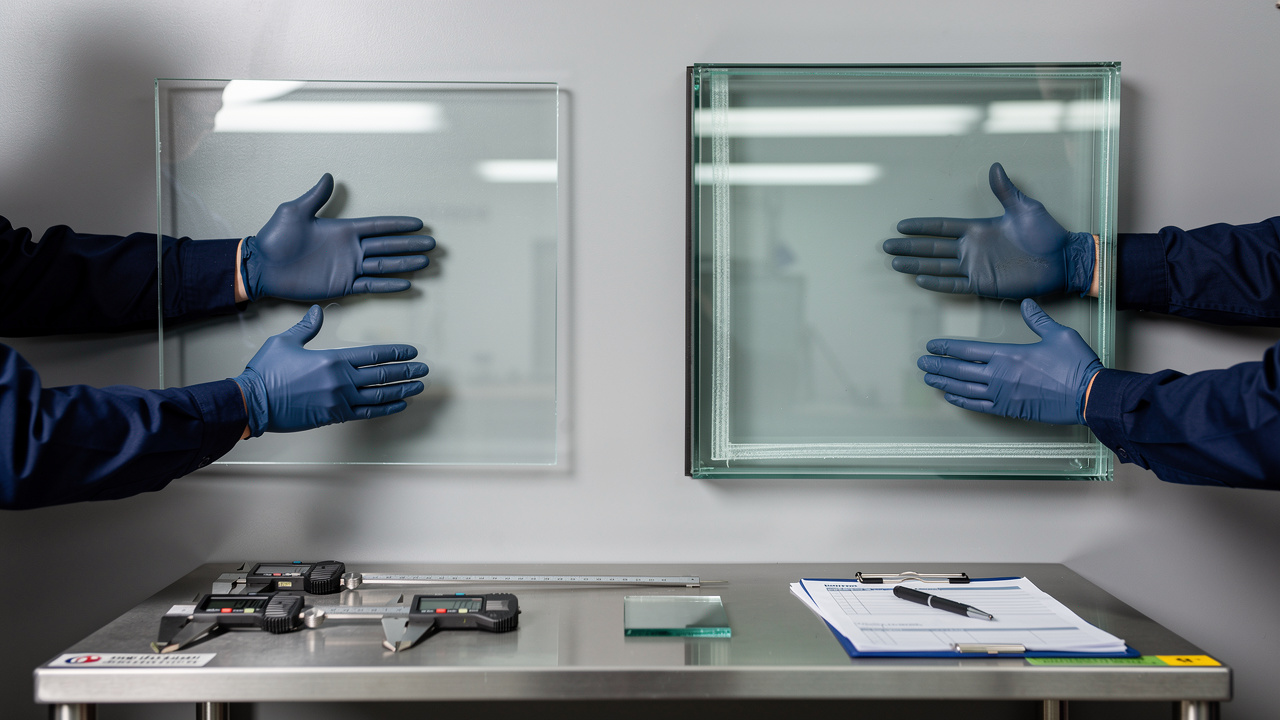
When you compare acoustic laminated glass and regular glass side by side, the gap in performance is clear across noise, safety, and durability. Regular glass focuses on clarity and basic weather separation, while acoustic laminated glass from Shaheen Acoustic is engineered to control sound, increase safety, and protect interiors from UV. The table below summarizes the main differences.
According to industry test data summarized by Acoustical Surfaces, a typical 6 mm single pane window achieves an STC rating around 29. By contrast, Shaheen Acoustic reports STC 45 to 50 for its acoustic laminated glass systems and up to STC 59 for complete soundproof glass windows. That jump in rating turns into a huge change in how a room feels.
| Criteria | Regular Glass | Acoustic Laminated Glass From Shaheen Acoustic |
|---|---|---|
| Noise reduction (approx dB) | Around 25 to 30 dB, depending on size and frame quality. Noticeable city noise still enters homes near main roads. | Up to 42 dB noise reduction in tested systems, with much calmer interiors even near highways or metro lines in Dubai and Abu Dhabi. |
| Typical STC rating | Around STC 28 to 30 for common 6 mm panes in standard frames. | STC 45 to 50 for laminated glass units, and up to STC 59 for full soundproof window systems supplied by Shaheen Acoustic. |
| Safety on breakage | Shatters into sharp pieces that can cut people and damage interiors during impact or forced entry attempts. | Interlayer holds fragments in place, reducing injury risk and slowing intruders, while still keeping the opening closed to weather and noise. |
| UV protection | Limited blocking of ultraviolet light, so fabrics, flooring, and artwork fade faster under UAE sun. | PVB interlayers block more than 99 percent of UV radiation, according to manufacturers like Pilkington, which helps preserve finishes and furnishings. |
| Thermal performance | High heat transfer that adds to air conditioning load during UAE summers. | Better thermal resistance due to multiple layers and interlayer, and excellent performance when part of an insulating glass unit. |
| Durability in UAE climate | Sealants and frames can age quickly under heat, dust, and humidity, which can lead to air leaks and rattling panes. | Protected edges and acoustic gaskets from Shaheen Acoustic give long‑lasting performance in harsh Gulf conditions with less risk of early failure. |
| Aesthetic options | Mostly clear or basic tinted glass, with limited acoustic upgrades available. | Wide range of clear, tinted, or frosted acoustic laminated panes that match modern designs in towers, villas, offices, and hotels. |
Psychoacoustic research summarized by the Acoustical Society of America notes that a 10 dB change in sound level is heard as roughly half or double the loudness. That means moving from an STC near 30 with regular glass to an STC around 45 with acoustic laminated glass can make traffic or street noise feel cut by more than half. In a Dubai bedroom facing a highway, that difference often decides whether someone sleeps well.
Safety gains are just as important. Regular glass in a shopfront along Al Wasl Road or a villa in Jumeirah breaks into large, sharp shards during impact, whereas acoustic laminated glass holds fragments in place — a property that also translates to improved thermal performance, as demonstrated in research on Evaluating UV-Protective Low-Emissivity Window films and their implications for thermal and visual comfort in commercial buildings. Laminated acoustic glass keeps the fragments stuck to the interlayer, reducing injury risk and strengthening the barrier against forced entry. At the same time, the PVB blocks over 99 percent of UV, which protects high‑value finishes in hotels, offices, and apartments across the UAE.
“When we design an acoustic glass package, we always start with the noise source and the weak points in the frame, not just the glass thickness,” explains the Shaheen Acoustic technical team.
Where Acoustic Laminated Glass Makes The Biggest Difference In The UAE

Acoustic laminated glass makes the biggest difference in noise‑exposed, high‑value environments across Dubai, Abu Dhabi, Sharjah, and other Emirates. Homes near busy roads, open‑plan offices in glass towers, hospitality projects, healthcare buildings, and schools all gain far more from acoustic laminated glass than from regular glass. When you walk into two similar rooms, one with each type, the contrast is easy to notice.
Residential apartments and villas near Sheikh Zayed Road, Dubai Marina, Downtown Dubai, or the Abu Dhabi Corniche often live with constant traffic and construction noise. Regular windows in bedrooms and living rooms pass that sound straight through, even when closed. Replacing them with acoustic laminated glass can turn a noisy bedroom into a calm space where outdoor noise fades into the background.
Corporate offices in areas like DIFC, Business Bay, Jumeirah Lake Towers, and Sharjah’s business districts rely heavily on glass partitions. Regular glass walls in conference rooms and executive cabins let speech leak into open work areas, hurting privacy and focus. Research from Nielsen Norman Group highlights that unwanted noise is the top complaint in open offices, and more than half of employees report that it harms productivity. Acoustic laminated partitions keep the transparent look while reducing speech transfer, with studies such as Fiber Fabric-Reinforced Laminated Veneer research demonstrating how layered composite materials engineered for insulation can deliver both structural integrity and high acoustic performance in modern buildings.
Hospitality and healthcare projects have even higher expectations for comfort and confidentiality. Hotel rooms along busy boulevards in Dubai or near Yas Island in Abu Dhabi must feel quiet despite traffic and nightlife. Clinics and hospitals need private conversations between doctors and patients to stay inside the room. Acoustic laminated glass satisfies both needs by blocking outside noise and limiting sound escape from inside spaces.
Educational facilities across the UAE, from schools in Sharjah to universities in Dubai International Academic City, often sit close to main roads and active sports fields. Regular glass in classrooms and libraries lets corridor and outdoor noise interrupt lessons and study time. Acoustic laminated glass in windows and internal screens cuts that interference, supporting better learning and concentration for students and staff.
“In Dubai’s urban environment, regular glass is not a noise barrier; it is a noise pathway.”
— Shaheen Acoustic design team
All of these benefits depend on correct installation. Shaheen Acoustic pairs high‑performance glass with acoustic gaskets, well‑designed aluminum or hardwood frames, and precise on‑site work. This combination reduces flanking paths where sound could sneak through small gaps, so clients across the UAE receive the performance their specifications promised.
Wrapping Up
Acoustic laminated glass and regular glass may look similar at a glance, but they behave like different materials once sound and impact come into play. Regular panes mainly keep out wind and dust, while acoustic laminated glass from Shaheen Acoustic uses mass and an interlayer to block noise, add safety, and protect interiors from UV.
The upfront price of acoustic laminated glass is higher than a basic single pane, yet the long‑term value is clear for UAE homes and commercial spaces. Quieter rooms mean better sleep, higher productivity, and happier guests or tenants. Added safety and UV protection help protect people and finishes, and thoughtful edge sealing gives better durability in Gulf weather.
With more than 15 years of local experience and over 5,500 finished projects across Dubai and the wider UAE, Shaheen Acoustic is a trusted partner for acoustic glazing and soundproof glass windows. For site assessments, product specifications, or project support, reach the team at +971 50 209 7517 or visit Shaheen Acoustic.
Conclusion

Choosing between acoustic laminated glass and regular glass is really a choice between living with noise or controlling it. For many UAE homes, offices, hotels, and clinics, acoustic laminated glass turns loud, tiring spaces into calmer, safer, and more private environments that suit modern city life.
Frequently Asked Questions
Question: Is acoustic laminated glass the same as double glazing?
Acoustic laminated glass and double glazing are different products. Acoustic laminated glass is a single bonded unit with multiple glass layers and an acoustic interlayer. Double glazing uses two separate panes with an air or gas cavity between them. For best performance, many UAE projects combine both approaches in one window system.
Question: How much noise reduction can I realistically expect from acoustic laminated glass in a Dubai apartment?
Well‑specified acoustic laminated glass from Shaheen Acoustic can reduce noise by up to 42 dB and reach STC 45 to 50. A 10 dB drop feels roughly half as loud to the human ear. Real results depend on frame design, sealing quality, and the exact glass build selected for your apartment.
Question: Does acoustic laminated glass also help with heat and energy savings in the UAE?
Yes, acoustic laminated glass gives better thermal resistance than regular single‑pane glass. The extra layers and interlayer slow heat transfer into the room. It does not replace full insulating glass units, yet it still helps lower cooling loads and air conditioning costs in Dubai’s extreme summer heat.
Question: Is acoustic laminated glass compliant with UAE building safety codes?
Yes, acoustic laminated glass meets safety glazing requirements because the interlayer holds fragments in place after breakage. That means one product can satisfy both acoustic and safety demands for windows, doors, balustrades, and partitions without separate safety glass. Many UAE architects now specify it as standard.
Question: How do I know if I need acoustic laminated glass or regular glass for my project?
If your main concern is noise from traffic, neighbors, HVAC plant, or busy corridors, you need acoustic laminated glass rather than regular panes. For quieter locations, standard glass may be acceptable. The simplest next step is to ask Shaheen Acoustic for a site assessment so the team can recommend the right glass build for your space.